
As governments and transport agencies worldwide work toward net-zero goals, reducing emissions from transportation infrastructure has become a critical priority. Roads are the backbone of economic growth, but inefficient traffic flow, delayed maintenance, and outdated infrastructure management practices contribute significantly to fuel consumption and greenhouse gas emissions.
Today, technologies such as AI sustainable road infrastructure platforms, AI road carbon emission reduction systems, and AI smart transportation systems are helping authorities create cleaner, safer, and more efficient road networks.
RoadVision AI supports this transition by combining computer vision, geospatial intelligence, and predictive analytics to improve road safety, optimize traffic movement, and reduce the environmental impact of transportation infrastructure.
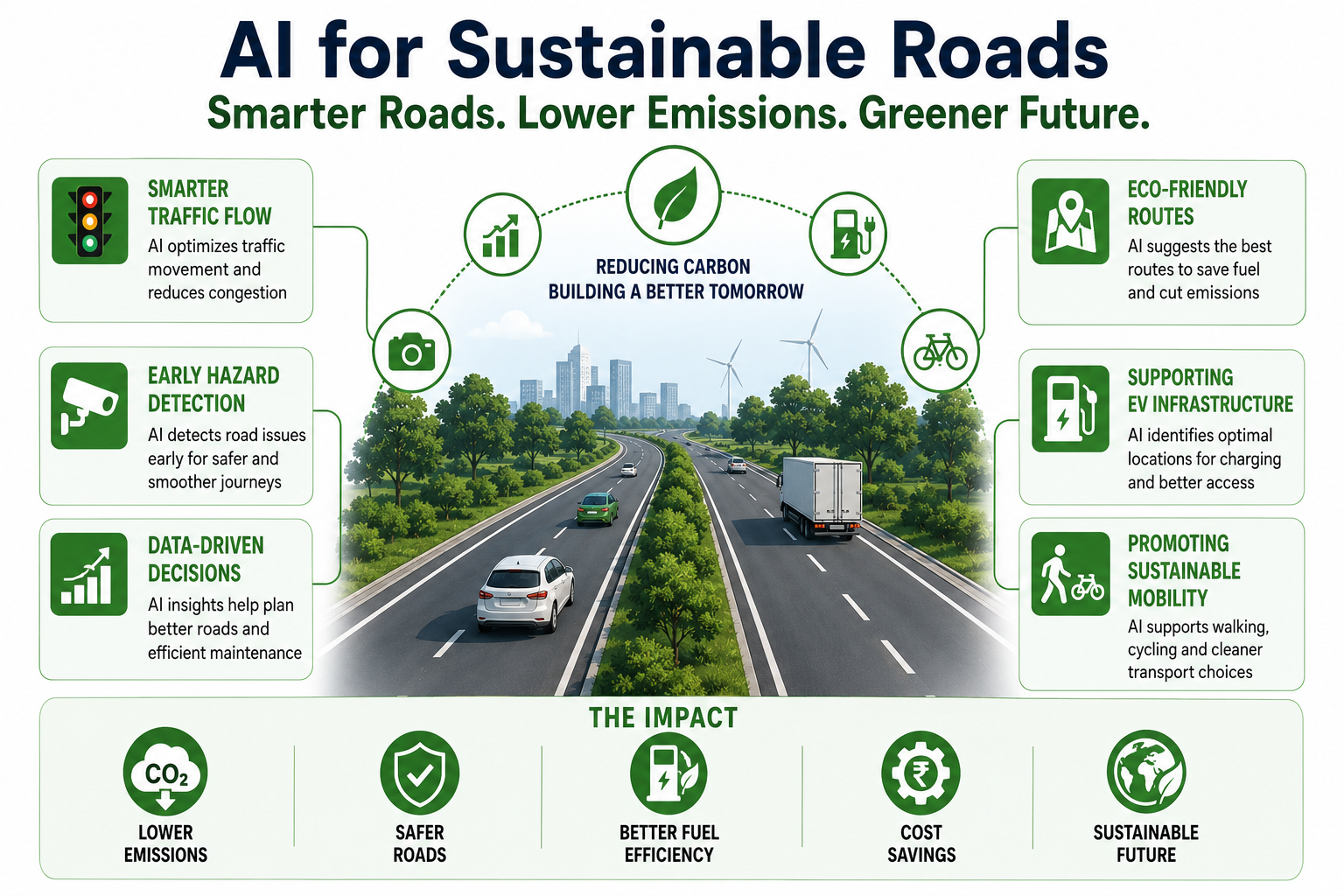
Transportation remains one of the largest contributors to global carbon emissions. Congestion, poor road conditions, and inefficient maintenance strategies increase vehicle fuel consumption and emissions.
Common contributors include:
Modern AI road carbon footprint monitoring solutions help agencies identify inefficiencies and implement targeted improvements that support sustainability objectives.
As the saying goes:
"A stitch in time saves nine."
Early intervention not only reduces maintenance costs but also prevents unnecessary environmental impacts.
One of the most effective ways to reduce transportation emissions is to improve traffic flow.
RoadVision AI uses:
These capabilities enable authorities to:
Through AI road congestion emission reduction, cities can improve mobility while supporting environmental targets.
Route choice has a significant impact on fuel efficiency and carbon output.
Advanced AI systems analyze:
This allows navigation platforms to recommend more efficient routes that reduce travel time and emissions.
By supporting AI eco-friendly route planning, transport agencies can help drivers make environmentally responsible travel decisions.
Road safety and sustainability are closely connected.
Damaged roads increase braking, acceleration, fuel consumption, and accident risks.
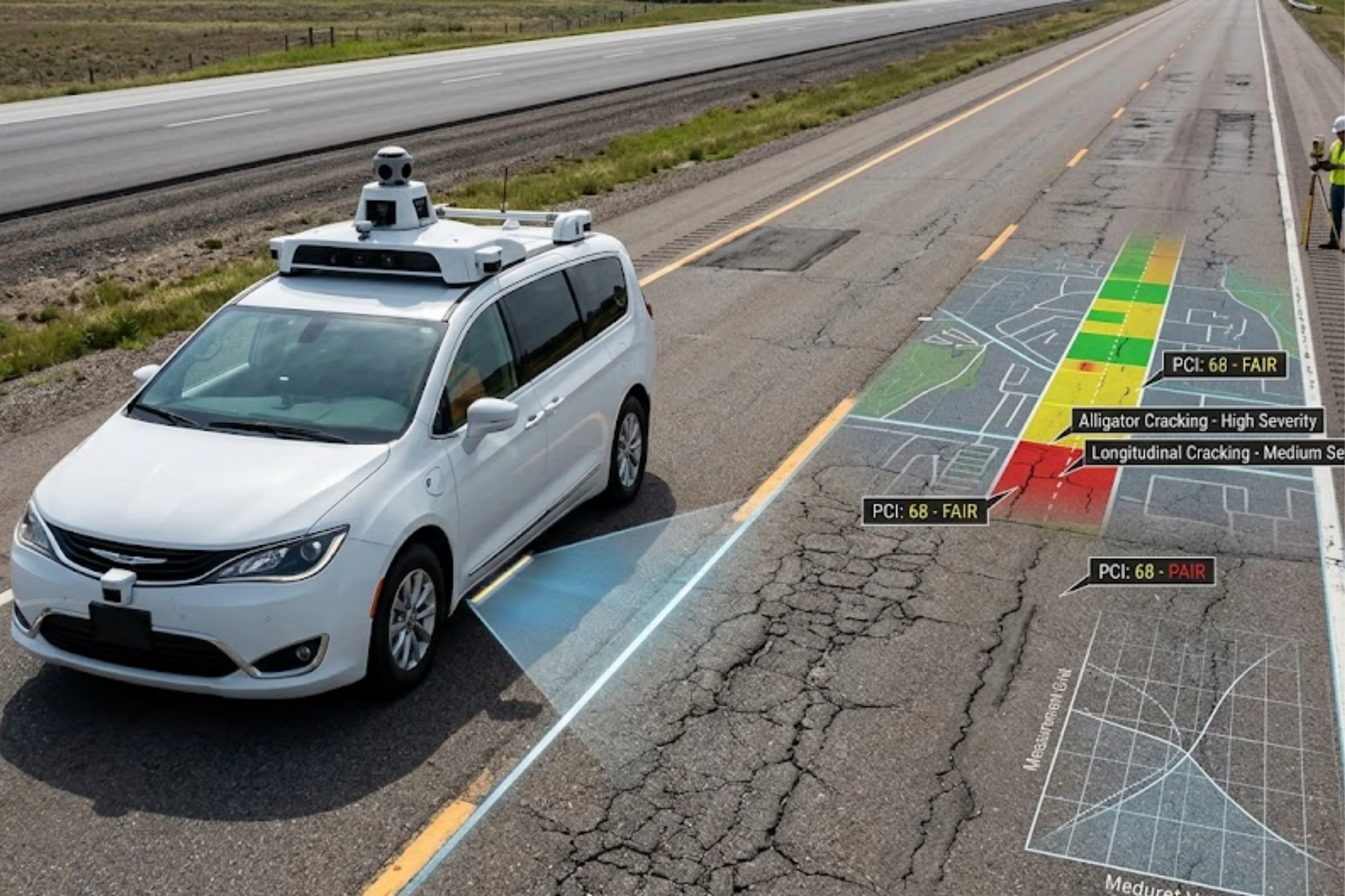
RoadVision AI uses computer vision road hazard detection to identify:
Through automated road safety monitoring AI, authorities can detect issues earlier and schedule maintenance before conditions deteriorate.
Safer roads improve vehicle efficiency while reducing environmental and economic costs associated with crashes.
Traditional inspections are often time-consuming and resource-intensive.
Modern AI-based infrastructure safety management platforms automate inspections using:
Benefits include:
This supports both sustainability goals and long-term infrastructure resilience.
Well-maintained roads last longer and require fewer carbon-intensive rehabilitation projects.
RoadVision AI enables:
Using automated road condition sustainability audits, agencies can extend pavement life while reducing resource consumption and construction-related emissions.
The growth of electric mobility depends on reliable charging infrastructure.
AI helps authorities:
Integrated with broader AI smart transportation systems, these capabilities accelerate EV adoption and support national decarbonization strategies.
Environmental sustainability and economic efficiency often go hand in hand.
AI-powered road management helps agencies:
Predictive maintenance prevents expensive reconstruction projects.
Budgets can be directed toward high-priority assets based on objective condition data.
Reliable road infrastructure improves freight movement, accessibility, and investment attractiveness.
For developing economies, these efficiencies create opportunities for long-term infrastructure development while minimizing environmental impact.
The future of transportation infrastructure will increasingly depend on intelligent, connected systems.
Emerging technologies include:
These innovations allow agencies to move beyond reactive maintenance and adopt proactive, sustainability-focused asset management strategies.
RoadVision AI combines automated roadway safety management and computer vision based road hazard detection.
The platform helps transportation agencies:
Building sustainable transportation networks requires more than greener vehicles. It also requires smarter roads.
Through AI sustainable road infrastructure, AI road carbon emission reduction, and AI-based infrastructure safety management, authorities can reduce environmental impacts while improving mobility and road safety.
RoadVision AI enables organizations to transition from reactive maintenance to data-driven infrastructure management. By combining automated inspections, predictive analytics, and intelligent monitoring, the platform supports cleaner, safer, and more resilient transportation systems.
As nations work toward a low-carbon future, intelligent road infrastructure will play a critical role in reducing emissions and creating sustainable mobility for future generations.
AI improves traffic flow, reduces congestion, optimizes maintenance schedules, and enables eco-friendly route planning, all of which lower fuel consumption and emissions.
AI road carbon footprint monitoring uses traffic, infrastructure, and mobility data to identify emission hotspots and support sustainable transportation planning.
RoadVision AI combines automated inspections, predictive maintenance, AI roadway safety management, and road condition monitoring to improve safety, reduce emissions, and extend infrastructure lifespan.
The Autonomous Road Engineer
AI-powered road condition monitoring, asset management, & infrastructure intelligence helping agencies move from reactive maintenance to predictive road management.


.webp)
.webp)