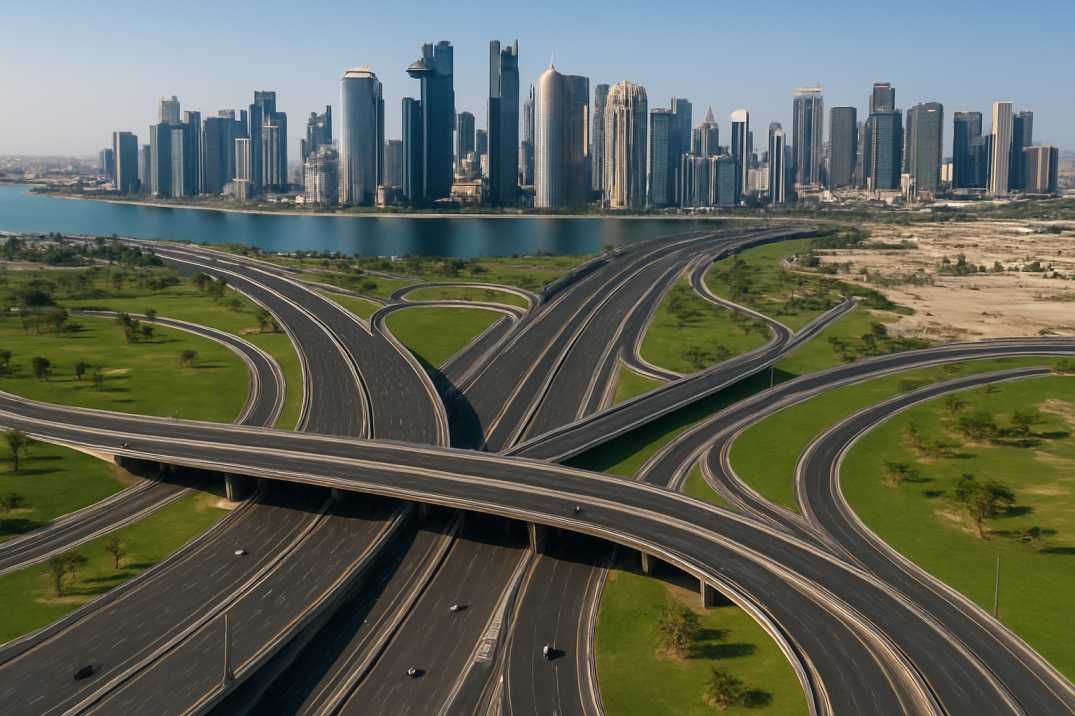
Raipur is Chhattisgarh's capital and its fastest-growing urban centre — a city whose road network must keep pace with rapid expansion in population, commerce, and infrastructure demand. The Raipur Municipal Corporation (RMC) is responsible for maintaining this network, but the tools it relied on were not built for a city moving at this speed.
Manual road inspections were the norm: field teams conducting visual surveys, logging defects by hand, and producing reports that varied by inspector and offered no reliable baseline for year-on-year comparison. Collecting and managing data across the full network was complex, resource-intensive, and chronically incomplete.
The consequences were familiar — delayed identification of defects, repeated reactive repairs on the same stretches, and maintenance budgets allocated on intuition rather than evidence. RMC needed a system that could assess its roads at scale, consistently, and fast enough to actually drive decisions. AI-based road condition assessment, automated pavement inspection, and AI-powered road infrastructure monitoring provide municipalities with the ability to evaluate road networks quickly, objectively, and at scale.

RMC partnered with RoadVision AI to conduct a pilot covering 57.04 kilometres of Raipur's road network. Before fieldwork began, RoadVision AI ran training workshops for RMC engineers — ensuring the teams responsible for acting on the data were fully equipped to collect it. That investment in ground-level capability set this deployment apart from a standard vendor engagement using AI-driven road inspection technology.
RMC engineers used the RoadVision AI mobile application to capture images and video of road conditions across the pilot area. Fitted with a suction windshield mount, the smartphone-based setup required no specialist vehicles or equipment. Engineers drove their regular routes and collected comprehensive visual and GPS data as part of normal operations — minimising disruption and maximising coverage using smartphone-based road survey technology.
Collected data was processed through RoadVision AI's intelligence platform, which automatically identified and classified distress types — ravelling, cracking, potholes, settlements, rutting, and shoving — in line with IRC guidelines. Every segment received a condition score. Every defect was geotagged. The subjectivity of manual assessment was replaced with a consistent, repeatable standard across all 57 kilometres.

The processed data was delivered as a comprehensive road inspection report — defects categorised by type and severity, segment-level IRC scores, and exportable formats compatible with RMC's existing asset management systems. A web-based GIS platform provided a live visual layer of the entire assessed network, colour-coded by condition, accessible to planners and engineers in real time.
The pilot revealed a network in mixed but manageable condition — with a clear signal that surface deterioration, if left unaddressed, would compound rapidly. Of the 57.04 kilometres surveyed, 31.89 KM was rated Good, 24.66 KM Fair, and just 0.49 KM Poor. That distribution tells an important story: the majority of Raipur's roads are not yet critical, but the volume of ravelling and settlement defects detected indicates a network approaching an inflection point.
Ravelling dominated the findings with 3,523 recorded instances — more than 75% of all defects. This is not a series of isolated problems. It is a systemic pattern of surface layer deterioration across multiple corridors, and it is precisely the kind of early-stage signal that AI-powered monitoring is built to catch before it escalates into pothole formation and structural failure.

The Raipur pilot did more than produce a report. It changed how RMC thinks about road management — shifting the organisation from a reactive posture to one grounded in data, repeatability, and proactive planning. The pilot's success was clear enough that it triggered the decision to deploy RoadVision AI across Raipur's full road network.


Most conversation about smart infrastructure in India centres on megacities. Raipur matters precisely because it is not one. It is a Tier-2 capital city with real infrastructure pressure, a motivated municipal corporation, and the same data problem that thousands of Indian urban bodies face — but without the resources of Mumbai or Delhi.
The RoadVision AI deployment in Raipur demonstrates that AI-powered road management is not a premium solution reserved for large urban bodies. It is a scalable system that works with off-the-shelf smartphones, trains existing engineering teams, and delivers IRC-standardised outputs that any municipal corporation can act on.
RMC now has a verified condition baseline, a live GIS layer of its road network, and a repeatable survey methodology it can deploy at any interval. That is the foundation for genuine infrastructure governance — and a model that every growing Indian city can replicate.
The Autonomous Road Engineer
AI that is transforming road infrastructure, from reactive to predictive.