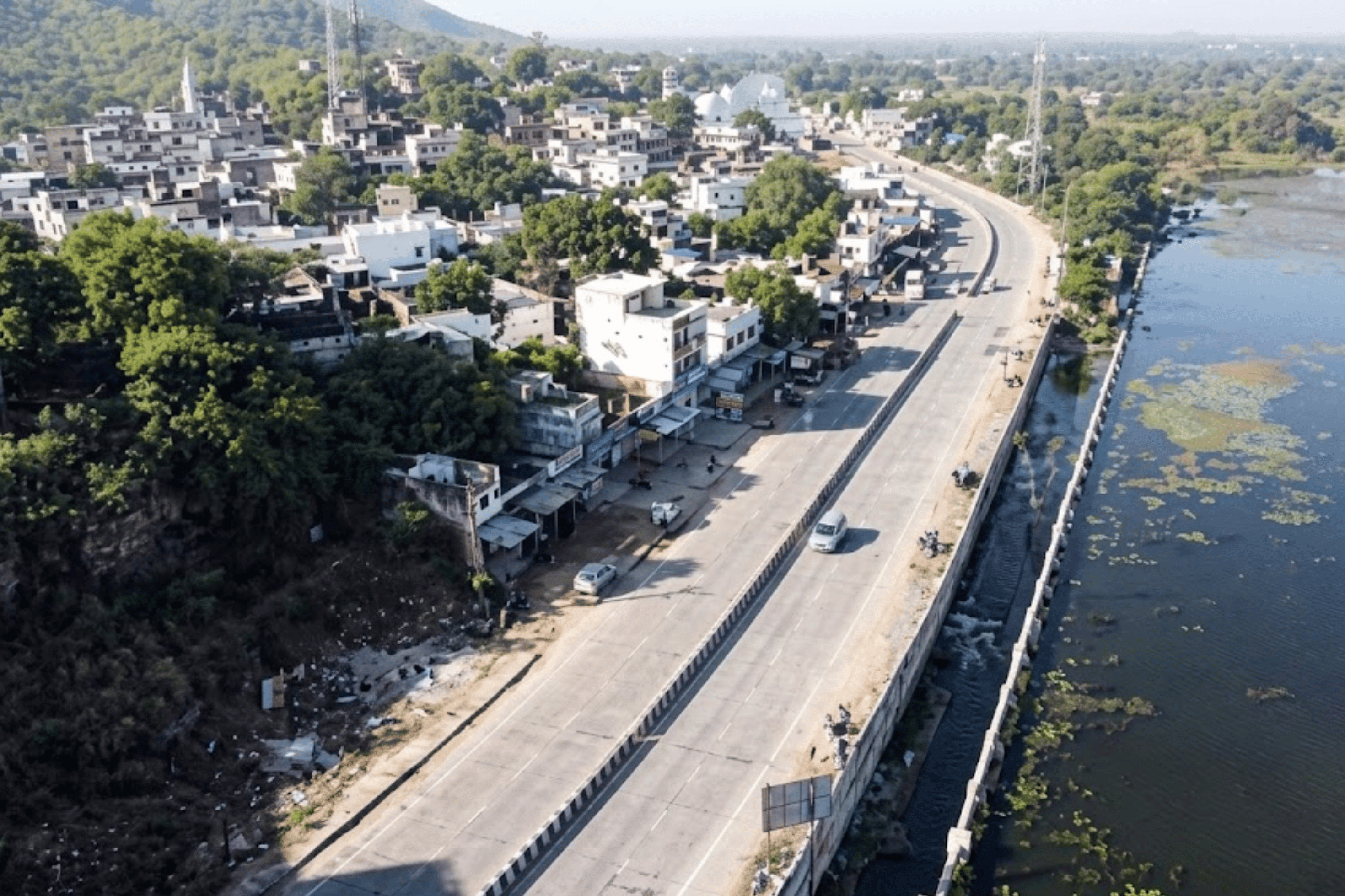
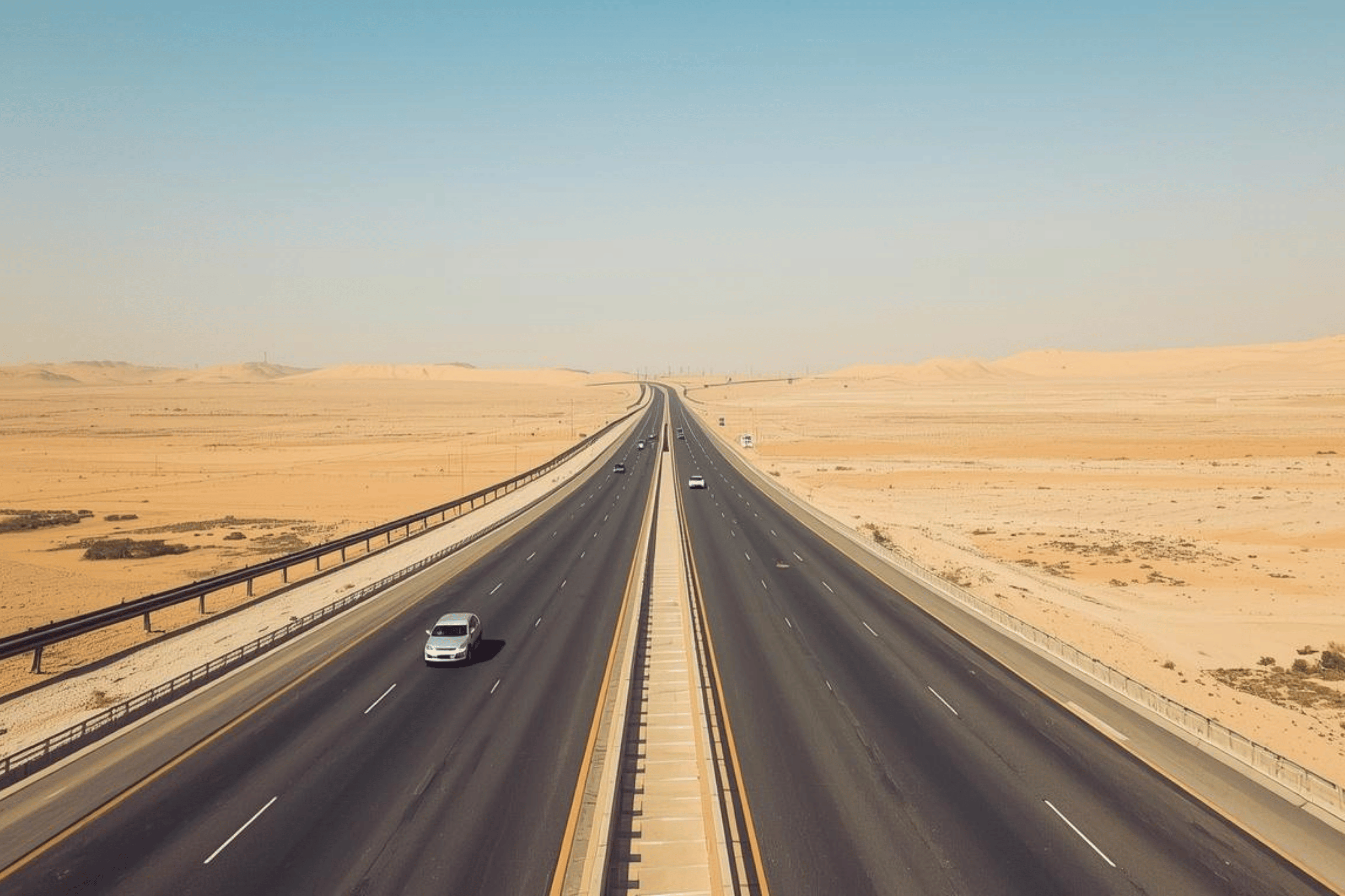
Doha is one of the world's fastest-growing capitals — a city that has built highways, tunnels, and arterial networks at a pace few cities can match. The scale of that ambition is also the scale of the maintenance challenge. Qatar's road network spans thousands of kilometres, and the traffic volumes that come with a booming economy mean that even high-quality surfaces show wear faster than traditional inspection cycles can detect it.
A road management company operating in Doha faced the problem that every growing city eventually confronts: the network had outgrown the tools used to monitor it. Manual inspections were labour-intensive, produced inconsistent data, and could not keep pace with the rate of expansion. High-severity defects went undetected until they became visible hazards. Preventive treatment opportunities were missed because the early-stage signals — surface ravelling, minor cracking — were never systematically recorded.
What was needed was a system that could cover Doha's road network at scale, deliver consistent condition data without disrupting the city's traffic, and generate outputs structured for asset management integration — all without the cost and complexity of specialist survey vehicles, using AI-powered road assessment and intelligent road analytics.
"Doha's roads had outgrown the tools used to monitor them. The network needed a system that could keep pace with the city itself — fast, scalable, and built for the volumes of a modern Gulf capital."
RoadVision AI deployed its pavement condition survey system across a wide area of Doha's road network, covering a total of 267.56 kilometres across multiple zones and corridors. The deployment used off-the-shelf dashcams mounted on regular vehicles — no specialist survey trucks, no expensive equipment procurement, no advance road closure planning — enabling scalable AI road inspection.
The inspection spanned key arterial and secondary roads across Doha including Al Rayyan Al Jadeed to Furousiya Street, Al Waab to Fereej Al Soudan, Muraikh to Al Sadd, Al Luqta Street to Khalifa Street, Fereej Al Amir, and multiple Ar-Rayyan corridors — covering both high-traffic arterials and secondary residential connectors across the city.
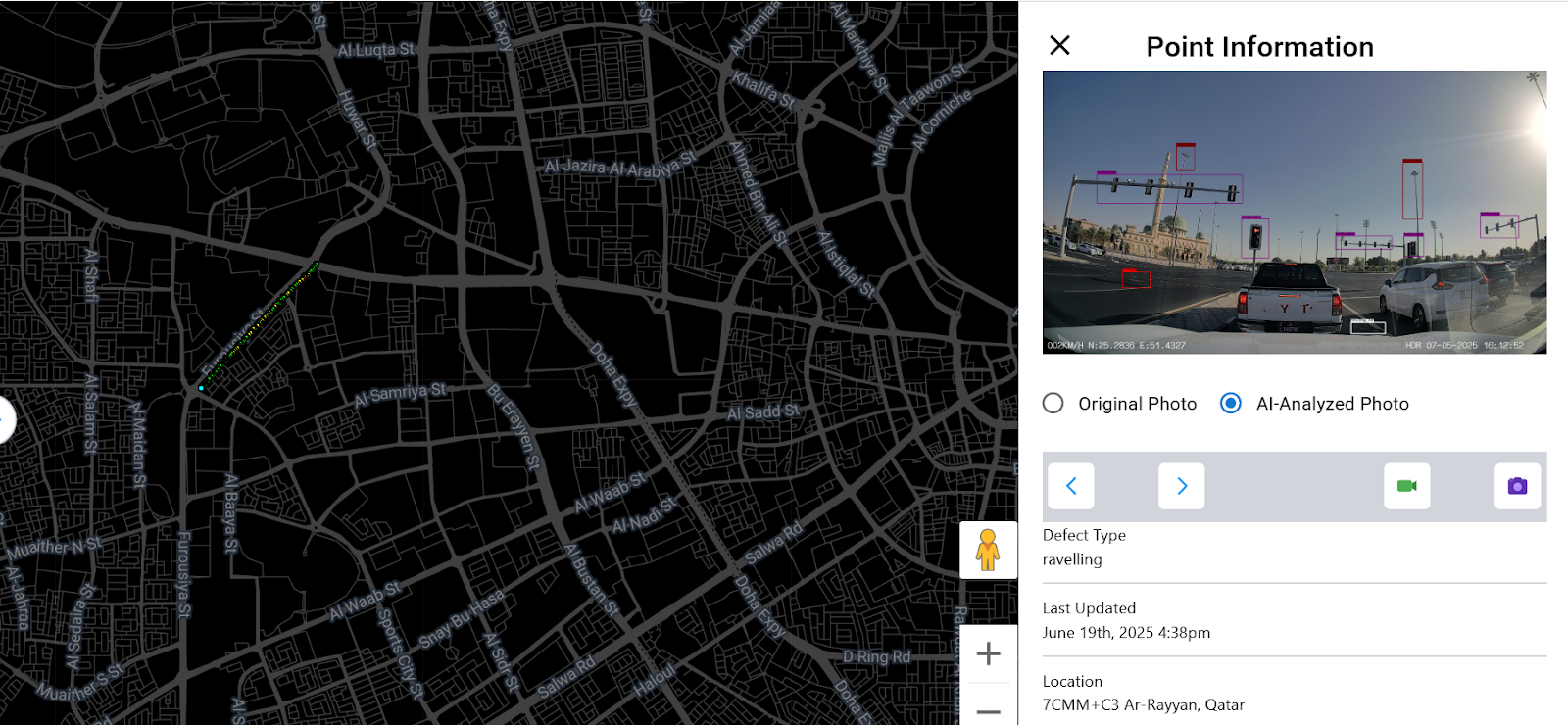
Dashcam-equipped vehicles drove each corridor at regular traffic speed, capturing continuous high-resolution video footage of road surface conditions. There were no lane closures, no traffic management requirements, and no disruption to Doha's arterial movement. Data collection was operationally invisible — indistinguishable from a regular patrol vehicle on the road.
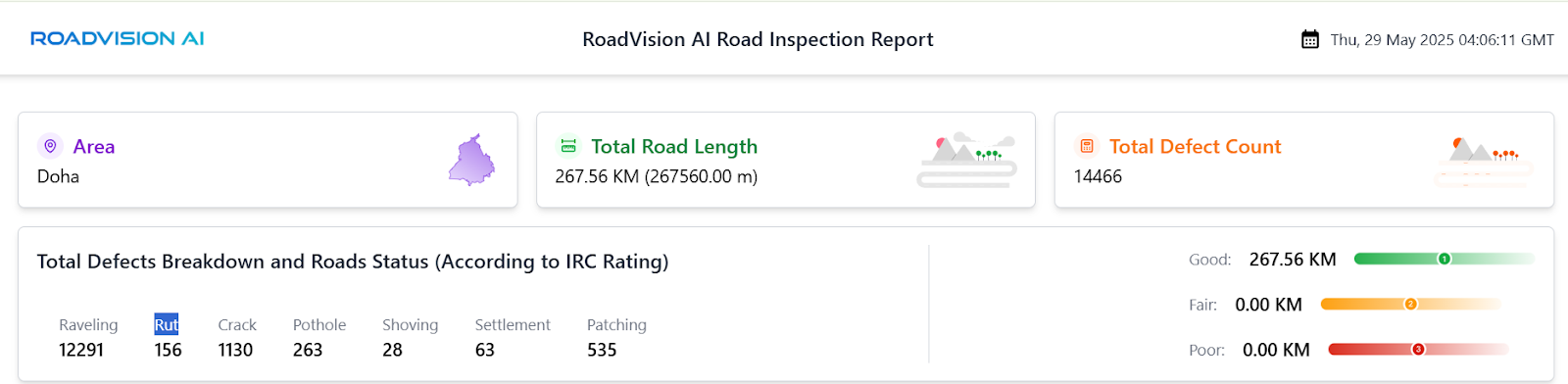
Footage was uploaded to the RoadVision cloud platform, where advanced AI models scanned every frame to detect visible road surface defects. Deep learning models trained on global road defect datasets automatically identified, classified, and scored each defect by type and severity — enabling automated road condition detection at scale. The entire 267.56 kilometre dataset was processed rapidly, compressing what would typically be weeks of manual analysis into a fraction of that time.
The inspection of 267.56 kilometres of Doha's road network catalogued 14,466 individual defects — classified by type, severity, and GPS location across seven distress categories. The headline finding is not just the volume, but the severity distribution: 61% of all defects were rated low severity, meaning the majority of Doha's network issues are still at the preventive maintenance stage. That is the most valuable possible insight for a road management authority — the window to act cheaply is still open on most of the network.
High-severity issues were identified and mapped for urgent intervention, giving the road management team a clear, prioritised action list. The combination of volume data and severity classification means maintenance resources can be allocated precisely — urgent repairs where needed, preventive treatment everywhere else, nothing wasted on guesswork.

The Doha deployment demonstrated at Gulf-region scale what RoadVision AI has proven across India: that AI-powered road inspection delivers more data, faster, at lower cost, and with zero traffic disruption compared to any traditional alternative — driving predictive road maintenance and better decision-making. For Doha's road management authority, the outcomes were immediate and structural.

The Doha deployment is significant for two reasons beyond its immediate scale. First, it validates RoadVision AI's platform in an international context — demonstrating that the system performs on Gulf-region road networks, with their specific surface conditions, traffic patterns, and infrastructure standards, just as effectively as it does across Indian cities.
Second, it establishes a replicable model for road asset management across the wider Gulf region. Doha's challenge — a fast-growing network, high traffic volumes, and the impossibility of keeping pace through manual inspection — is the challenge of every rapidly urbanising city in the GCC. A dashcam-based, AI-processed, asset-management-integrated inspection system that covers 267 kilometres without stopping traffic once is a model every one of those cities can adopt.
RoadVision AI was developed in India for Indian infrastructure conditions — diverse road types, high traffic density, extreme weather variation. That heritage makes it uniquely suited for the demands of global road networks. Doha proved it. The next city is already in scope.
Experience how AI-powered road inspection systems can help you maintain road networks faster, safer, and more cost-effectively.
The Autonomous Road Engineer
AI that is transforming road infrastructure, from reactive to predictive.