

AI-powered inspection, condition monitoring, and compliance reporting aligned to Austroads, ARRB, and IPWEA NAMS standards.
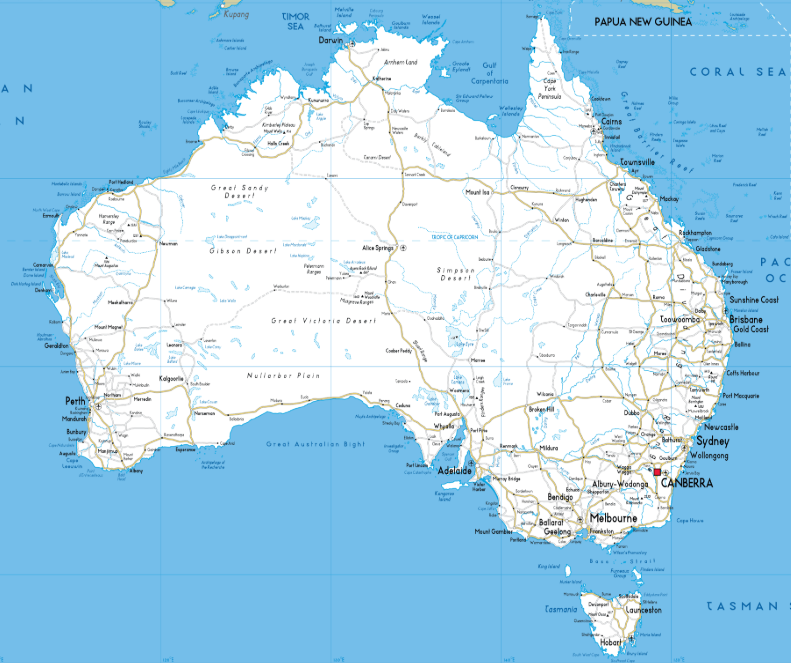
75% of Australia's roads are locally managed without continuous condition data. RoadVision AI delivers AI road network intelligence and infrastructure mapping to close that gap.
Outputs are built for Australian practice — not adapted from international models. Every metric, threshold, and report format is configured to the relevant Australian standard.
IRI, rutting, cracking, texture depth. Good <2.5 m/km | Fair 2.5–4.5 | Poor >4.5 — with climate-zone correction applied per segment, not per network average.
RCR-compatible outputs. Councils transitioning from periodic ARRB survey contracts can benchmark AI baselines without losing historical continuity.
Export configured to SMEC (Transport for NSW), PAVED (TMR QLD), ROMAN (Main Roads WA), VicRoads/MRPV, DPTI SA, DIER TAS.
Condition evidence structured for LGA road asset plans and Special Schedule 7. Supports Roads to Recovery and Black Spot Programme applications.
High-risk location scoring aligned to AusRAP 5-star methodology. Evidence packages formatted for NRRA Road Safety Programme submissions.
Each agent configured to Australian climate zones, regulatory frameworks, and procurement conditions.
IRI, rutting, cracking, texture depth — per lane-segment, per climate zone
IRI, rutting, cracking, texture depth — per lane-segment, per climate zone
Austroads IRI thresholds; ARRB RCR compatible; direct state PMS export
Dashcam video or LiDAR — no specialist survey vehicle required
AUD $350–$900/lane-km vs. AUD $3,000–$9,000 for traditional survey
Monthly updates replace biennial survey cycles
Multi-year maintenance scenario modelling across all 537 LGAs
Multi-year maintenance scenario modelling across all 537 LGAs
IPWEA NAMS, Special Schedule 7, Roads to Recovery, Black Spot — structured evidence packages
Treatment ranked by condition severity, traffic loading, and council budget cycle
Funding submission evidence generated automatically from condition data
Transport for NSW, TMR QLD, Main Roads WA, VicRoads/MRPV, DPTI SA, DIER TAS
Transport for NSW, TMR QLD, Main Roads WA, VicRoads/MRPV, DPTI SA, DIER TAS
Direct PMS integration — SMEC, PAVED, ROMAN — no manual data migration
NRRA programme templates auto-generated from live condition data
Pilbara haul roads, QLD coal/cane corridors, WA grain routes, NSW pastoral network
Pilbara haul roads, QLD coal/cane corridors, WA grain routes, NSW pastoral network
Real-time ESAL accumulation modelling vs. design assumptions; predictive failure alerts
Replaces reactive resheeting with scheduled structural intervention
Satellite damage detection within 24 hours of flood, cyclone, or bushfire event
Satellite damage detection within 24 hours of flood, cyclone, or bushfire event
NEMA emergency route maps + DRFA claim documentation generated simultaneously with field response
QLD/NSW floods, WA cyclones, VIC bushfire network damage
Computer vision — pavement condition, roadside geometry, signage gaps, line marking degradation
Computer vision — pavement condition, roadside geometry, signage gaps, line marking degradation
High-risk location scores aligned to AusRAP 5-star methodology
NRRA Road Safety Programme submissions; LGA and state agency blackspot prioritisation
Annual LGA-wide survey is unaffordable at traditional rates — that is why the maintenance backlog compounds. RoadVision AI changes the cost equation with cost-effective road surveys in Australia.
Structured for AusTender, state procurement portals (Buy.NSW, QTenders, Tenders WA), and IPWEA NAMS planning timelines.
Benchmark AI outputs against your existing ARRB / agency data.
Full state or LGA coverage with monthly condition updates.
Predictive scheduling replaces biennial survey contracts.
Procurement: AusTender · Buy.NSW · QTenders · Tenders WA · LGA direct. Compatible with Roads to Recovery, Black Spot Programme, Bridges Renewal, and DRFA grant conditions.
Book a demonstration scoped to your jurisdiction, your PMS system, and your Austroads or IPWEA NAMS reporting requirements. Includes AI disaster road assessment and flood damage road mapping Australia.

The Autonomous Road Engineer
AI-powered road condition monitoring, asset management, & infrastructure intelligence helping agencies move from reactive maintenance to predictive road management.
RoadVision AI Private Limited,
Office No. 308 & 310, B Block, Ansal
Chamber - 1, Bhikaji Cama Place,
Near Engineers India Limited (EIL)
Bhawan, New Delhi - 110066


