
Australia's road network stretches from dense metropolitan corridors to high-speed regional highways and remote rural links. Managing safety across such a vast and diverse system is a complex challenge that goes far beyond meeting design standards alone.
For agencies responsible for road asset management in Australia, the focus is shifting. It is no longer enough to respond after crashes occur — the priority is increasingly to anticipate risk before serious incidents happen.
This transition from reactive to proactive safety management is being driven by AI-based road safety analytics and predictive intelligence. By using real-world operational data at scale, predictive safety tools are redefining how Australian roads are designed, upgraded, and maintained.
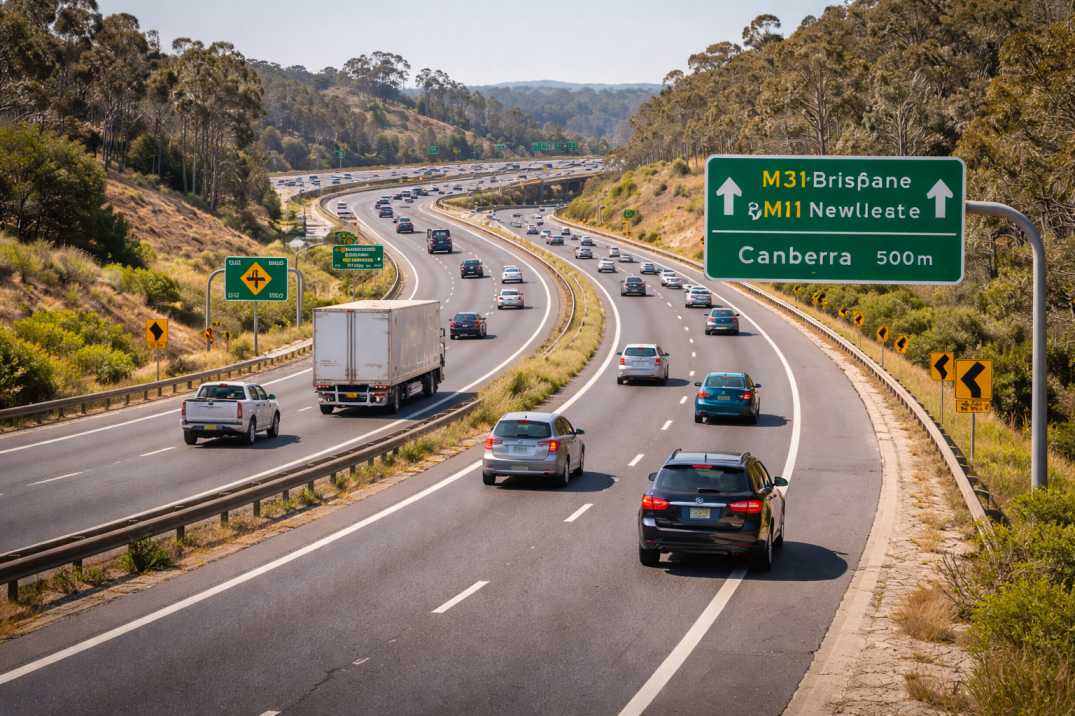
Conventional road safety practices have historically relied on:
While valuable, these methods have an inherent limitation: crashes are lagging indicators. They represent the final outcome of risk, not the early warning signs that exist long before an accident is recorded.
Many high-risk locations show repeated near-miss behaviour, speed inconsistencies, or driver hesitation well before crash statistics reveal a problem.
This is where predictive crash risk analysis using AI through the Road Safety Audit Agent fills a critical gap — identifying latent safety risk before incidents escalate.
2.1 What Is Predictive Safety Analytics?
Predictive safety analytics uses machine learning and large-scale network data to understand how road users interact with infrastructure in real operating conditions.
2.2 Key Data Inputs
2.3 How Predictive Analytics Works
Digital road safety analytics through the Road Safety Audit Agent can process inputs such as:
By analysing these factors together, AI identifies behavioural patterns that correlate with increased crash likelihood.
This enables AI-based road design optimisation, where engineers refine alignment, cross-sections, and roadside treatments based on observed risk — not assumptions alone.
One of the most powerful applications of AI in road safety through the Road Safety Audit Agent is predicting where crashes are likely to occur in the future.
Predictive crash risk models evaluate indicators such as:
These insights allow agencies to prioritise safety treatments such as:
This proactive approach strongly supports Australia's national and state road safety strategies focused on reducing fatalities and serious injuries.
5.1 Speed-Related Indicators
IndicatorWhat It RevealsInterventionSpeed variation approaching curvesDriver uncertaintyImproved warning signageSpeed differential between vehiclesMixed traffic riskSpeed managementHigh approach speeds at intersectionsRed-light violation riskSignal timing, enforcementHeavy vehicle speed on gradesBraking performanceGrade warning, escape ramps
5.2 Behavioural Indicators
IndicatorWhat It RevealsInterventionLane deviationDriver distraction or fatigueRumble strips, delineationAbrupt brakingSurprise geometryAdvance warningMerging conflictsDesign inadequacyLane alignment, signagePedestrian-vehicle interactionsCrossing safetyPedestrian treatments
5.3 Geometric Indicators
IndicatorWhat It RevealsInterventionCurve speed inconsistencyDesign-operating mismatchGeometric correctionSight distance limitationCrest curve issuesVegetation clearing, realignmentShoulder drop-offEdge recovery riskShoulder widening, barriers
Road safety performance is closely linked to the condition and visibility of infrastructure assets.
Predictive analytics becomes significantly more effective when integrated with broader road asset management systems in Australia.
For example:
This integrated approach ensures that safety upgrades are prioritised alongside maintenance investment decisions.
Traffic exposure plays a central role in crash risk.
A curve or intersection that performs adequately under low volumes may become dangerous as traffic demand increases, especially with heavy vehicle freight movement on regional corridors.
By integrating movement and volume data from traffic surveys through the Traffic Analysis Agent, AI models can normalise risk and focus attention on locations where both:
This ensures that limited safety budgets are targeted where they deliver maximum benefit.
Traditional road safety audits remain essential, relying on expert engineering judgement and field inspection.
However, AI-enhanced automated road safety audits through the Road Safety Audit Agent strengthen this process by providing:
Rather than replacing auditors, AI supports them with deeper insight into how roads actually function under live traffic.
This hybrid approach balances professional expertise with data-driven intelligence.
As Australia plans new corridors and upgrades existing routes, AI-based road design optimisation supports safer outcomes from the outset.
Predictive analytics allows designers to test how proposed geometries are likely to perform under real driver behaviour, helping prevent risk before construction begins.
Key design applications include:
This reduces reliance on costly post-construction fixes and ensures infrastructure is:
RoadVision AI provides end-to-end predictive safety capabilities through its integrated suite of AI agents across Australian road networks.
The platform integrates:
This unified system supports proactive safety planning for authorities, consultants, and infrastructure operators.
While predictive safety analytics offers major benefits, successful adoption requires:
The strongest outcomes come from combining AI intelligence with professional judgement and established safety standards.
Australia's vision for safer roads requires moving beyond reactive crash response toward proactive, predictive safety management.
Through AI-based road safety analytics, predictive crash risk modelling, and AI-supported road design optimisation through the Road Safety Audit Agent, agencies can identify risk early and deliver safer road environments for all users.
The platform's ability to:
transforms how road safety is approached across Australia.
When integrated with asset and traffic data through the Roadside Assets Inventory Agent and Traffic Analysis Agent, predictive analytics strengthens road asset management in Australia and supports a more resilient transport network.
RoadVision AI is transforming infrastructure safety and maintenance through advanced AI-driven audits, pothole detection, and traffic survey insights. Aligned with Austroads guidance and international best practices, the platform helps engineers reduce costs, improve maintenance outcomes, and build safer, smarter highways.
Book a demo with RoadVision AI today to explore how predictive safety analytics can shape the future of Australian road design.
It uses AI to forecast crash risk based on real traffic behaviour and asset conditions.
Yes AI identifies high-risk locations and supports targeted safety upgrades.
No AI enhances audits by providing continuous, objective safety insights.
The Autonomous Road Engineer
AI-powered road condition monitoring, asset management, & infrastructure intelligence helping agencies move from reactive maintenance to predictive road management.


.webp)
.webp)
.webp)