
Across Africa, road infrastructure plays a critical role in economic growth, regional trade, urban mobility, and access to essential services. Yet many pavements deteriorate years before reaching their intended design life, creating major financial and safety challenges for governments and road authorities.
Traditional inspection and maintenance methods are no longer sufficient to manage growing transport networks exposed to heavy freight movement, climate stress, and limited maintenance budgets. As a result, many authorities are now adopting AI pavement condition monitoring and smart pavement analytics platforms to improve infrastructure performance through data-driven decision making.
Modern AI road condition assessment systems are helping engineers identify failures early, optimise maintenance timing, and extend pavement life across diverse African environments.
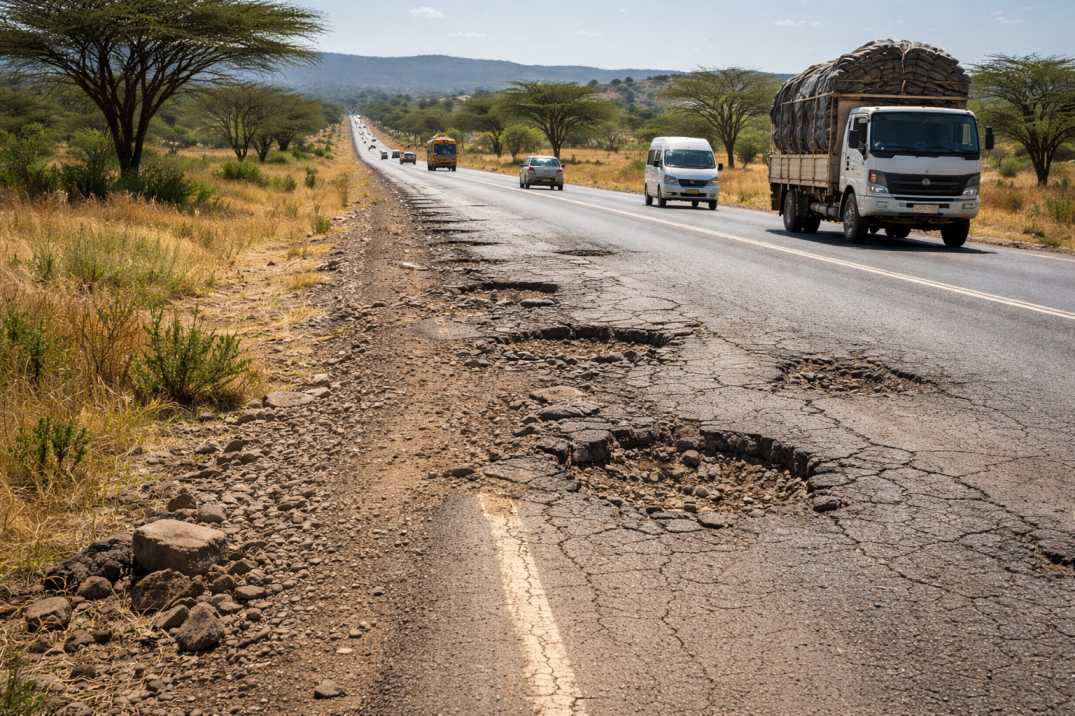
Premature pavement failure is rarely caused by one issue alone. In most cases, multiple environmental, operational, and structural factors combine over time.
Many African countries experience extreme heat, heavy rainfall, flooding, prolonged dry periods, and rapid temperature fluctuations. These conditions accelerate pavement cracking, stripping, rutting, and subgrade weakening.
Without continuous automated road condition monitoring, early distress often remains undetected until structural deterioration becomes severe.
Regions with tropical rainfall such as Kenya, Uganda, and Cameroon experience moisture-related failures, while countries like South Africa, Namibia, and Botswana face heat-induced rutting and oxidation.
Rapid trade expansion across African freight corridors has significantly increased heavy vehicle traffic. Overloaded trucks place stresses far beyond original pavement design assumptions.
Traditional surveys struggle to capture evolving traffic patterns. In contrast, AI-based infrastructure pavement analytics continuously monitor pavement response under real operating conditions.
This is particularly critical on:
Many road rehabilitation decisions are still made using limited historical condition data and infrequent inspections.
Without continuous monitoring, agencies often rely on reactive maintenance strategies instead of predictive planning. Modern automated pavement analysis software solves this challenge by combining historical performance trends with real-time inspection data.
Inconsistent material quality, poor compaction, and inadequate drainage during construction can create hidden weaknesses that accelerate deterioration.
Using digital pavement survey systems and computer vision road inspection, authorities can identify defects much earlier and improve quality verification during project delivery.
Water remains one of the leading causes of pavement deterioration across Africa.
Blocked culverts, inadequate cross-fall, poor shoulder drainage, and uncontrolled runoff weaken pavement structures and accelerate failures including potholes, rutting, and edge collapse.
Many road agencies operate under constrained budgets, making preventive maintenance difficult.
Without accurate network-wide condition data, maintenance funding is often allocated inefficiently. A modern AI-based road asset management system enables agencies to prioritise interventions based on actual risk and pavement performance.
Heavy wheel loads deform pavement layers, especially under high temperatures.
Surface aggregates loosen due to aging binder and moisture damage.
Water infiltration combined with traffic loading causes localised pavement collapse.
Weak shoulders and poor drainage lead to edge cracking and pavement breakup.
Excess asphalt binder rises to the surface under high heat conditions.
Traditional pavement surveys rely heavily on manual visual inspections conducted periodically across selected road sections.
These methods face several major limitations:
As road networks expand, manual inspections become increasingly difficult to scale efficiently.
This is why many agencies are shifting toward AI powered road inspection and digital pavement monitoring systems.
Modern AI pavement inspection systems analyse video, image, dashcam, and sensor data collected during normal road operations.
Using advanced computer vision, these systems automatically identify:
Unlike traditional surveys, AI road condition analysis provides objective and repeatable assessments across the entire network.
Road conditions can be monitored regularly without requiring dedicated manual inspections.
Automated pavement distress detection improves consistency and reduces human error.
Authorities gain visibility across urban roads, highways, and remote corridors simultaneously.
Changes in pavement condition can be tracked over time to improve lifecycle planning.
Real-time insights help agencies respond before failures become severe.
One of the biggest advantages of AI-based predictive pavement maintenance is the ability to forecast future deterioration before visible failure occurs.
AI models analyse:
This enables authorities to:
Predictive maintenance strategies are significantly more cost-effective than reactive repairs after structural failure.
The adoption of AI pavement monitoring Africa solutions is growing rapidly as governments modernise infrastructure management systems.
South Africa faces major challenges related to freight overloading, mining corridors, and pavement deterioration.
Authorities are increasingly adopting:
These technologies support compliance with SANRAL pavement management frameworks and TMH standards.
East African transport corridors connecting Mombasa to Kampala experience growing freight demand and heavy traffic stress.
AI road condition assessment systems help authorities monitor trade routes more efficiently while improving maintenance prioritisation.
Rapid urbanisation and expanding logistics corridors have increased demand for scalable smart road monitoring systems.
AI-driven pavement analytics help agencies identify failures early across dense urban road networks.
Countries such as Egypt and Morocco face extreme desert temperatures and coastal exposure.
Road surface damage detection using AI supports climate-resilient pavement management strategies in harsh environments.
Modern infrastructure management requires more than surface inspections alone.
A fully connected road lifecycle management system combines:
This integrated approach helps agencies make more informed investment decisions across the entire transport network.
Poor pavement conditions directly impact road safety by increasing braking distances, reducing skid resistance, and creating vehicle instability.
Using AI pothole detection systems, authorities can identify safety risks much earlier.
Key safety benefits include:
Combining pavement analytics with road safety data strengthens both maintenance planning and crash prevention strategies.
Adopting smart pavement analytics platforms provides major long-term infrastructure benefits across Africa.
Preventive maintenance significantly delays structural deterioration.
Early intervention reduces expensive rehabilitation requirements.
Maintenance funding can be prioritised using real condition data.
Continuous monitoring helps networks adapt to changing environmental conditions.
Reliable roads improve trade, logistics, and access to services.
As African transport networks continue expanding, infrastructure management must evolve beyond manual inspections and reactive repairs.
Modern automated highway monitoring and dashcam based road survey technologies are enabling road authorities to:
The shift toward intelligent infrastructure management is becoming essential for building resilient and sustainable road networks across Africa.
Premature pavement failure in Africa is not inevitable. With the adoption of digital pavement monitoring technology, authorities can move from reactive maintenance toward proactive infrastructure preservation.
RoadVision AI helps infrastructure teams modernise pavement management through:
By combining intelligent analytics with real-world operational data, road authorities can build safer, longer-lasting, and more resilient transport networks across Africa. Book a demo today!
Q1. Why do pavements in Africa deteriorate faster than expected?
Extreme climate conditions, overloading, and limited continuous monitoring contribute to early pavement failure.
Q2. How does AI improve pavement condition assessment?
AI provides consistent, objective analysis and predicts future deterioration based on real performance data.
Q3. Can AI help optimise maintenance budgets?
Yes, AI enables predictive maintenance planning, ensuring funds are used where they deliver the highest impact.

The Autonomous Road Engineer
AI-powered road condition monitoring, asset management, & infrastructure intelligence helping agencies move from reactive maintenance to predictive road management.


.webp)
.webp)
.webp)