
Dubai's world-class road network—spanning high-speed expressways, urban arterials and rapidly developing smart mobility corridors—demands precision, durability and timely maintenance. With rising traffic volumes, extreme climate conditions and ambitious infrastructure goals, early detection of pavement defects has become more important than ever.
Potholes, cracks, drainage failures and surface distress not only affect driving comfort but also increase accident risk, disrupt mobility and raise maintenance costs. Traditional, manual inspection methods often fall short in a fast-growing city where every kilometre of road must be monitored continuously.
By integrating AI-powered pavement condition monitoring and digital road-asset management, Dubai can shift from reactive repairs to predictive, preventive maintenance—ensuring smoother, safer and smarter roads for the future.
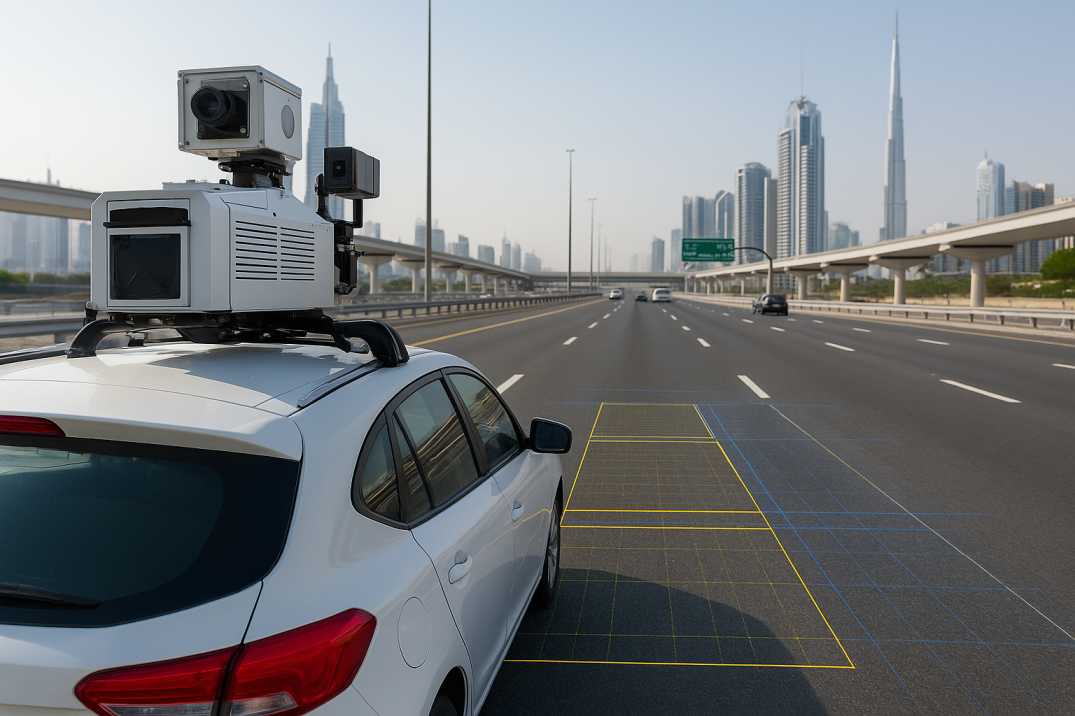
1.1 Extreme Heat and Thermal Stress
Dubai faces some of the world's highest road-surface temperatures. Constant expansion and contraction accelerate binder ageing, surface cracking and micro-fatigue—eventually leading to pothole formation. The Pavement Condition Intelligence Agent tracks these temperature-induced changes.
1.2 High Urban Traffic and Load Stress
Expressways and primary corridors handle heavy trucks, buses and high-frequency commuter traffic. Repeated axle loads cause rutting, cracks and structural distress.
1.3 Sudden Rainfall and Drainage Challenges
Though infrequent, intense rainfall events can cause temporary waterlogging. Inadequate drainage or clogged stormwater channels enable water infiltration, weakening lower pavement layers.
1.4 Pavement Ageing and Material Oxidation
Over time, bitumen oxidation, surface wear, skid-resistance loss and micro-cracks contribute to uneven surfaces and pothole development.
1.5 Infrequent Manual Inspections
Manual surveys cannot cover Dubai's vast network regularly. Delayed detection often means defects worsen before maintenance crews can respond—turning "a small crack into a big headache."
1.6 Sand and Debris Accumulation
Wind-blown sand can obscure surface defects and accelerate surface wear, making manual detection even more challenging.
2.1 The Pothole Lifecycle
2.2 Contributing Factors
Although Dubai follows its own engineering and maintenance standards under RTA and DMT, global best practices—including insights from the Indian Roads Congress—provide valuable technical principles relevant to durable pavement design and upkeep:
AI through the Pavement Condition Intelligence Agent enables cities like Dubai to operationalise these principles with accuracy and scale.
4.1 Sheikh Zayed Road (E11)
Dubai's busiest corridor with high-speed traffic requiring continuous monitoring for early pothole detection.
4.2 Sheikh Mohammed Bin Zayed Road (E311)
Major freight and commuter route with heavy vehicle loads accelerating pavement wear.
4.3 Emirates Road (E611)
High-speed expressway requiring rapid defect detection to prevent safety incidents.
4.4 Al Khail Road
Urban arterial with complex interchanges and varying traffic patterns.
4.5 Dubai-Al Ain Road (E66)
Corridor connecting Dubai to Al Ain with mixed traffic and seasonal variations.
4.6 Hatta Road (E44)
Mountainous route with unique pavement challenges and limited alternative routes.
RoadVision AI applies these standards through its integrated suite of AI agents, delivering comprehensive pavement monitoring solutions.
5.1 Continuous Network-Level Monitoring
The Pavement Condition Intelligence Agent uses dash-cam feeds, sensor-mounted fleets and digital imaging to monitor Dubai's roads continuously—ensuring no stretch is left unseen.
5.2 Automated Detection of Road Surface Defects
Advanced algorithms through the Pavement Condition Intelligence Agent identify:
This unbiased, machine-consistent detection eliminates guesswork and speeds up decision-making.
5.3 Predictive Maintenance for Early Intervention
By analysing climate patterns, traffic loads from the Traffic Analysis Agent, environmental stresses and historical deterioration, RoadVision AI forecasts:
This ensures maintenance teams "fix the roof before it rains."
5.4 Integration With Digital Road Asset Management
RoadVision AI seamlessly links with Dubai's asset management systems through the Roadside Assets Inventory Agent, providing:
This supports transparent reporting and long-term infrastructure planning.
5.5 Faster Response and Reduced Risk
Real-time alerts through the Road Safety Audit Agent enable maintenance teams to act quickly—reducing accident risk, improving mobility and enhancing driver comfort.
5.6 Scalable, Lane-Closure-Free Digital Surveys
RoadVision AI can survey hundreds of kilometres daily without disrupting traffic or requiring additional manpower, making it ideal for Dubai's busy urban environment.
5.7 Post-Repair Verification
The platform verifies repair quality and durability, ensuring that pothole treatments are effective and identifying areas requiring follow-up.
6.1 Variability in Road-Surface Materials
Different pavement types across Dubai's network require calibration for accurate detection.
AI Solution: Models trained on local materials maintain accuracy across diverse surfaces.
6.2 Rapid Changes in Road Conditions
Extreme heat or heavy rainfall can quickly alter pavement condition.
AI Solution: Continuous monitoring captures changes as they occur.
6.3 Integration with Legacy Systems
Connecting AI outputs with existing asset management platforms requires careful planning.
AI Solution: Flexible APIs enable gradual integration without disrupting current operations.
6.4 Uniform Data Quality
Ensuring consistent data quality across wide corridors with varying conditions.
AI Solution: Standardised collection protocols through RoadVision AI ensure consistency.
6.5 Workforce Training
Field teams need training to adapt to AI-driven workflows and interpret detection results.
AI Solution: Comprehensive training programs ensure successful adoption.
6.6 Sand and Debris Interference
Wind-blown sand can affect visual detection accuracy.
AI Solution: Algorithms distinguish between sand accumulation and surface defects.
Yet, with proper planning and standardisation through RoadVision AI, Dubai can overcome these hurdles and unlock the full potential of predictive road maintenance.
7.1 For Road Users
7.2 For Maintenance Teams
7.3 For Agencies
8.1 Cost Savings
8.2 User Benefits
8.3 Safety Improvements
Potholes and pavement defects may seem inevitable, but with AI, they don't have to be long-lasting. As Dubai continues its journey toward becoming a global smart-city leader, predictive and preventive road maintenance can transform urban mobility for decades to come.
The platform's ability to:
transforms how pothole detection is approached across Dubai.
AI-powered systems through RoadVision AI reduce repair times, enhance safety, extend pavement life and support sustainable infrastructure—proving that "a stitch in time saves nine."
RoadVision AI is at the forefront of this innovation. With its powerful computer vision through the Pavement Condition Intelligence Agent, digital twin analytics, and predictive modelling, the platform detects defects early, accelerates repairs and keeps Dubai's roads safer and smoother. Fully aligned with global engineering standards and RTA requirements, RoadVision AI empowers agencies to optimise budgets, minimise risks and modernise urban mobility through the Traffic Analysis Agent and Road Safety Audit Agent.
If your organisation is ready to embrace next-generation road maintenance, book a demo with RoadVision AI today and discover how our platform can help eliminate potholes faster.
Yes. AI systems provide continuous, objective, data-driven detection, which reduces reliance on periodic manual surveys and catches defects earlier.
With appropriate sensor configurations (infrared cameras, high-contrast imaging), AI can adapt to challenging environmental conditions though clarity may vary.
Yes. Preventive maintenance guided by AI significantly lowers lifecycle costs by avoiding recurrent heavy repairs and restoring pavement health early.

The Autonomous Road Engineer
AI-powered road condition monitoring, asset management, & infrastructure intelligence helping agencies move from reactive maintenance to predictive road management.


.webp)
.webp)
.webp)