
Across the United States, highways in cold and mixed climates face some of the most aggressive forms of infrastructure deterioration. Snow accumulation, ice formation, and repeated freeze–thaw cycles place continuous stress on pavement layers, accelerating cracking, rutting, pothole development, and long-term structural failure.
For agencies responsible for road asset management in the USA, understanding and quantifying this seasonal stress is essential to maintaining safety, serviceability, and long-term infrastructure value.
Traditional pavement evaluation methods often struggle to keep pace with the dynamic nature of cold-weather damage. This is why many highway agencies are increasingly adopting automated pavement stress analysis and AI-based pavement monitoring through the Pavement Condition Intelligence Agent to measure, predict, and manage deterioration with far greater precision.
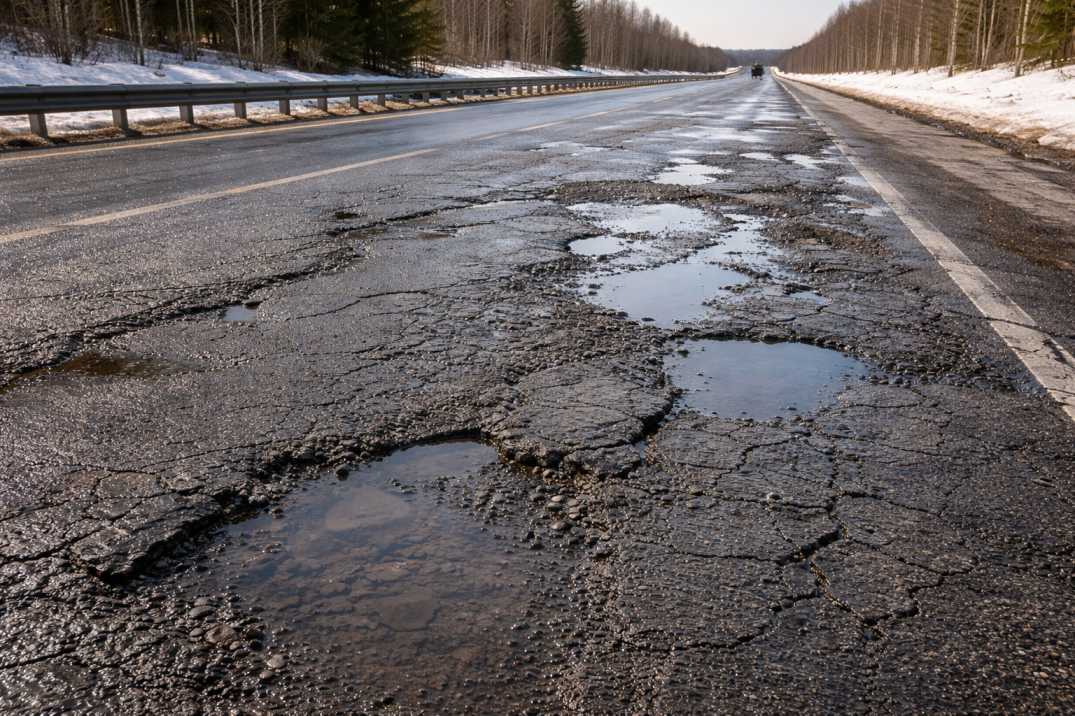
Freeze–thaw damage occurs when moisture infiltrates pavement layers and freezes during cold periods. As water expands into ice, it creates internal pressure that weakens the pavement structure. When temperatures rise and thawing occurs, material strength drops further, leaving pavements highly vulnerable to traffic loading.
In many northern and mountainous U.S. regions, this cycle can repeat dozens of times each year.
Over time, these repeated stresses accelerate:
Cold climate deterioration is not a single event — it is a progressive process that requires continuous observation and analysis. This makes cold climate pavement assessment a critical priority for highway agencies.
2.1 The Freeze–Thaw Process
2.2 Factors Influencing Freeze–Thaw Damage
2.3 Regional Variations
Conventional pavement management programs often rely on:
While useful, these methods capture only snapshots of pavement condition. Early-stage freeze–thaw distress frequently develops beneath the surface long before it becomes clearly visible.
Because damage can progress rapidly between inspection cycles, maintenance interventions are often reactive rather than preventive. This increases lifecycle costs and exposes road users to safety risks, especially during winter operations.
Integrating AI-based pavement monitoring through the Pavement Condition Intelligence Agent allows agencies to move toward continuous, data-driven evaluation instead of delayed response.
AI pavement stress analysis through the Pavement Condition Intelligence Agent uses high-resolution visual and sensor data collected at traffic speed to detect subtle surface changes associated with thermal and moisture-driven deterioration.
Machine learning models analyse indicators such as:
By tracking these conditions over time, AI can quantify how freeze–thaw cycles affect different pavement sections.
This transforms environmental stress from an assumed factor into a measurable, actionable variable — strengthening decision-making within road asset management frameworks in the USA.
5.1 Cracking Indicators
IndicatorDescriptionSeasonTransverse crackingPerpendicular to centerlineLate winter/springLongitudinal crackingParallel to centerlineThroughout winterAlligator crackingFatigue from weakened layersSpring thawBlock crackingShrinkage from agingAfter freeze cycles
5.2 Surface Distress Indicators
IndicatorDescriptionSeasonRavellingAggregate lossSpringPotholesLocalised failuresSpring/early summerRuttingWheel path deformationSpring thawEdge failuresShoulder deteriorationWinter/spring
5.3 Subsurface Indicators
IndicatorDescriptionDetection MethodFrost heaveSurface undulationLiDAR, profile measurementIce lensesSubsurface expansionGPR, thermal imagingMoisture accumulationSaturation zonesGPR, sensors
One of the most valuable outcomes of AI adoption through the Pavement Condition Intelligence Agent is pavement distress prediction.
Instead of waiting for visible failures, AI enables agencies to forecast:
Predictive insights support timely interventions such as:
This proactive approach reduces emergency repair costs, improves network reliability, and extends pavement life.
Pavement condition directly affects vehicle control, braking performance, and winter safety outcomes.
When AI pavement outputs are integrated with road safety audit findings from the Road Safety Audit Agent, agencies gain clearer insight into how surface distress contributes to crash risk — particularly under snow and ice conditions.
Similarly, combining pavement stress analysis with road inventory inspection data from the Roadside Assets Inventory Agent highlights the role of:
Traffic exposure insights from AI-based traffic surveys through the Traffic Analysis Agent further refine prioritisation by identifying high-volume corridors most affected by seasonal damage.
Traditional lifecycle models rely on generalized deterioration curves and fixed design assumptions. In contrast, pavement lifecycle management using AI replaces these assumptions with observed performance data.
By continuously monitoring how pavements respond to:
AI updates lifecycle predictions in near real time.
This allows agencies to:
9.1 Northern Tier (Minnesota, North Dakota, Montana)
9.2 Northeast (New York, Pennsylvania, New England)
9.3 Midwest (Illinois, Indiana, Ohio, Michigan)
9.4 Mountain Regions (Colorado, Wyoming, Utah)
9.5 Pacific Northwest (Washington, Oregon)
Data-driven pavement insights help transportation agencies justify maintenance strategies with measurable evidence. This strengthens long-term planning, funding prioritisation, and compliance with performance-based management requirements.
Key strategic benefits include:
As climate variability increases, the ability to quantify environmental stress becomes central to sustainable highway management. AI through RoadVision AI provides the analytical foundation needed to adapt pavement strategies to evolving conditions.
RoadVision AI delivers scalable solutions for AI-driven pavement analysis through its integrated suite of AI agents across diverse U.S. highway environments.
The platform integrates:
Snow, ice, and freeze–thaw cycles place unique and persistent stress on U.S. highways. Traditional inspection methods alone are no longer sufficient to manage this challenge effectively.
Through AI pavement stress analysis, continuous AI-based pavement monitoring via the Pavement Condition Intelligence Agent, AI-driven pavement distress prediction, and data-informed pavement lifecycle optimisation, highway agencies can quantify environmental impact, anticipate deterioration, and strengthen road asset management in the USA.
The platform's ability to:
transforms how cold climate pavement management is approached across the United States.
RoadVision AI is transforming infrastructure maintenance by detecting potholes, cracks, and surface wear early through the Pavement Condition Intelligence Agent, enabling timely interventions and safer road conditions. Aligned with U.S. road regulations and global best practices, the platform provides engineers and decision-makers with actionable insights that reduce costs, mitigate risks, and improve the travel experience.
Book a demo with RoadVision AI today to explore how predictive pavement analytics can improve winter resilience across your highway network.
They cause repeated expansion and weakening of pavement layers due to moisture and temperature changes.
AI continuously analyses surface distress patterns to detect early signs of environmental damage.
Yes predictive insights enable timely interventions that prevent costly structural failures.

The Autonomous Road Engineer
AI-powered road condition monitoring, asset management, & infrastructure intelligence helping agencies move from reactive maintenance to predictive road management.


.webp)
.webp)
.webp)