
Dubai's rapid rise as a global smart mobility leader is no coincidence. With world-class expressways, ambitious smart city goals, and an unwavering focus on efficiency, the emirate is transforming how its highways are monitored and maintained. Yet as traffic volumes increase and infrastructure ages, the need for accurate, real-time, and predictive insights has become more crucial than ever.
To address these challenges, Dubai is integrating AI smart roads, digital highway maintenance systems, and advanced road asset management across its transport network. Powered by AI-based highway surveys, LiDAR mapping, and dashcam-driven visual intelligence, the future of Dubai's highways is being built on automation and foresight. As the saying goes, "forewarned is forearmed," and Dubai is leveraging AI to stay several steps ahead.
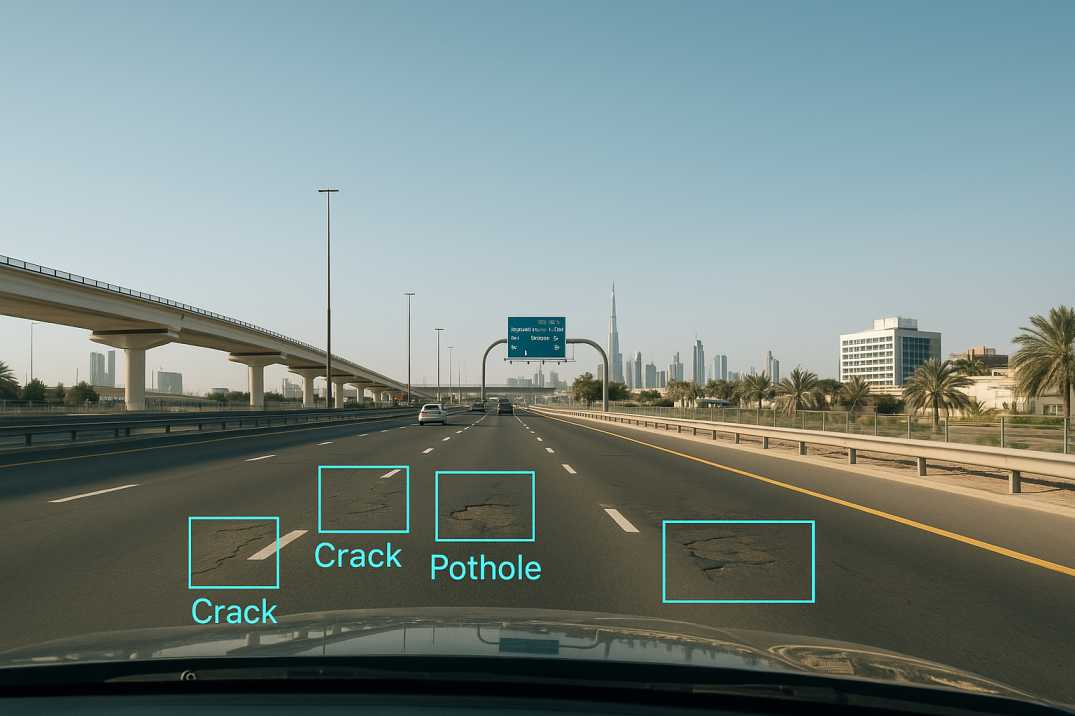
Dubai's infrastructure ambitions demand systems that can keep pace with its growth. Traditional inspection methods—manual surveys or scheduled maintenance—are no longer sufficient for a city where mobility, safety, and service quality are strategic priorities.
Key drivers for AI adoption include:
The Roads and Transport Authority (RTA) recognised early that digital transformation was essential. By adopting a digital-first highway maintenance model through the Pavement Condition Intelligence Agent and Traffic Analysis Agent, Dubai ensures its road network remains resilient, future-ready, and aligned with global benchmarks for smart mobility.
2.1 Proactive Pavement Condition Monitoring
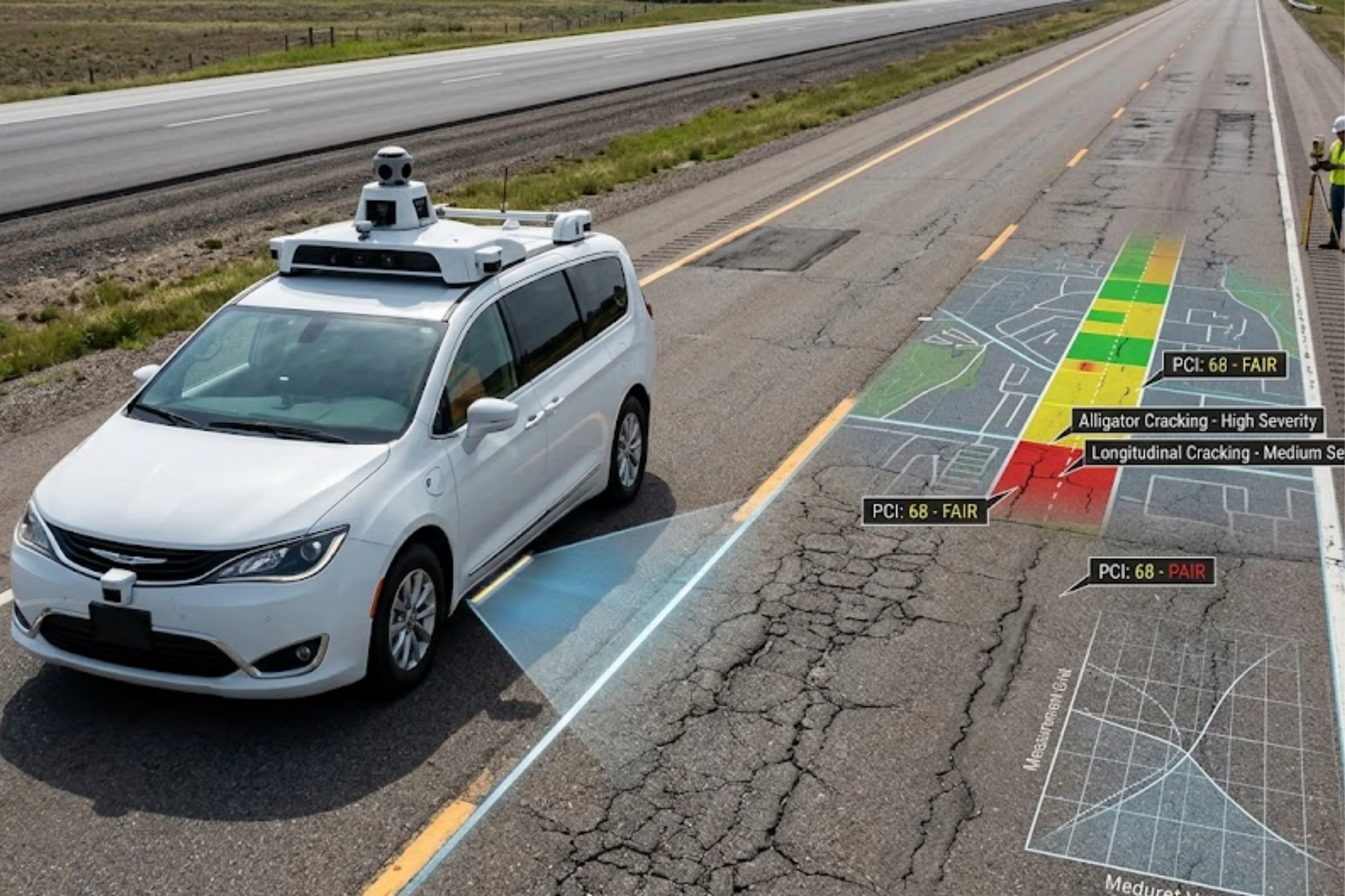
Modern standards emphasise continuous, automated monitoring to detect early-stage pavement distresses. Dubai uses LiDAR, laser profilers, and imaging systems to generate accurate digital twins of its road surfaces through the Pavement Condition Intelligence Agent.
2.2 Predictive Maintenance Through AI
Rather than waiting for cracks, potholes, or rutting to worsen, predictive models estimate deterioration patterns based on:
2.3 Integrated Road Asset Management
A unified platform through the Roadside Assets Inventory Agent is essential for organising:
This helps authorities prioritise interventions based on risk, condition, and lifecycle value.
2.4 Smart Surveying Using Dashcams & Digital Tools
Portable dashcam-based surveys complement high-end equipment, capturing frequent on-ground visuals at low cost. AI interprets these feeds through the Road Safety Audit Agent to detect anomalies in real time.
2.5 Traffic-Responsive Management
Integrating real-time traffic data enables dynamic responses to congestion, incidents, and special events, optimising both safety and efficiency.
2.6 Compliance with Dubai Standards
All systems align with RTA requirements, UAE road guidelines, and international best practices, ensuring regulatory compliance and interoperability.
These principles mirror global best practices, including guidelines similar to IRC methodologies for pavement health evaluation and highway asset preservation.
RoadVision AI operationalises these principles through automation, accuracy, and actionable insights using its integrated suite of AI agents:
3.1 AI-Driven Pavement Condition Surveys
The Pavement Condition Intelligence Agent uses advanced computer vision to identify:
Each distress is geo-tagged and severity-classified for immediate engineering review, enabling proactive intervention before failures occur.
3.2 Digital Twin-Based Road Safety Audits
High-resolution imagery and LiDAR data generate true-to-life digital twins of Dubai highways through the Roadside Assets Inventory Agent, enabling teams to:
3.3 Dashcam-Based Highway Surveys at Scale
Portable, fast-deploy dashcam systems allow frequent monitoring of the entire network. The Road Safety Audit Agent converts ordinary video footage into structured maintenance intelligence—ideal for day-to-day inspections between detailed surveys.
3.4 Predictive Analytics for Maintenance Planning
By integrating traffic patterns from the Traffic Analysis Agent, historical defects, material data, and environmental conditions, RoadVision AI predicts deterioration and supports targeted preventive maintenance that optimises budget allocation.
3.5 End-to-End Road Asset Management
From inventory updates to maintenance prioritisation, RoadVision AI maintains a complete, dynamic record aligned with Dubai's standards and international frameworks, ensuring:
3.6 Integration with RTA Systems
All outputs are formatted for seamless integration with existing RTA platforms, traffic management centres, and smart city initiatives.
Even with cutting-edge tools, several operational challenges persist:
4.1 Data Volume & Integration Complexity
LiDAR, video, IoT sensors, and AI systems produce massive datasets that require seamless integration and advanced cloud infrastructure for processing and storage.
AI Solution: Scalable cloud architecture and edge processing ensure efficient data handling without overwhelming systems.
4.2 Diverse Roadway Conditions
Dubai's highways range from dense urban corridors to desert-exposed routes, demanding adaptive models tuned to local environmental and traffic behaviours.
AI Solution: AI models trained on diverse local conditions maintain accuracy across all road types.
4.3 Transition From Legacy Procedures
Shifting from schedule-based maintenance to predictive models requires upskilling teams, updating SOPs, and aligning contractors with AI-led workflows.
AI Solution: Comprehensive training and user-friendly interfaces ensure successful adoption.
4.4 High Accuracy Expectations
Given Dubai's mobility reputation, tolerance for errors is minimal. Systems must meet exceptionally high standards of precision and reliability.
AI Solution: Rigorous validation and continuous model refinement ensure outputs meet required accuracy levels.
4.5 Environmental Challenges
High temperatures, sand, and humidity can affect sensor performance and data quality.
AI Solution: Robust hardware and algorithms designed for Middle Eastern conditions maintain performance year-round.
4.6 Rapid Network Expansion
New roads from ongoing development require continuous integration into monitoring systems.
AI Solution: Scalable deployment ensures new corridors are incorporated seamlessly as they open.
Despite these hurdles, Dubai demonstrates that "where innovation leads, efficiency follows" through platforms like RoadVision AI.
Dubai's highways are entering a new era—powered by AI-driven monitoring, predictive maintenance, and advanced digital highway management. By integrating LiDAR surveys, AI-based inspections, and smart asset management systems through the Pavement Condition Intelligence Agent, Traffic Analysis Agent, Road Safety Audit Agent, and Roadside Assets Inventory Agent, the emirate strengthens safety, sustainability, and operational performance.
The platform's ability to:
transforms how Dubai approaches highway management at every level.
RoadVision AI amplifies this transformation with its AI-centric pavement surveys, digital twin road safety audits, dashcam-based scanning, and advanced analytics, ensuring:
As Dubai moves towards a fully intelligent road network under the Dubai 2040 Urban Master Plan, the message is clear: "smart roads build smart cities."
If your organisation aims to adopt similar innovations for highway monitoring and maintenance, book a demo with RoadVision AI today and explore how next-generation AI can redefine your highway infrastructure.
Q1: What is the difference between AI highway survey and dashcam based highway survey?
AI highway survey uses advanced sensors and predictive analytics for comprehensive data, while dashcam-based survey provides mobile, visual monitoring to complement broader inspections.
Q2: How much cost saving does a digital highway maintenance system deliver?
Automated and AI-based systems significantly reduce inspection costs and extend pavement life, leading to annual savings compared to manual survey methods.
Q3: How does road asset management Dubai benefit the transport sector?
It enables proactive planning, improves safety, reduces maintenance costs, and ensures compliance with Dubai’s smart infrastructure standards.

The Autonomous Road Engineer
AI-powered road condition monitoring, asset management, & infrastructure intelligence helping agencies move from reactive maintenance to predictive road management.


.webp)
.webp)