
With India’s expanding road infrastructure, the demand for precise and structured road inventory management has never been greater. The Indian Roads Congress (IRC) introduced IRC SP 21 to standardize and streamline road inventory surveys. But traditional manual survey methods are often time-consuming, error-prone, and costly. That's where modern technologies like AI-based road asset management tools come into play.
This blog explains the key provisions of IRC SP 21, its role in India’s road sector, and how AI-driven platforms like RoadVision AI are revolutionizing compliance and performance in road inventory inspection.
.jpg)
IRC SP 21 provides a systematic method for capturing every physical element along a roadway—from pavements and shoulders to signages, medians, drains, and roadside assets. Compliance with this guideline ensures:
In a country where infrastructure investments must be justified with clear data, IRC SP 21 isn't just a rulebook—it's the backbone of evidence-based road management.
IRC SP 21 is grounded in the following core principles:
2.1 Standardisation of Asset Records
A consistent format for documenting all roadway features to ensure comparability across cities, states, and contractors, enabling network-wide analysis and benchmarking.
2.2 Geo-Referenced Data Collection
Each road asset must be accurately mapped to its geographic location using GPS coordinates to support future audits, maintenance tracking, and integration with GIS systems.
2.3 Comprehensive Coverage
The guideline mandates capturing the full range of road elements, such as:
2.4 Integration with Asset Management Systems
Data must easily plug into decision-support platforms for budget planning, lifecycle analysis, and prioritisation of maintenance works.
2.5 Periodic Updating
Inventories must be maintained as living documents, updated regularly to reflect changes from construction, maintenance, and deterioration.
These principles were designed for clarity and accountability—but with AI, they come alive with speed and precision.
RoadVision AI brings these principles into practice with cutting-edge automation through the Roadside Assets Inventory Agent. Its AI-powered Road Inventory Inspection platform transforms traditional surveys into fast, accurate, compliance-ready outputs.
3.1 Automated, Real-Time Data Capture
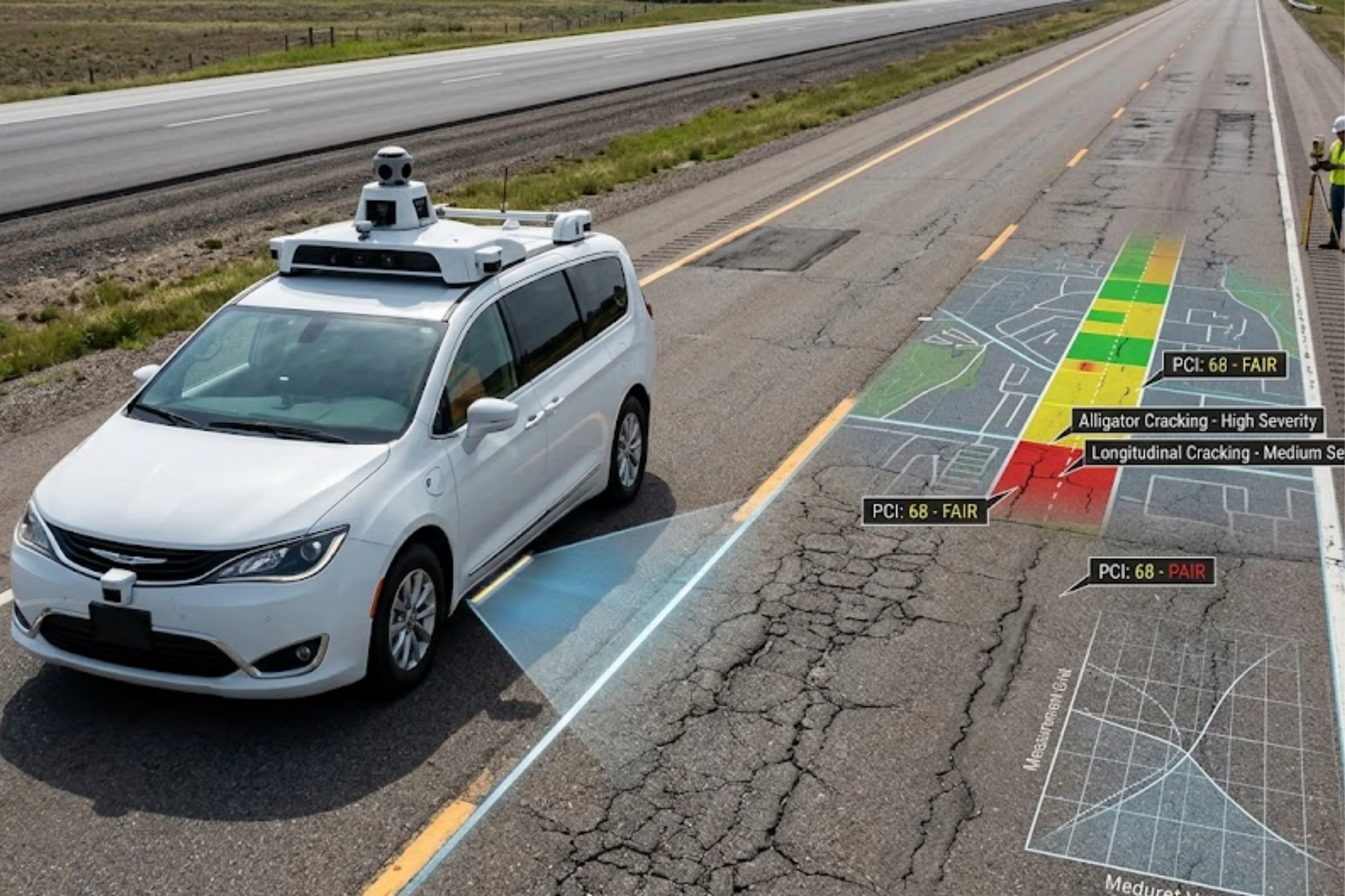
Instrumented vehicles, drones, and mobile mapping systems collect high-definition imagery, LiDAR, and GPS data during normal traffic flow—eliminating manual dependency and reducing survey time from months to days.
3.2 AI-Driven Object Detection and Classification
Computer vision models trained on millions of Indian road images identify and classify road features exactly as defined by IRC SP 21. This includes:
3.3 Geo-Tagged Asset Mapping
Every detected asset is automatically tagged with precise GPS coordinates, timestamps, and photographic evidence—creating a complete, verifiable digital record.
3.4 Standardised Reporting
Outputs are auto-generated in formats aligned with IRC SP 21 specifications, ensuring smooth departmental audits, approvals, and integration with existing asset management systems.
3.5 Integration with GIS and Digital Twins
RoadVision AI enables stakeholders to visualise their entire road network digitally through interactive maps and digital twins—supporting smarter decision-making across highway authorities, PWDs, and ULBs.
3.6 Integration with Pavement and Safety Data
The Pavement Condition Intelligence Agent and Road Safety Audit Agent complement inventory data with condition assessments and safety insights, creating a holistic view of corridor health.
In short, RoadVision AI takes the spirit of IRC SP 21—standardisation and accuracy—and delivers it at scale across India's vast road network.
Even with AI, road inventory management faces practical challenges:
4.1 Diverse Road Conditions Across India
Urban streets, rural roads, expressways, and hill roads present vastly different asset types and configurations—requiring adaptive AI models trained on diverse datasets.
4.2 Legacy Records and Data Gaps
Many agencies still rely on scattered, outdated, or incomplete asset records that must be reconciled with new digital inventories during transition.
4.3 Adoption Resistance
Transitioning from manual to AI-based workflows requires training, change management, and demonstrated ROI to build confidence among field staff.
4.4 Infrastructure for Large-Scale Digitalisation
Handling heavy datasets, cloud storage, and integration with government systems needs robust digital infrastructure and bandwidth.
4.5 Standardisation Across Jurisdictions
Different states and agencies may have local variations in asset classification that must be mapped to IRC SP 21 standards.
Yet, these challenges are transitional. As infrastructure digitalisation accelerates under programs like PM Gati Shakti and National Infrastructure Pipeline, AI adoption becomes not just feasible—but inevitable.
As the proverb says, "You can't stop the waves, but you can learn to surf." AI is the surfboard India's infrastructure sector now needs.
IRC SP 21 is no longer a compliance checkbox—it is the foundation for smart, accountable, and scalable road management. With the complexity and volume of India's road assets, manual surveys cannot keep pace. AI-based platforms bring speed, accuracy, consistency, and transparency to road inventory inspection.
RoadVision AI is pioneering this transformation by combining computer vision, digital twin technology, and automated analytics through the Roadside Assets Inventory Agent to deliver fully compliant, audit-ready inventory outputs. From smart cities to national highways, it empowers engineers and administrators to:
India's roads are evolving—its inventory systems must evolve too. The future belongs to those who embrace automation early. After all, "the early bird catches the worm," and in infrastructure, early adopters capture the efficiencies.
If your organisation is ready to modernise its road inventory management and achieve full IRC SP 21 compliance, book a demo with RoadVision AI today and discover how intelligent asset management can transform your approach to road network planning.
Q1. What is IRC SP 21 used for in road infrastructure?
IRC SP 21 is the Indian guideline for conducting road inventory surveys to ensure consistent, accurate recording of road assets and features for planning and maintenance.
Q2. Can AI surveys fully replace manual road inventory methods?
Yes, AI-based surveys provide faster, more accurate, and scalable alternatives while ensuring compliance with IRC SP 21.
Q3. Is RoadVision AI compliant with IRC codes like SP 21?
Absolutely. RoadVision AI is designed to generate road inventory reports and asset mapping fully aligned with IRC SP 21 and other national standards.
The Autonomous Road Engineer
AI-powered road condition monitoring, asset management, & infrastructure intelligence helping agencies move from reactive maintenance to predictive road management.


.webp)
.webp)