
Efficient drainage is one of the most critical factors in ensuring long-lasting pavement performance. Water infiltration, if not managed effectively, leads to structural damage, safety risks, and costly maintenance.
For highway drainage engineers, combining established standards with modern technologies like AI road inspection software is essential to building resilient infrastructure.
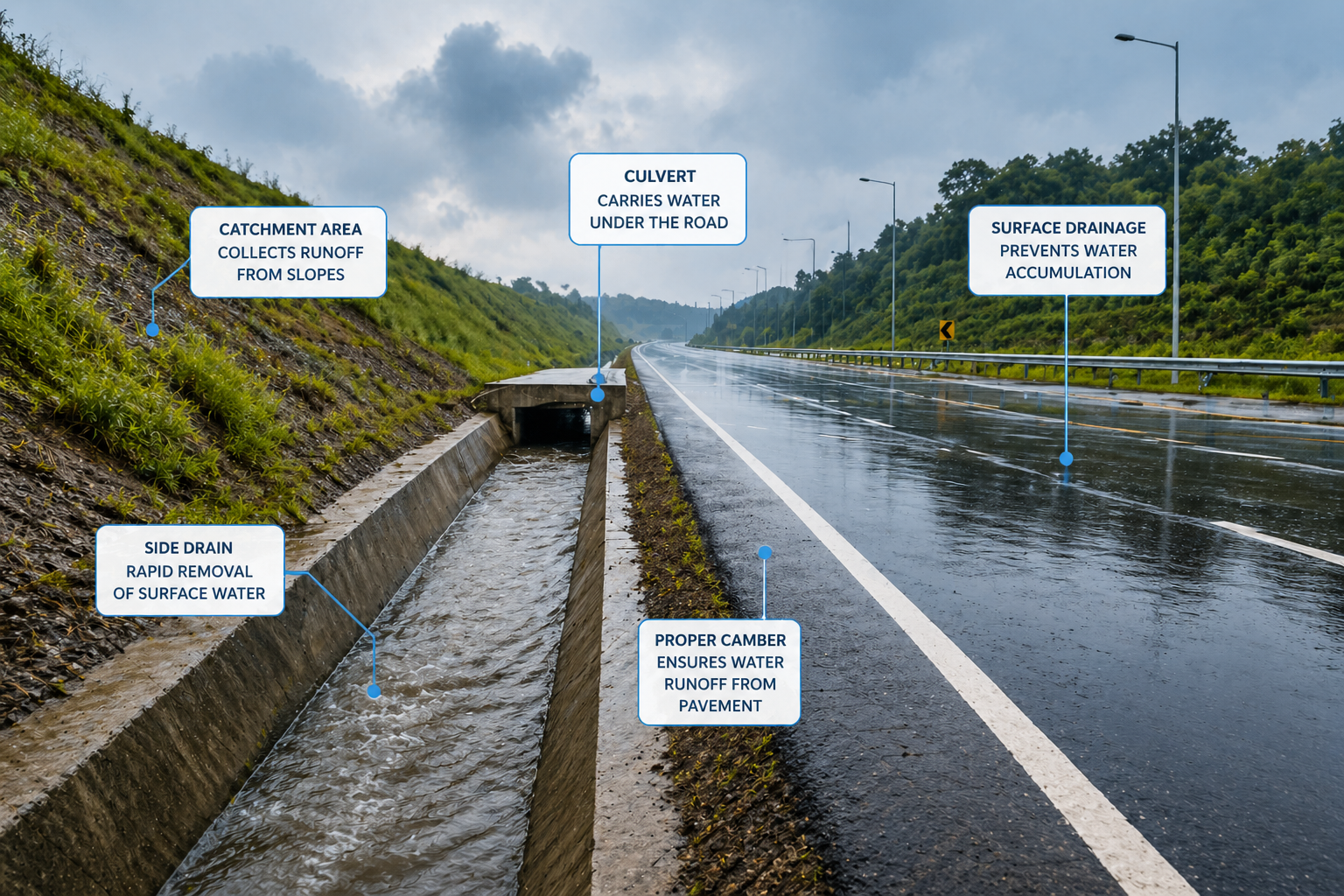
Water is the most destructive element for road infrastructure. Poor drainage leads to:
Both IRC:SP:42 and AASHTO HEC-22 emphasize rapid removal and controlled flow of water to protect pavement integrity.
IRC:SP:42 provides a structured approach to highway drainage design, covering both surface and subsurface systems.
Surface drainage ensures that water does not accumulate on the pavement.
Key aspects include:
The design must consider rainfall intensity, terrain, and soil characteristics to ensure effectiveness.
Subsurface drainage prevents water from entering pavement layers, which is a primary cause of failure.
It includes:
This layer is critical for maintaining structural stability over time.
Hydraulic design involves:
The objective is to ensure that drainage systems can handle extreme weather conditions.
AASHTO HEC-22 focuses on stormwater management, particularly in highway and urban drainage systems.
Efficient systems are designed to intercept runoff before it spreads across the pavement.
These include:
These systems improve water collection efficiency and reduce surface flow.
Drainage systems must be designed to handle peak discharge without causing overflow or backflow.
Gutter flow analysis ensures that water spread does not interfere with traffic safety.
Inlet spacing is determined based on:
Improper spacing can result in localized flooding and pavement damage.
Energy dissipation structures prevent erosion at drainage outlets and maintain embankment stability.
IRC:SP:42 focuses on practical highway drainage solutions suited to Indian conditions, while AASHTO HEC-22 provides detailed hydraulic modeling approaches, especially for urban stormwater systems.
IRC emphasizes subsurface drainage, whereas AASHTO prioritizes stormwater collection and conveyance systems.
Together, they offer a comprehensive framework for drainage design.
Even well-designed systems fail due to:
Traditional inspection methods often fail to detect these issues early.
Modern infrastructure requires smarter monitoring solutions. Technologies like AI drainage monitoring systems are enabling proactive maintenance.
Using computer vision and data analytics, AI can:
This reduces response time and prevents damage escalation.
With advanced analytics, flood risk prediction AI can:
This enables engineers to act before failures occur.
AI tools can detect:
Solutions powered by pavement defect detection AI improve accuracy and reduce manual effort.
Integration with geospatial systems allows:
Using smart road analytics platforms, engineers can make faster and more informed decisions.
To ensure durability and resilience:
The future of road infrastructure lies in combining engineering standards with intelligent technologies.
Adopting automated road condition monitoring allows engineers to:
With climate change increasing rainfall intensity, integrating AI is becoming essential.
Drainage standards like IRC:SP:42 and AASHTO HEC-22 provide a strong foundation for designing effective drainage systems. However, real-world challenges demand continuous monitoring and proactive maintenance.
RoadVision AI is enabling this shift through Autonomous Road Engineers that use vision intelligence and real-time analytics to monitor drainage, detect risks, and provide actionable insights.
From identifying waterlogging to assessing pavement damage, it ensures roads remain resilient even under extreme conditions.
Book a demo with RoadVision AI today and take the next step toward smarter, flood-resilient highways.
Highway drainage is critical because water is one of the primary causes of pavement deterioration. Poor drainage can weaken subgrade layers, cause potholes, rutting, shoulder erosion, and reduce road safety through waterlogging and skid risks. Standards like IRC:SP:42 and AASHTO HEC-22 help engineers design effective drainage systems that improve pavement lifespan and structural stability.
IRC:SP:42 focuses on highway drainage practices suited to Indian road conditions, emphasizing surface and subsurface drainage for pavement protection. AASHTO HEC-22 focuses more on hydraulic analysis and stormwater management for highways and urban roads, including inlet design, gutter flow, and stormwater conveyance systems. Together, they provide comprehensive guidance for flood-resilient road infrastructure.
AI-powered drainage monitoring systems use computer vision, GIS mapping, and predictive analytics to identify waterlogging, blocked drains, pavement damage, and erosion risks in real time. AI can also support flood risk prediction, automate defect detection, and prioritize maintenance activities, helping highway agencies prevent drainage-related pavement failures before they become severe.

The Autonomous Road Engineer
AI-powered road condition monitoring, asset management, & infrastructure intelligence helping agencies move from reactive maintenance to predictive road management.


.webp)
.webp)
.webp)