
Road safety remains a critical concern across India’s highway network, with certain locations consistently reporting higher crash frequency and severity. To systematically identify and prioritize such locations, IRC:131-2022 introduces a structured methodology centered around the Blackspot Severity Index.
For NHAI Safety Auditors and State Transport Departments, understanding and applying this methodology is essential for data-driven decision-making and effective safety interventions. This guide breaks down the concept, calculation, and practical application of the Blackspot Severity Index in a clear, step-by-step manner.
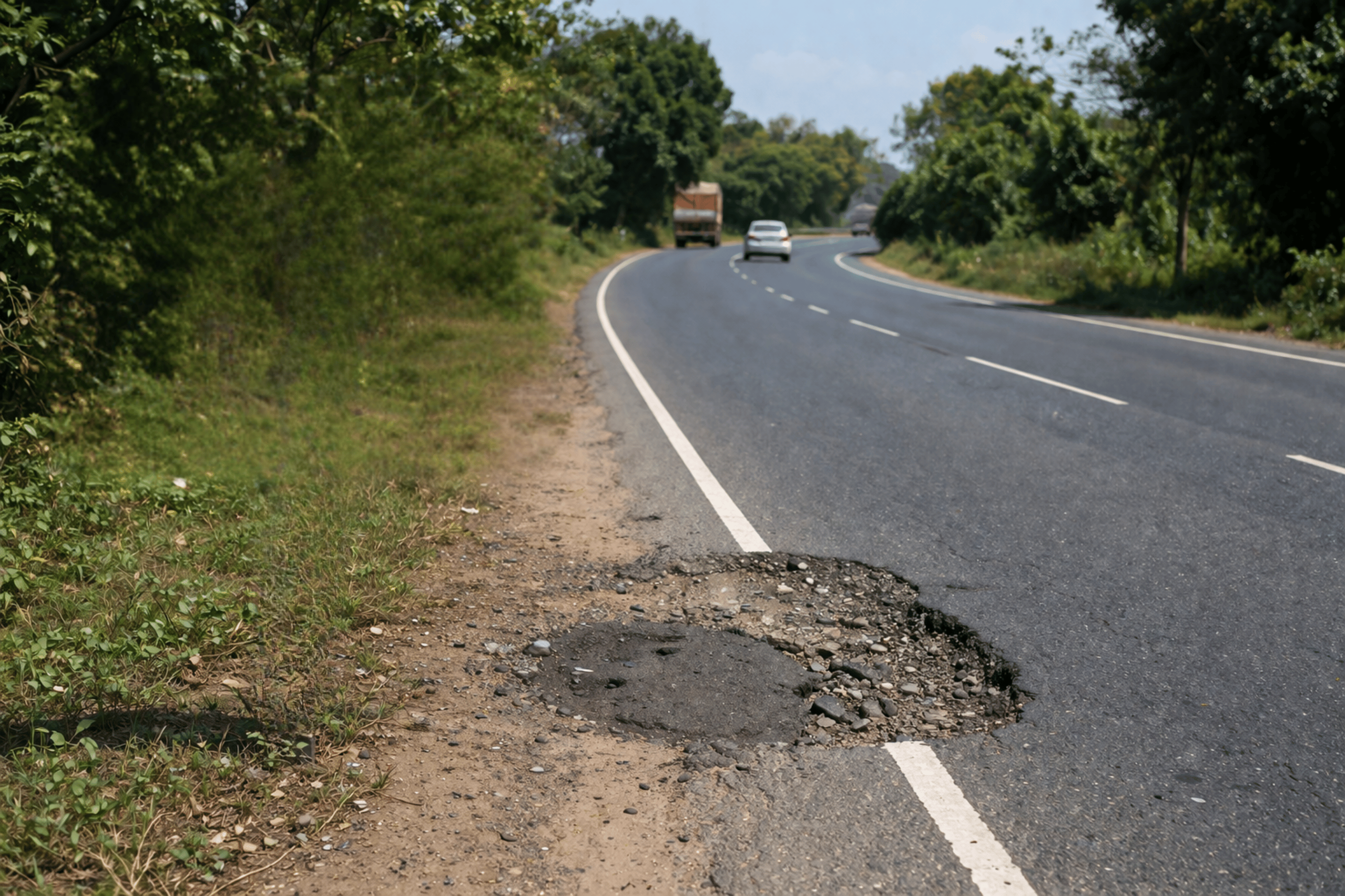
The Blackspot Severity Index is a quantitative measure used to rank hazardous road locations based not just on crash frequency, but also on the severity of those crashes.
Unlike traditional approaches, this method assigns weighted importance to different crash outcomes, ensuring that fatal and serious injury crashes are prioritized over minor incidents.
This enables more accurate AI-driven risk assessment and better allocation of safety improvement resources.
The IRC:131 framework standardizes how blackspots are:
It ensures consistency across agencies and supports advanced approaches like predictive crash analytics and AI-powered traffic analysis.
The Severity Index is calculated using weighted values assigned to different types of crashes:
Each category is assigned a severity weight, reflecting its impact on road safety.
This structured weighting system strengthens infrastructure risk modeling and improves prioritization accuracy.
Collect crash data for a specific road stretch or intersection over a defined period (typically 3 years). The dataset should include:
Accurate data collection is critical for effective AI-based road safety implementation.
Each crash type is assigned a predefined weight based on severity. Typically:
This ensures that high-impact incidents influence the index more significantly.
The Blackspot Severity Index (SI) is calculated using a weighted sum:
SI = (W₁ × Fatal Crashes) + (W₂ × Grievous Injuries) + (W₃ × Minor Injuries) + (W₄ × Non-Injury Crashes)
Where:
This formula enables structured traffic risk scoring AI applications.
Once calculated, the Severity Index values are:
Higher SI values indicate more dangerous locations requiring urgent attention.
Locations exceeding predefined thresholds are classified as blackspots. These are then shortlisted for:
This process aligns well with automated road inspection and digital safety workflows.
While IRC:131 provides a strong methodological foundation, integrating AI significantly enhances its effectiveness.
Using computer vision road analysis, crash-related and road condition data can be automatically extracted from video feeds.
Predictive crash analytics enables identification of potential blackspots even before sufficient crash data accumulates.
With smart road monitoring systems, highways can be continuously assessed rather than relying on periodic audits.
AI enables large-scale deployment across entire highway networks, improving efficiency and consistency.
Use Severity Index to identify high-risk corridors across state or national highways.
Incorporate SI calculations into DPRs and safety audits for targeted improvements.
Support evidence-based decision-making for funding and intervention prioritization.
The IRC:131 framework provides a structured and reliable approach to Blackspot Severity Index calculation, enabling highway engineers to prioritize safety interventions effectively. However, the real transformation lies in combining this methodology with AI-based road safety solutions.
Platforms like RoadVision AI are enabling this shift by bringing together vision intelligence and language intelligence to automate road condition monitoring, safety analysis, and blackspot detection at scale. With capabilities such as computer vision road analysis, predictive crash analytics, and AI-driven risk assessment, they empower agencies to move from manual audits to continuous, data-driven safety management.
As India’s highway network continues to expand, integrating intelligent systems with established standards like IRC:131 will be critical to achieving safer, more resilient infrastructure.
Ready to modernize your Blackspot Severity Index workflows with AI-based road safety?
Book a demo with RoadVision AI today and transform how you identify, analyze, and eliminate high-risk locations across your highway network.
The Blackspot Severity Index helps highway authorities identify and prioritize accident-prone locations based on both crash frequency and crash severity. Unlike traditional methods that focus only on the number of accidents, IRC:131 gives higher weight to fatal and grievous injury crashes, enabling more effective safety planning and resource allocation.
AI enhances blackspot analysis by automating crash data processing, road condition monitoring, and risk detection using computer vision and predictive analytics. AI-powered systems can continuously monitor highways, identify emerging high-risk zones, and support faster, more accurate decision-making compared to manual audits.
NHAI safety auditors, state transport departments, highway engineers, road safety consultants, and infrastructure agencies can all benefit from AI-driven blackspot analysis. These systems improve network-level screening, support safety audits, optimize intervention planning, and enable scalable road safety management across large highway networks.
The Autonomous Road Engineer
AI-powered road condition monitoring, asset management, & infrastructure intelligence helping agencies move from reactive maintenance to predictive road management.


.webp)
.webp)
.webp)