
As Saudi Arabia accelerates its infrastructure expansion, construction activity across highways, expressways, and urban corridors has reached unprecedented levels. With this rapid growth comes a critical challenge: ensuring safety in live construction zones, where high-speed traffic, heavy machinery, and shifting lane geometries intersect. In this environment, even a moment of inattentiveness can lead to severe incidents—a reminder that "an ounce of prevention is worth a pound of cure."
This is why road asset management in Saudi Arabia increasingly relies on AI-powered work zone safety monitoring. These intelligent systems provide real-time hazard detection, automated alerts, and predictive safety insights that help keep both workers and road users safe.
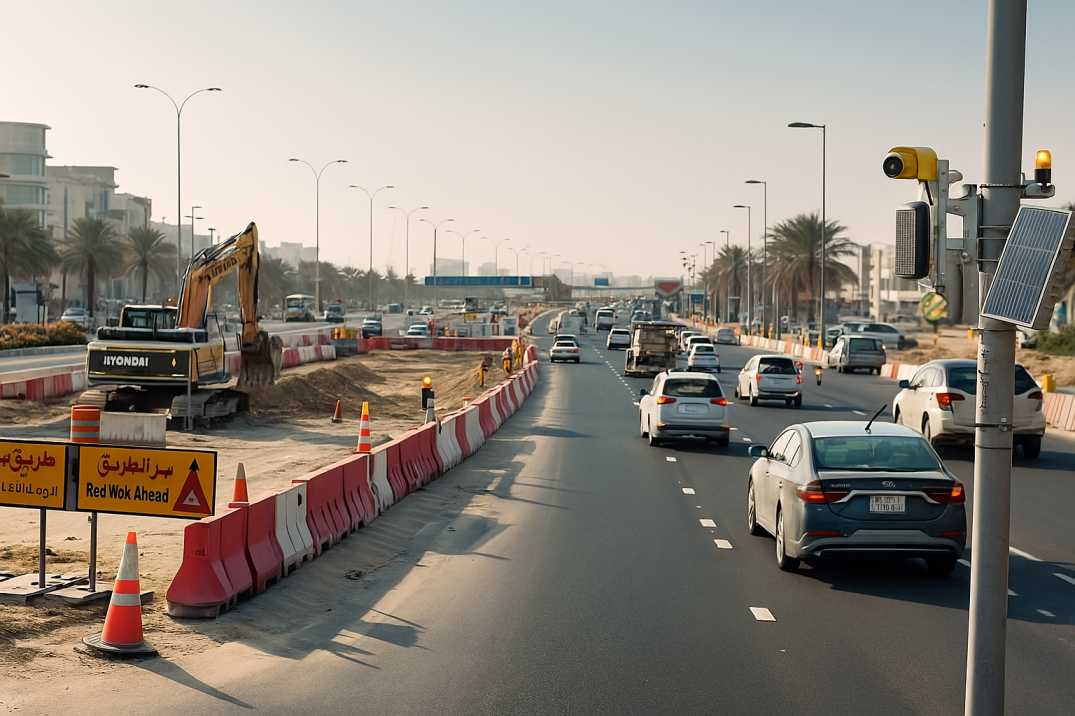
Work zones in Saudi Arabia often operate under demanding conditions:
Traditional monitoring methods—manual supervision, periodic inspections, or CCTV alone—are no longer sufficient. Key risks persist, including:
AI fills these gaps by providing continuous, automated, and data-driven oversight across the full work zone footprint.
2.1 Traffic-Related Hazards
2.2 Worker-Related Hazards
2.3 Infrastructure Hazards
Although Saudi Arabia follows its own standards and the MOT & Transport General Authority guidelines, many principles from the Indian Roads Congress (IRC) align closely with global work zone safety best practices. These principles emphasise:
3.1 Clear and Predictable Guidance
IRC guidelines stress visibility and clarity of temporary traffic control—cones, barricades, signs, tapers, and lane shifts must be highly visible and consistently maintained. The Road Safety Audit Agent verifies compliance.
3.2 Worker and Equipment Separation
Physical and procedural measures must reduce worker exposure to moving traffic and equipment, including buffer zones and clearly demarcated work areas.
3.3 Continuous Monitoring
IRC principles recognise the importance of regular checks on temporary setups, ensuring any deviation is quickly corrected.
3.4 Safe and Efficient Traffic Flow
Temporary alignments must minimize conflict points and ensure drivers can navigate the zone without confusion.
3.5 Emergency Preparedness
Work zones must have plans for emergency vehicle access and incident response.
AI-enabled monitoring through the Road Safety Audit Agent naturally strengthens all these principles by offering precision, automation, and real-time situational awareness.
4.1 Temporary Traffic Control
4.2 Worker Protection
4.3 Speed Management
4.4 Night Operations
RoadVision AI delivers a comprehensive AI-driven work zone safety solution through its integrated suite of AI agents, enhancing compliance and operational safety across Saudi Arabia's road projects.
5.1 Work Zone Hazard Detection
Using advanced computer vision through the Road Safety Audit Agent, the system detects:
This aligns with IRC/MOT principles of continuous monitoring and maintaining safe work areas.
5.2 Automated Incident Detection
The Road Safety Audit Agent instantly identifies:
Alerts are sent in real time to supervisors, enabling immediate intervention.
5.3 Predictive Safety Analytics
By analysing historical behaviours and real-time conditions through the Traffic Analysis Agent, RoadVision AI forecasts:
It allows teams to adjust signage, barriers, or work patterns proactively—heading trouble off at the pass.
5.4 Integration with Road Asset Management
RoadVision AI feeds into broader asset management functions through the Pavement Condition Intelligence Agent and Roadside Assets Inventory Agent:
This synergy ensures projects are not only safer but also operationally efficient and compliant.
5.5 PPE Compliance Monitoring
AI detects whether workers are wearing:
5.6 Equipment Proximity Alerts
AI monitors:
5.7 Traffic Queue Monitoring
The Traffic Analysis Agent detects:
6.1 Major Project Corridors
6.2 Environmental Challenges
6.3 Regulatory Framework
While AI offers transformative benefits, certain challenges must be considered:
7.1 Initial Setup Costs
Deploying high-quality sensors, cameras, and communication networks requires upfront investment.
AI Solution: Phased implementation demonstrates ROI through incident reduction.
7.2 Environmental Conditions
Dust, extreme heat, and night-time visibility can affect standard cameras—requiring rugged, purpose-built systems.
AI Solution: Robust hardware and adaptive algorithms maintain accuracy.
7.3 Data Governance & Privacy
AI video analytics must comply with privacy, data-handling, and cybersecurity requirements.
AI Solution: Anonymized data processing and secure storage protocols.
7.4 Change Management
Teams must adapt workflows to incorporate digital alerts, dashboards, and automated reporting.
AI Solution: Comprehensive training programs ensure successful adoption.
7.5 Technological Integration
Integrating AI platforms with existing traffic management and asset systems requires structured implementation planning.
AI Solution: Flexible APIs enable gradual integration without disrupting current operations.
7.6 Power and Connectivity
Remote work zones may lack reliable power and connectivity for real-time monitoring.
AI Solution: Solar-powered sensors and offline-first data capture.
Despite these challenges, the benefits—reduced accidents, higher compliance, and smoother project delivery—make AI indispensable for Saudi Arabia's evolving transport sector.
8.1 For Workers
8.2 For Contractors
8.3 For Road Users
8.4 For Project Owners
AI in work zone safety monitoring is reshaping how Saudi Arabia protects workers and motorists during construction. With real-time detection through the Road Safety Audit Agent, automated alerts, predictive analytics, and seamless integration into road asset management, modern work zones become far safer and more efficient. As the saying goes, "Safety is not expensive—it's priceless."
The platform's ability to:
transforms how work zone safety is approached across Saudi Arabia's expanding infrastructure network.
RoadVision AI stands at the forefront of this transformation. Through cutting-edge AI in road construction, digital twin modelling, automated audits, and traffic analytics, the platform ensures projects across Saudi Arabia remain compliant, efficient, and resilient. From pothole detection through the Pavement Condition Intelligence Agent to work-zone monitoring via the Road Safety Audit Agent, it supports end-to-end lifecycle management guided by global standards—and fully aligned with regional regulatory requirements.
If your organisation is ready to modernise work zone safety and unlock data-driven operational excellence, book a demo with RoadVision AI today and discover how intelligent monitoring can safeguard your next infrastructure project.
1. Can AI prevent work-zone accidents in real time?
Yes, AI detects hazards instantly and sends alerts before they escalate, helping prevent collisions and injuries.
2. Is AI monitoring suitable for high-speed Saudi highways?
Absolutely, AI is ideal for fast-moving corridors, providing real-time visibility and predictive alerts where traditional monitoring fails.
3. Does AI replace safety officers on site?
No, AI enhances their capabilities by providing continuous monitoring, data insights, and alerts that humans may miss.
The Autonomous Road Engineer
AI-powered road condition monitoring, asset management, & infrastructure intelligence helping agencies move from reactive maintenance to predictive road management.


.webp)
.webp)
.webp)