
Large street events are a hallmark of American culture—parades, music festivals, marathons, rallies, and sports celebrations bring communities together. Yet, when thousands flock to the streets, mobility can unravel quickly. A single bottleneck can snowball into gridlock, delayed emergency response, and unsafe pedestrian movement. In other words, when it rains, it pours.
Traditional approaches—manual traffic counts, static CCTV feeds, and on-ground personnel—aren't designed for the scale and unpredictability of modern urban events. To move from reaction to anticipation, U.S. cities are increasingly adopting AI-based traffic survey tools and digital traffic monitoring systems. These technologies help ensure order, safety, and regulatory compliance across complex event environments.
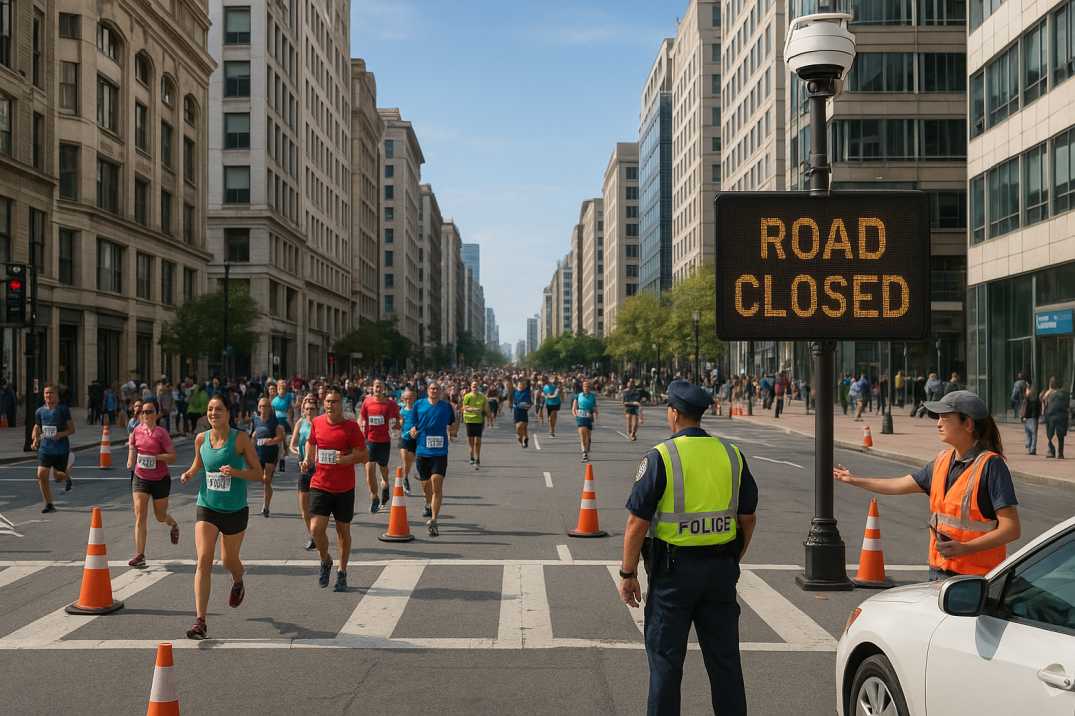
U.S. street events are dynamic. Pedestrian surges, impromptu route changes, and emergency vehicle access can shift mobility patterns instantly. The question is no longer if cities need real-time intelligence, but how quickly they can deploy it.
AI-enhanced traffic monitoring leverages smart cameras, IoT sensors, and machine learning to analyze:
This provides city officials with the agility needed to prevent issues before they spiral out of control—because in traffic operations, "a stitch in time saves nine."
While U.S. cities follow Federal Highway Administration (FHWA) guidelines, many platforms like RoadVision AI also integrate principles reflected in IRC methodologies (applicable in India) that emphasize structured, repeatable, data-driven road safety and condition assessment. Key principles relevant to both FHWA and IRC-style frameworks include:
2.1 Systematic Condition Assessment
Continuous, standardized evaluation of pavements, signage, and road geometry through the Pavement Condition Intelligence Agent ensures infrastructure can handle elevated event loads.
2.2 Evidence-Based Decision-Making
Policies and interventions are guided by measured data—not assumptions—through the Traffic Analysis Agent.
2.3 Risk Identification & Mitigation
Early detection of hazards such as damaged surfaces, unclear markings, or obstructed signs through the Road Safety Audit Agent reduces accident potential during high-density events.
2.4 Compliance and Accountability
Aligning with regulatory norms ensures cities meet federal and state mobility standards while maintaining legal safeguards.
2.5 Multi-Modal Integration
Event traffic management must consider all road users—vehicles, pedestrians, cyclists, and emergency services—with appropriate priority and safety measures.
2.6 Real-Time Adaptability
Traffic conditions during events change rapidly; systems must provide real-time data to support dynamic decision-making.
These shared principles underpin how high-quality event traffic management should function in a modern U.S. context.
RoadVision AI operationalizes these standards through a suite of advanced, AI-powered tools that transform raw data into actionable intelligence:
3.1 Predictive Congestion Management
The Traffic Analysis Agent uses machine learning models to forecast:
Officials can redirect flows, adjust signal timings, or open alternative routes proactively before gridlock develops.
3.2 Enhanced Public Safety Surveillance
Integrated video analytics through the Road Safety Audit Agent detect:
This aligns event mobility with FHWA safety expectations and enables rapid response to developing situations.
3.3 Automated Road Inventory & Asset Condition Tracking
Before any major event, authorities know the real-time status of:
This removes last-minute operational surprises and ensures road assets perform as expected when thousands of people depend on them.
3.4 Data-Driven Road Safety Audits
The Road Safety Audit Agent connects traffic data with pavement condition survey results to confirm that selected event routes can withstand increased loads without compromising public safety. This includes:
3.5 Emergency Vehicle Priority
AI systems detect emergency vehicles and:
3.6 Post-Event Analytics
After events, the platform provides:
Together, these practices create a digital ecosystem where cities can truly "measure twice, act once."
Without advanced monitoring, cities often struggle with:
4.1 Delayed Emergency Response
Unpredictable congestion during events can significantly slow emergency vehicles, with potentially life-threatening consequences.
4.2 Manual Traffic Control Limitations
Human controllers cannot monitor every intersection or predict developing congestion patterns, leading to reactive rather than proactive management.
4.3 Limited Visibility Across Large Event Footprints
Multiple simultaneous incidents across a wide area exceed human monitoring capacity, allowing problems to escalate unnoticed.
4.4 Inadequate Asset Readiness
Malfunctioning signals, worn-out pavements, or damaged signage discovered during events create safety risks and operational headaches.
4.5 Reactive Rather Than Proactive Control
Without predictive capabilities, cities respond to problems after they occur rather than preventing them—leading to inefficiencies and safety risks.
4.6 Data Fragmentation
Traffic, pavement, and asset data stored in separate systems prevents holistic understanding of event impacts.
4.7 Public Communication Gaps
Limited real-time information hinders communication with attendees about congestion, delays, and alternative routes.
In fast-moving event scenarios, traditional tools quickly reach their breaking point.
Urban centers such as New York City, Los Angeles, and Chicago are already experimenting with AI-based traffic survey and monitoring tools during high-density events. Their deployments demonstrate measurable improvements in:
These cities show that when AI and urban mobility work hand-in-hand, the results speak for themselves.
Street events symbolize the energy and unity of American communities—but they shouldn't come at the cost of safety or mobility. With AI-driven traffic surveys, digital monitoring, and robust road asset management through the Traffic Analysis Agent, Road Safety Audit Agent, and Pavement Condition Intelligence Agent, cities can shift from firefighting to foresight.
RoadVision AI stands at the forefront of this transformation. By blending advanced AI with compliance to FHWA and IRC-style best practices, it empowers cities to:
The platform's ability to integrate traffic, pavement, and asset data into a unified view provides city officials with the comprehensive intelligence needed to manage even the most complex events.
As the saying goes, "forewarned is forearmed." With AI-powered traffic monitoring, U.S. cities can ensure that celebrations remain joyous occasions rather than logistical nightmares.
If your city aims to deliver safer, smarter, and more efficient event experiences, book a demo with RoadVision AI today and discover how AI traffic monitoring can transform your approach to event management.
Q1. How does AI traffic monitoring improve safety during U.S. events?
AI provides real-time alerts, predictive analysis, and pedestrian safety insights that align with U.S. traffic safety regulations.
Q2. Can AI help reduce traffic congestion in large events?
Yes, digital traffic monitoring systems predict congestion and help authorities reroute vehicles efficiently.
Q3. How does road asset management support event planning?
By using road inventory inspection and pavement condition survey, cities ensure their roads and assets are event-ready and safe.
The Autonomous Road Engineer
AI-powered road condition monitoring, asset management, & infrastructure intelligence helping agencies move from reactive maintenance to predictive road management.


.webp)
.webp)
.webp)