
Traffic fatalities remain one of the most pressing public safety challenges in the United States. Despite improvements in vehicle technology and enforcement strategies, thousands of lives are still lost each year due to roadway conditions, design gaps, and preventable infrastructure failures. Reports from the Federal Highway Administration (FHWA) and National Highway Traffic Safety Administration consistently highlight how roadway design, asset conditions, and traffic engineering play a major role in crash frequency and severity.
In this context, digital road safety audits USA and AI-driven roadway assessment tools have emerged as transformative solutions—enabling agencies to detect risks early, streamline audits, and build safer road corridors. As the saying goes, "An ounce of prevention is worth a pound of cure," and nowhere is this truer than in transportation safety.
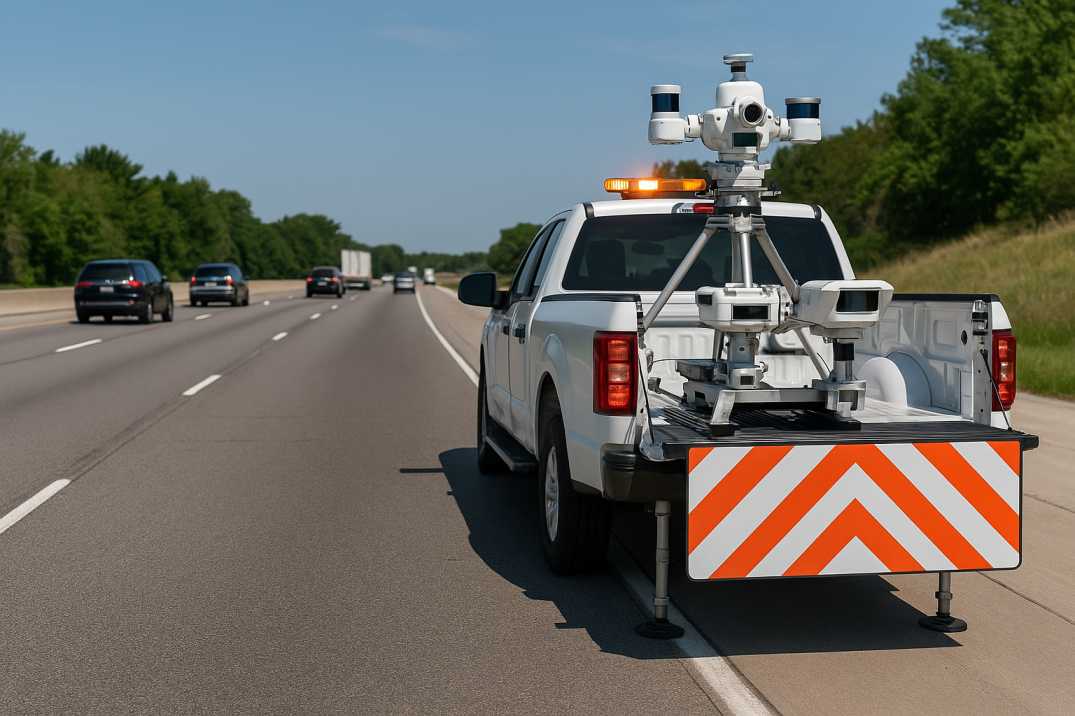
Traditional road safety audits relied heavily on manual site visits, subjective observations, and lengthy documentation processes. While effective in the past, these methods are insufficient for today's vast, complex, and rapidly changing U.S. roadway network.
Digital road safety audits matter because they:
With AI, high-definition imagery, LiDAR, and predictive analytics, agencies can move from reactive safety improvements to proactive crash prevention.
Although the U.S. follows FHWA and AASHTO standards, global best practices—especially from the Indian Roads Congress (IRC)—offer additional structured approaches that complement U.S. guidelines. Key principles relevant to digital safety audits include:
2.1 Systematic Hazard Identification
Issues should be detected early across planning, design, construction, and operations—not just after crashes occur. The Road Safety Audit Agent enables this systematic approach.
2.2 Evidence-Based Decision Making
Data—not assumptions—should guide safety treatments. AI provides objective evidence that withstands scrutiny and supports targeted interventions.
2.3 Consideration for All Road Users
Audits must evaluate safety for motorists, pedestrians, cyclists, heavy vehicles, and vulnerable groups—a principle central to both IRC guidance and U.S. Safe System approaches.
2.4 Lifecycle Asset Management
Roadway elements must be monitored across their lifespan to prevent failures that contribute to crashes. The Pavement Condition Intelligence Agent and Roadside Assets Inventory Agent enable this continuous monitoring.
2.5 Standardisation and Repeatability
Digital audit tools ensure every corridor is evaluated with consistent criteria, eliminating the variability inherent in manual inspections.
2.6 Integration with Safety Performance Functions
Modern safety management relies on predictive models that estimate crash potential—AI enhances these models with real-world data on roadway conditions.
These principles align strongly with the U.S.'s Vision Zero and Safe System approaches, reinforcing the need for precision, predictability, and accountability in safety programs.
RoadVision AI operationalises these global and U.S. standards through advanced computer vision, artificial intelligence, and digital twin technologies. Here's how the platform's integrated suite of AI agents transforms road safety audits:
3.1 AI-Powered Hazard Detection
The Road Safety Audit Agent automatically identifies:
This aligns with both FHWA safety criteria and IRC's risk-based evaluation methods, providing objective evidence for every identified hazard.
3.2 3D LiDAR Mapping for Design and Safety Validation
LiDAR-based road geometry modelling helps agencies:
This is especially useful for highways, rural roads, and high-speed corridors where geometry plays a critical role in crash causation.
3.3 Integrated Road Inventory + Safety Audits
By merging digital inventory inspection with safety assessments, the Roadside Assets Inventory Agent supports:
In other words, agencies get one unified source of truth—no more scattered spreadsheets or inconsistent field notes across different departments.
3.4 Predictive Analytics for Crash Prevention
Machine learning models in the Traffic Analysis Agent assess:
This enables proactive interventions before crashes occur, supporting federal Vision Zero goals and HSIP requirements for data-driven safety improvements.
3.5 Multi-Modal Safety Assessment
AI systems capture interactions between all road users:
3.6 Before-and-After Studies
The platform enables objective evaluation of safety improvements by comparing pre- and post-treatment conditions, providing:
4.1 Large and Diverse Roadway Networks
Challenge: The U.S. has over 4 million miles of roads, making comprehensive manual audits impossible.
Solution: High-speed mobile scanning with RoadVision AI covers networks quickly and consistently, capturing data at traffic speeds without disrupting travel.
4.2 Workforce Limitations
Challenge: Manual audits are labor-intensive and require specialized expertise that is increasingly scarce.
Solution: AI automates detection, classification, and reporting—freeing skilled staff for analysis and decision-making rather than data collection.
4.3 Data Overload
Challenge: Agencies often struggle with large datasets from modern survey technologies.
Solution: RoadVision AI provides intuitive dashboards and structured audit outputs that highlight critical findings rather than overwhelming users with raw data.
4.4 Integration with Existing Systems
Challenge: Legacy asset databases and safety management systems can be rigid and difficult to update.
Solution: RoadVision AI ensures compatibility with DOT GIS, Pavement Management Systems (PMS), and Transportation Asset Management Systems (TAMS) through flexible export formats and APIs.
4.5 Standardisation Across Jurisdictions
Challenge: Different states and agencies use varying safety assessment protocols.
Solution: The platform supports configurable outputs mapped to specific state requirements while maintaining core consistency with FHWA guidance.
4.6 Funding and Procurement Cycles
Challenge: Technology adoption must align with multi-year funding and procurement cycles.
Solution: Flexible deployment options, including pilot programs and phased implementation, enable agencies to adopt AI capabilities within existing budget constraints.
By addressing these challenges, agencies transition smoothly into modern, digital safety management without disruption to ongoing operations.
Digital road safety audits represent a major leap forward in reducing traffic fatalities in the United States. Through AI-driven detection, LiDAR mapping, digital inventory integration, and predictive analytics, agencies can spot dangers early, streamline maintenance, and ultimately save lives.
RoadVision AI is at the forefront of this movement—combining U.S. regulatory compliance with global best practices, including IRC-based methodologies. The platform empowers engineers, planners, and transportation leaders to:
Through the integrated capabilities of the Road Safety Audit Agent, Pavement Condition Intelligence Agent, Roadside Assets Inventory Agent, and Traffic Analysis Agent, RoadVision AI delivers a comprehensive ecosystem for modern road safety management.
As the saying goes, "The road to safety is always under construction." With AI and digital audits, the nation is far better equipped to build safer roads—today and for generations to come. Every mile inspected, every hazard identified, and every crash prevented brings us closer to the ultimate goal: zero fatalities on America's roadways.
If your agency is ready to transform road safety management with AI-powered digital audits, book a demo with RoadVision AI today and discover how our platform can help you save lives through smarter, faster, and more comprehensive safety assessments.
The adoption of digital road safety audits USA is key to reducing traffic fatalities nationwide. By integrating AI road safety inspection, road inventory surveys, and predictive analytics, transportation agencies can proactively identify risks, improve road conditions, and save lives.
RoadVision AI is transforming infrastructure development and maintenance by harnessing AI in roads to enhance safety and streamline road management. Using advanced roads AI technology, the platform enables early detection of potholes, cracks, and surface defects through precise pavement surveys, ensuring timely maintenance and optimal road conditions. Committed to building smarter, safer, and more sustainable roads, RoadVision AI aligns with IRC Codes and also complies with U.S. road regulations and standards, empowering engineers and stakeholders with data-driven insights that cut costs, reduce risks, and enhance the overall transportation experience.
Book a personalized consultation today to discover how RoadVision AI can support your safety initiatives. Book a demo with us.
Q1. What is a digital road safety audit in the USA?
A digital road safety audit is a technology-driven process that identifies roadway hazards using AI and high-resolution data analysis.
Q2. How does AI improve road safety audits USA?
AI enhances accuracy, detects risks earlier, and supports better infrastructure planning compared to manual audits.
Q3. Are road safety audits mandatory in the USA?
While not always mandatory, FHWA recommends safety audits for all major road projects to minimize crash risks.

The Autonomous Road Engineer
AI-powered road condition monitoring, asset management, & infrastructure intelligence helping agencies move from reactive maintenance to predictive road management.


.webp)
.webp)
.webp)