
Construction sites are among the most complex and high-risk work environments. Heavy machinery, dynamic ground conditions, multiple subcontractors, elevated work zones, and time-bound activities mean hazards can emerge "in the blink of an eye." Traditional safety inspections—manual walk-throughs, paper checklists, and episodic audits—are no longer enough for today's high-velocity projects.
In an industry where one unsafe act can topple an entire operation like a house of cards, the need for intelligent, real-time safety oversight has never been greater. This is where AI-based construction monitoring steps in, turning safety into a predictive, data-driven, and continuous practice rather than a reactive one.
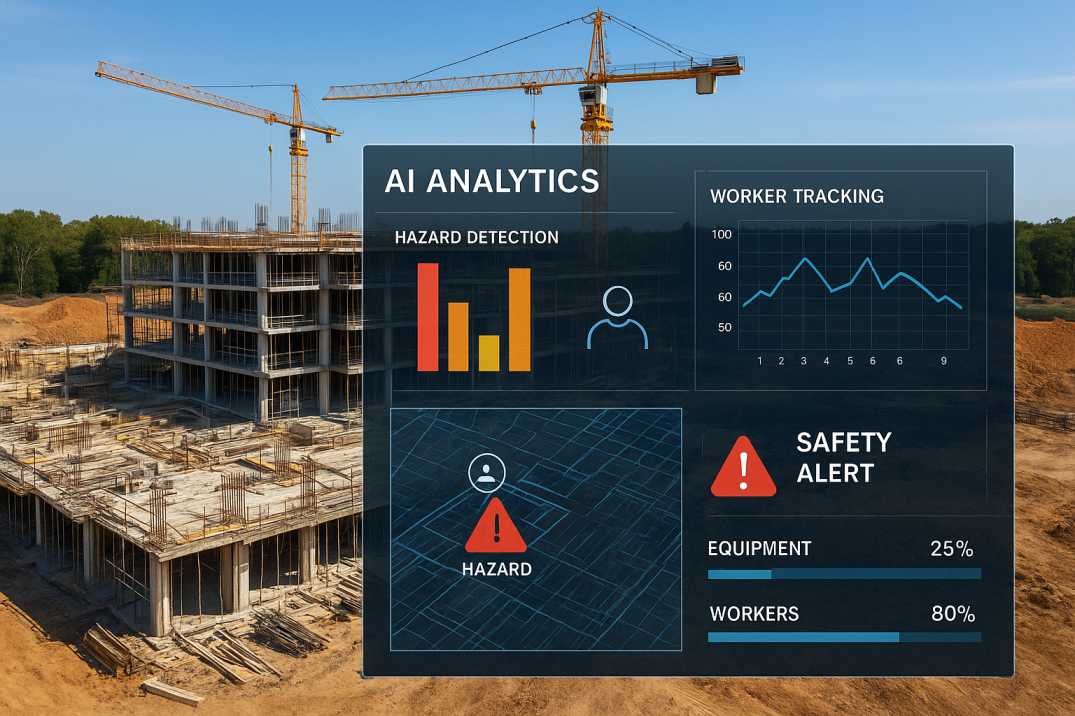
Construction environments change hour by hour—new scaffolding goes up, excavation zones shift, materials are offloaded, and teams rotate across tasks. This constant flux makes traditional safety supervision vulnerable to blind spots.
Key factors that demand 24/7 AI-powered oversight:
In short: "When the stakes are high, you can't leave safety to chance."
AI-based monitoring through the Road Safety Audit Agent ensures no hazardous condition slips through the cracks, offering visibility that manual systems simply cannot match.
2.1 Falls from Height
2.2 Struck-by Hazards
2.3 Caught-in/Between Hazards
2.4 Electrical Hazards
2.5 Health Hazards
Although the Indian Roads Congress (IRC) primarily governs road and highway projects, its core principles—risk minimisation, worker protection, site discipline, compliance monitoring, and hazard control—extend naturally to construction safety.
Relevant IRC-aligned principles include:
3.1 Continuous Monitoring of High-Risk Zones
IRC guidelines emphasise identifying black spots, unsafe work fronts, and conflict points. AI systems through the Road Safety Audit Agent replicate this by automatically scanning such areas in real time.
3.2 Compliance with PPE and Workforce Safety Norms
Ensuring helmets, reflective jackets, gloves, and boots are worn as mandated aligns with IRC safety codes for construction personnel.
3.3 Safe Movement of Equipment and Vehicles
IRC stresses safe circulation paths, barricading, and signage—areas where AI can detect inconsistencies or risks instantly.
3.4 Documentation and Evidence-Based Safety
IRC requires thorough record-keeping for safety audits, inspections, and incident analysis. AI automates this using time-stamped video, sensor data, and alerts.
3.5 Emergency Preparedness
IRC emphasizes emergency response planning, which AI supports through rapid incident detection and notification.
By grounding AI safety frameworks in IRC principles, organisations maintain both regulatory compliance and operational discipline.
RoadVision AI brings these IRC-driven principles to life through a suite of advanced, automated safety technologies via its integrated suite of AI agents. Here's how:
Using computer vision models through the Road Safety Audit Agent, RoadVision AI identifies:
Instant alerts help site teams act before small issues snowball into major accidents.
RoadVision AI detects whether workers are wearing:
This eliminates manual checking and ensures compliance across shifts and subcontractors.
Drones integrated with RoadVision's digital monitoring system through the Pavement Condition Intelligence Agent:
This capability is particularly valuable for linear projects like highways, metros, and bridges.
Using smart helmets and vests, RoadVision AI can track:
When readings exceed safe thresholds, supervisors are alerted immediately for intervention.
Machine learning models through the Traffic Analysis Agent forecast risks based on:
It's the digital version of the proverb "A stitch in time saves nine."
Decision-makers get a consolidated view of:
This enables proactive decision-making and faster emergency response.
AI creates virtual safety zones for:
Any worker entering restricted zones triggers immediate alerts.
5.1 Leading Indicators
5.2 Lagging Indicators
5.3 Behavioural Metrics
Despite its transformative benefits, the path to AI adoption is not without hurdles:
6.1 Resistance to Technological Change
Some workers may perceive AI as surveillance rather than support, creating trust issues.
AI Solution: Clear communication about safety benefits and privacy protections builds acceptance.
6.2 Connectivity Across Remote Sites
Large or remote construction zones may pose bandwidth challenges for real-time monitoring.
AI Solution: Edge processing with local storage ensures functionality without constant connectivity.
6.3 Integration with Existing Workflows
Synchronising AI systems with legacy safety processes takes careful planning and phased implementation.
AI Solution: Flexible integration through RoadVision AI enables gradual adoption.
6.4 Data Privacy and Security
Video and behavioural data must be securely managed to maintain trust and comply with regulations.
AI Solution: Anonymized data processing and role-based access controls protect privacy.
6.5 Training and Skill Development
Teams need to understand how to interpret alerts, analytics, and dashboards effectively.
AI Solution: Comprehensive training programs ensure successful adoption.
6.6 False Alarms
AI systems must balance sensitivity and specificity to avoid alert fatigue.
AI Solution: Continuous model refinement reduces false positives.
However, with proper change management and training through RoadVision AI, these challenges can be overcome—leading to safer, more productive worksites.
7.1 For Workers
7.2 For Project Owners
7.3 For Contractors
AI is rewriting the rulebook for construction safety. By shifting from reactive hazard response to predictive, continuous risk management through the Road Safety Audit Agent, AI makes job sites safer, smarter, and more compliant. As the saying goes, "Forewarned is forearmed." With AI-based systems, hazards are identified long before they can cause harm.
The platform's ability to:
transforms how worker safety is approached across construction sites of all sizes.
RoadVision AI is at the forefront of this transformation, offering:
Whether you're supervising a mega highway project, a metro corridor, or an urban construction site, RoadVision AI empowers engineers and owners to protect workers, reduce incidents, minimise downtime, and elevate operational efficiency.
Ready to transform your construction safety operations? Book a demo with RoadVision AI today and experience how intelligent monitoring can turn your site into a safer, smarter workplace.
Q1. How does AI improve construction site safety?
AI enhances safety through real-time monitoring, automated PPE detection, and predictive analytics that help prevent accidents before they occur.
Q2. Can AI-based monitoring replace human safety officers?
No, it complements them. AI assists safety teams by automating data collection and hazard detection, allowing professionals to focus on strategy and prevention.
Q3. What types of data do digital monitoring systems use?
They combine camera feeds, environmental information, and site logs to deliver comprehensive insights into site conditions and worker behavior.
The Autonomous Road Engineer
AI-powered road condition monitoring, asset management, & infrastructure intelligence helping agencies move from reactive maintenance to predictive road management.


.webp)
.webp)
.webp)