
India faces one of the highest road fatality rates in the world. With rapidly increasing vehicle density, infrastructure expansion, and inconsistent compliance practices, the risk environment on highways and city roads continues to intensify. Effective road safety is no longer optional—it is a national necessity.
As construction, widening, and maintenance activities grow, work zones have become accident hotspots. Non-standard traffic control, inadequate lighting, or missing signs can quickly escalate into life-threatening situations. This is precisely where Indian Roads Congress guidelines, especially IRC SP 55, come into play. When combined with modern technologies such as AI-based road safety, digital pavement monitoring, and predictive accident prevention, India can dramatically reduce fatalities and improve compliance across the network.
As the saying goes, "Safety doesn't happen by accident." Strong standards—supported by the right technology—are key to saving lives.
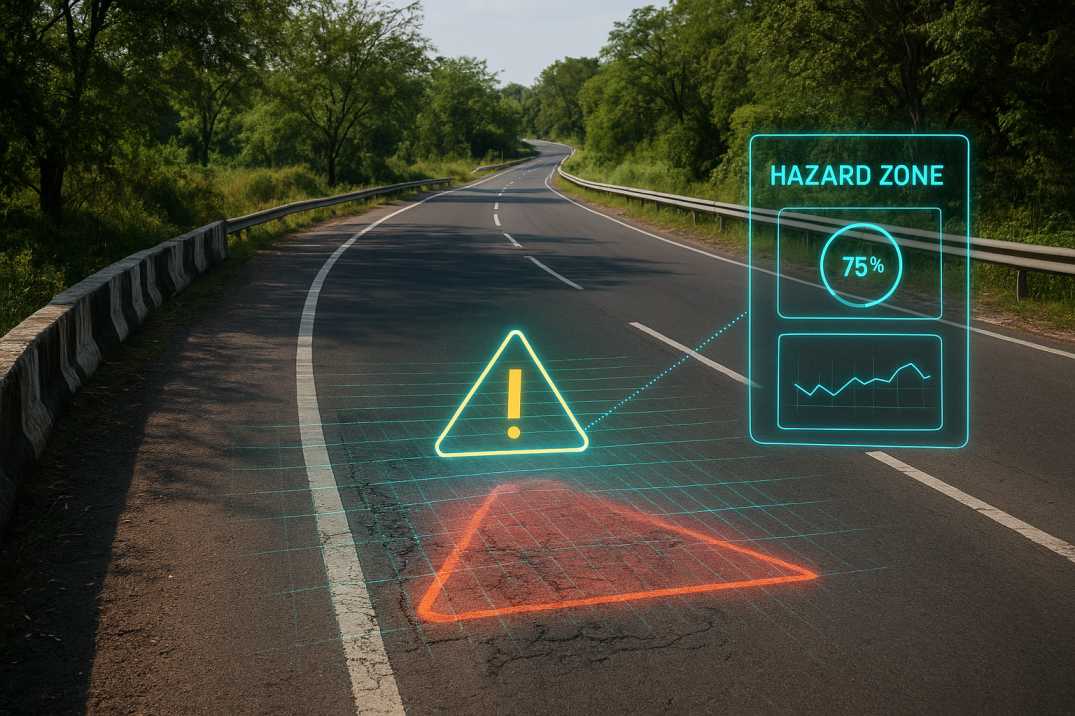
Work zones are among the most vulnerable segments of India's road network. Poorly managed construction zones often lead to:
IRC SP 55 sets out the technical and operational requirements for temporary traffic management. Consistent adherence to these guidelines ensures smoother traffic flow, reduces unpredictable driver behaviour, and safeguards workers and road users. In short, the standard is India's blueprint for safe work zones.
2.1 Why Work Zones Are High-Risk
2.2 Common Work Zone Crash Types
IRC SP 55 is designed to standardise how work zones are secured and communicated to the public. Its key principles include:
Use of approved warning, regulatory, and informatory signs placed at defined distances before the work zone to give drivers adequate reaction time.
Cones, barricades, and delineators must guide traffic safely around the work site, preventing last-minute manoeuvres that cause collisions.
Reflective materials, lamps, and illuminated signs help avoid night-time crashes when visibility is naturally reduced.
Temporary speed limits, rumble strips, and enforcement ensure controlled vehicle movement through work zones.
Protective barriers, high-visibility clothing, and designated safe areas for workers separate them from traffic.
Work zone design varies based on traffic speed, road classification, and surrounding environment—what works for a rural highway may not suit an urban corridor.
Early notification of work zones through variable message signs and public information campaigns helps drivers prepare.
Properly designed tapers and merge areas allow smooth traffic transitions between lanes.
Provisions for emergency vehicle access through work zones must be maintained.
All traffic control devices must be removed and normal traffic patterns restored promptly after work completion.
By operationalising these principles, India can significantly reduce work zone hazards and strengthen nationwide traffic discipline.
The Road Safety Audit Agent uses computer vision to continuously monitor work zones for:
Machine learning models identify:
The Pavement Condition Intelligence Agent detects:
The Traffic Analysis Agent monitors:
AI detects:
Modern road safety requires more than compliance checklists—it demands continuous, technology-driven monitoring. RoadVision AI integrates IRC SP 55 requirements with advanced digital and AI-enabled capabilities through its integrated suite of AI agents to create a proactive safety ecosystem.
The Road Safety Audit Agent detects missing signs, displaced cones, damaged barricades, or improper channelisation—instantly flagging non-compliance for immediate correction.
By analysing historical crashes, traffic behaviour from the Traffic Analysis Agent, and weather patterns, AI identifies emerging danger points in advance, enabling preventive action.
Uneven surfaces, cracks, or potholes within work zones can turn into crash triggers. AI-enabled sensors and drones through the Pavement Condition Intelligence Agent identify and classify these risks in real time.
RoadVision AI maps site conditions against IRC SP 55 standards, ensuring crews follow prescribed layouts throughout the project lifecycle—from initial setup to final removal.
Stakeholders receive precise compliance dashboards, helping engineers take corrective actions before minor lapses become serious hazards.
AI systems with enhanced low-light capability monitor work zones during night hours when visibility is reduced and crash risk is elevated.
The Roadside Assets Inventory Agent maintains records of all temporary traffic control devices, ensuring accountability and proper removal after project completion.
RoadVision AI's approach ensures that "forewarned is forearmed"—empowering authorities to fix issues proactively and enhance road user confidence.
Despite its importance, nationwide adherence to IRC SP 55 faces several hurdles:
Work zones across states vary widely in implementation quality due to lack of oversight and standardised monitoring.
AI Solution: Automated compliance tracking ensures consistent standards across all projects.
Human inspections are slow, error-prone, and often impractical on high-speed corridors where quick response is essential.
AI Solution: Continuous monitoring through the Road Safety Audit Agent covers all work zones simultaneously.
Local bodies may lack trained personnel or budgetary capacity for constant monitoring of multiple work zones.
AI Solution: Automated systems reduce reliance on dedicated inspection staff.
Construction activities change throughout the day, making static compliance checks insufficient for safety.
AI Solution: Real-time monitoring captures changes as they occur.
Many road users are unfamiliar with temporary signage, increasing risk in poorly designed work zones.
AI Solution: Predictive models identify locations where driver confusion indicates signage issues.
Without objective evidence, ensuring contractors maintain safety standards is challenging.
AI Solution: Digital records provide objective documentation of compliance.
Work zones can impede emergency response if not properly designed.
AI Solution: Access route verification ensures emergency vehicle passage.
AI-driven platforms like RoadVision AI help bridge these gaps through automation, real-time visibility, and predictive analytics.
Implementing IRC SP 55 is one of India's strongest levers for reducing road fatalities. When combined with AI-based monitoring through the Road Safety Audit Agent, predictive safety tools, and digital pavement analytics via the Pavement Condition Intelligence Agent, these guidelines gain far greater force and reliability.
The platform's ability to:
transforms how work zone safety is managed across India's expanding infrastructure network.
Road safety improves dramatically when standards set the foundation and intelligent technology strengthens enforcement. This powerful combination ensures:
RoadVision AI stands at the forefront of this transformation. By integrating AI-powered monitoring, digital traffic surveys, and predictive safety analytics, it helps authorities create safer, smarter, and more efficient transport systems—fully aligned with Indian Roads Congress standards.
If India is to turn the tide on road fatalities, this is the moment to adopt intelligent tools that make safety predictable, not accidental.
Book a demo with RoadVision AI today and see how technology and standards together can create safer roads across India.
Q1: What is IRC SP 55 used for in India?
It provides guidelines for road work zone safety, traffic control, and accident prevention during construction and maintenance.
Q2: How does AI help in implementing IRC SP 55?
AI automates compliance checks, detects safety gaps, and predicts accident risks to ensure guidelines are effectively followed.
Q3: Can IRC SP 55 reduce road fatalities in India?
Yes, when properly implemented with AI tools, it can significantly cut down accidents in work zones and high-risk areas.
The Autonomous Road Engineer
AI-powered road condition monitoring, asset management, & infrastructure intelligence helping agencies move from reactive maintenance to predictive road management.


.webp)
.webp)
.webp)