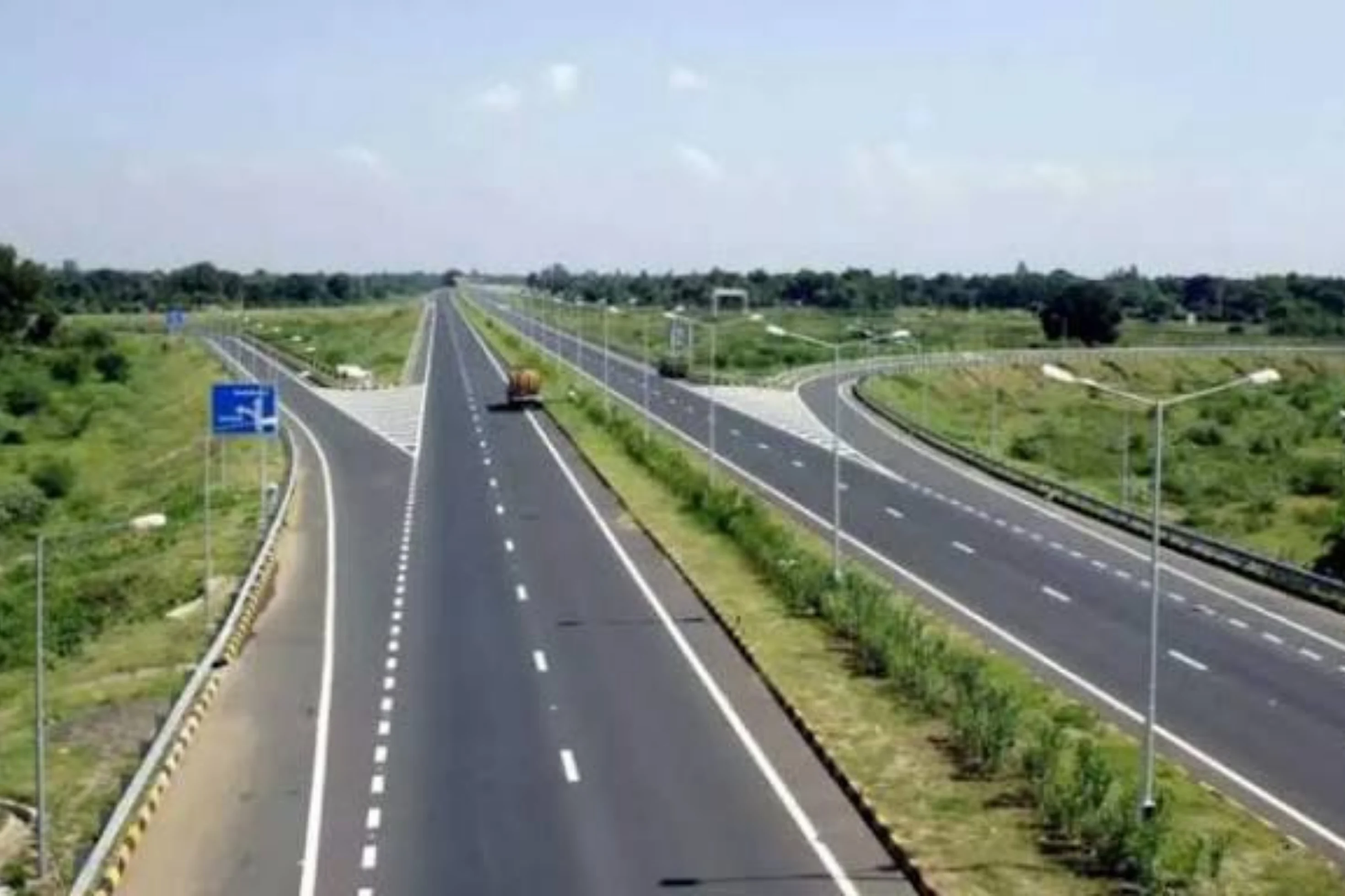
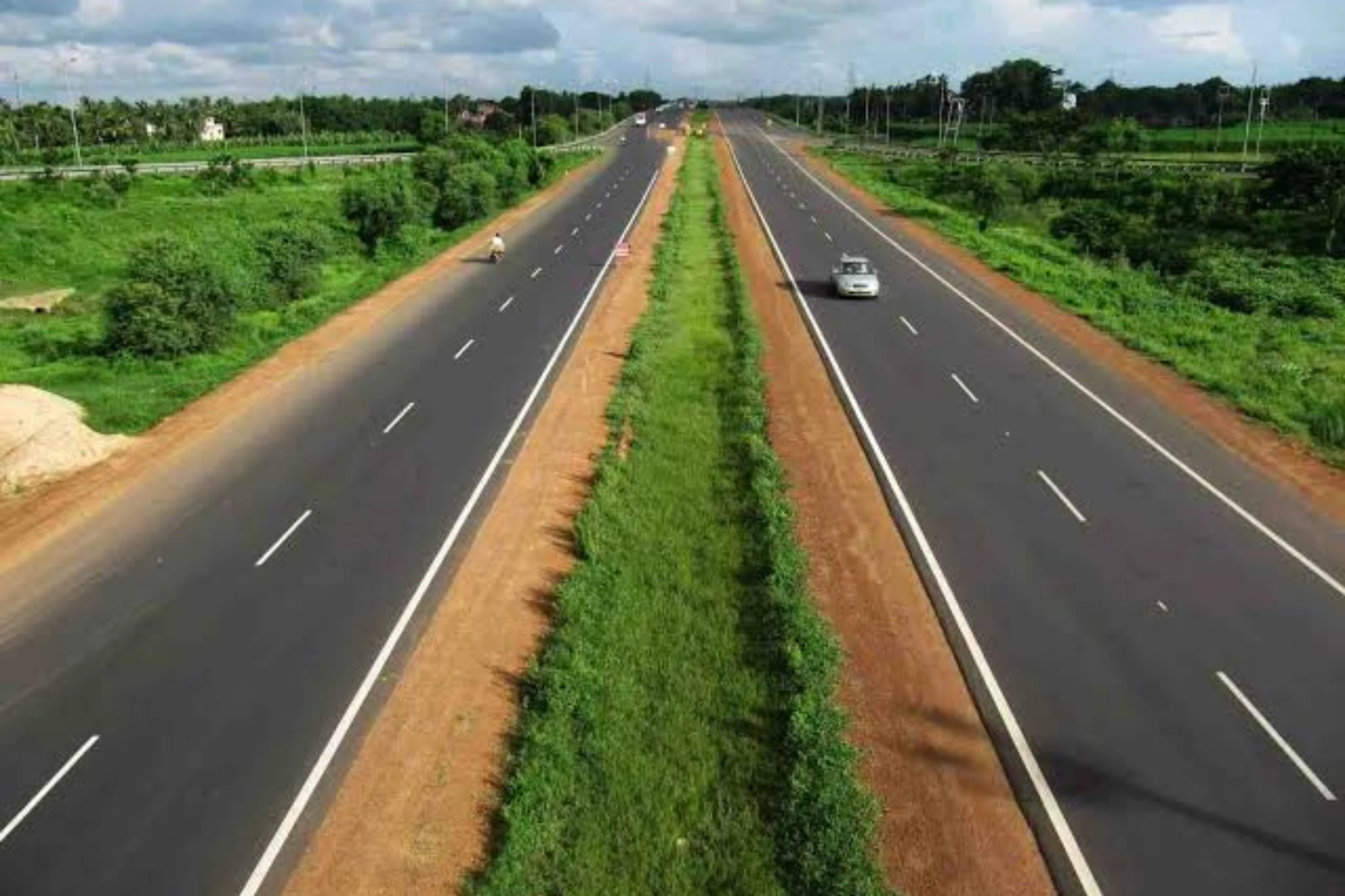
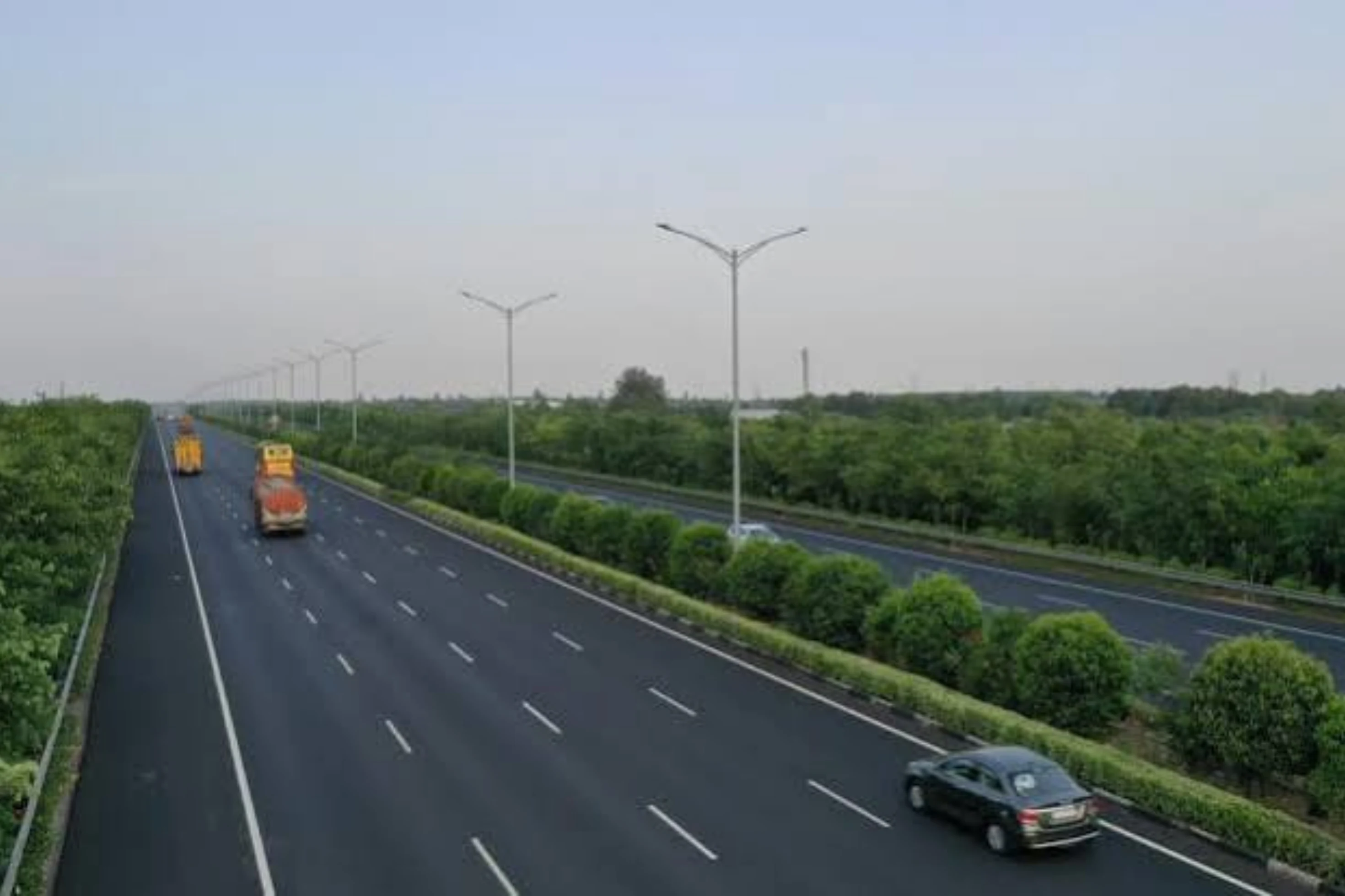
This is a project-level account from RoadVision AI's road survey programme for NHAI's Patna Regional Office, covering the Koilwar to Bhojpur section in Bihar, from Km 137.375 of NH-30 to Km 27.37 of NH-84. That chainage is where the Bhojpur–Buxar section of NH-84 begins, so the two sections form one continuous run, and this account reads them side by side.
Koilwar is a historic town and community development block in Bhojpur district, on the banks of the Sone River along NH-922, roughly 15 km east of the district headquarters, Arrah, and bordering Patna district near Bihta. The corridor begins here, at Km 137.375 of NH-30, and runs to Km 27.37 of NH-84.
The Sone crossing at Koilwar is among the oldest in the country. The British-built Abdul Bari (Koilwar) Bridge, a rail-road bridge of 1862, was the longest river bridge in India from 1862 until 1900, and a newer bridge has been built alongside it to carry modern traffic. At the far end of the section, at Km 27.37 of NH-84, the corridor hands over directly to the Bhojpur–Buxar section.
Read separately, the Koilwar–Bhojpur and Bhojpur–Buxar sections give two reports. Read together, under the same detection, severity grading and chainage reference, they show how condition changes along the run, and they let the same weekly comparison tool be used from one end to the other.
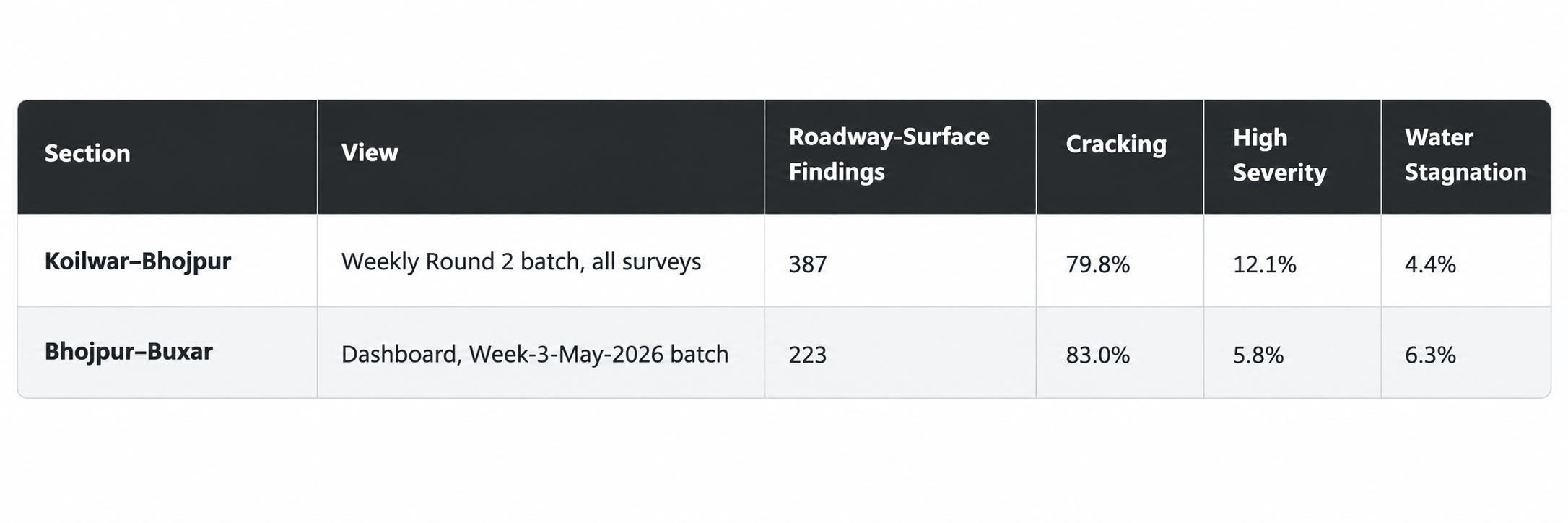
In the survey record for this section, RoadVision AI has logged 387 roadway-surface findings across seven defect types: 47 (12.1%) High, 329 (85.0%) Medium and 11 (2.8%) Low. Cracking accounts for 309 findings (79.8%), far ahead of potholes (18, 4.7%), shoulder edge drop (17, 4.4%), water stagnation (17, 4.4%), rutting (12, 3.1%), shoulder vegetation growth (11, 2.8%) and shoulder unevenness (3, 0.8%).
The 47 High-severity findings equal the combined count of potholes, shoulder edge drop and rutting, and the 329 Medium findings equal cracking, water stagnation and shoulder unevenness together. The urgent list is therefore short, and the large Medium band is almost entirely cracking, which points to a planned sealing and resurfacing response rather than emergency repair.
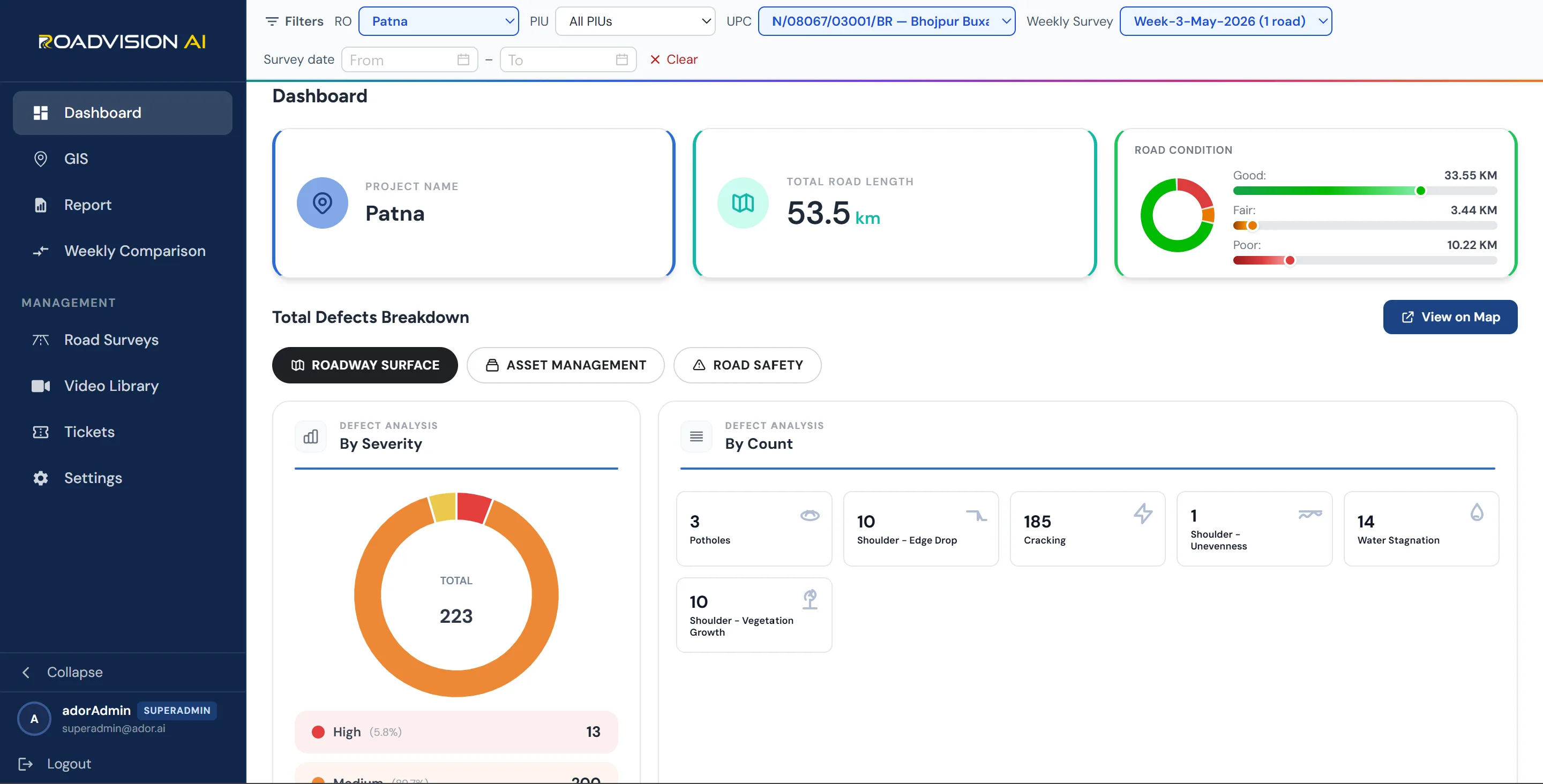
The dashboard for the adjoining Bhojpur–Buxar section shows the same pattern with a lower severity load. Of 223 roadway-surface findings, cracking accounts for 185 (83.0%), water stagnation for 14 (6.3%), shoulder edge drop and shoulder vegetation growth for 10 each, potholes for 3 and shoulder unevenness for 1. Only 13 findings (5.8%) are High severity. Of the 47.21 km rated, 33.55 km (71.1%) is Good, 3.44 km (7.3%) Fair and 10.22 km (21.6%) Poor.
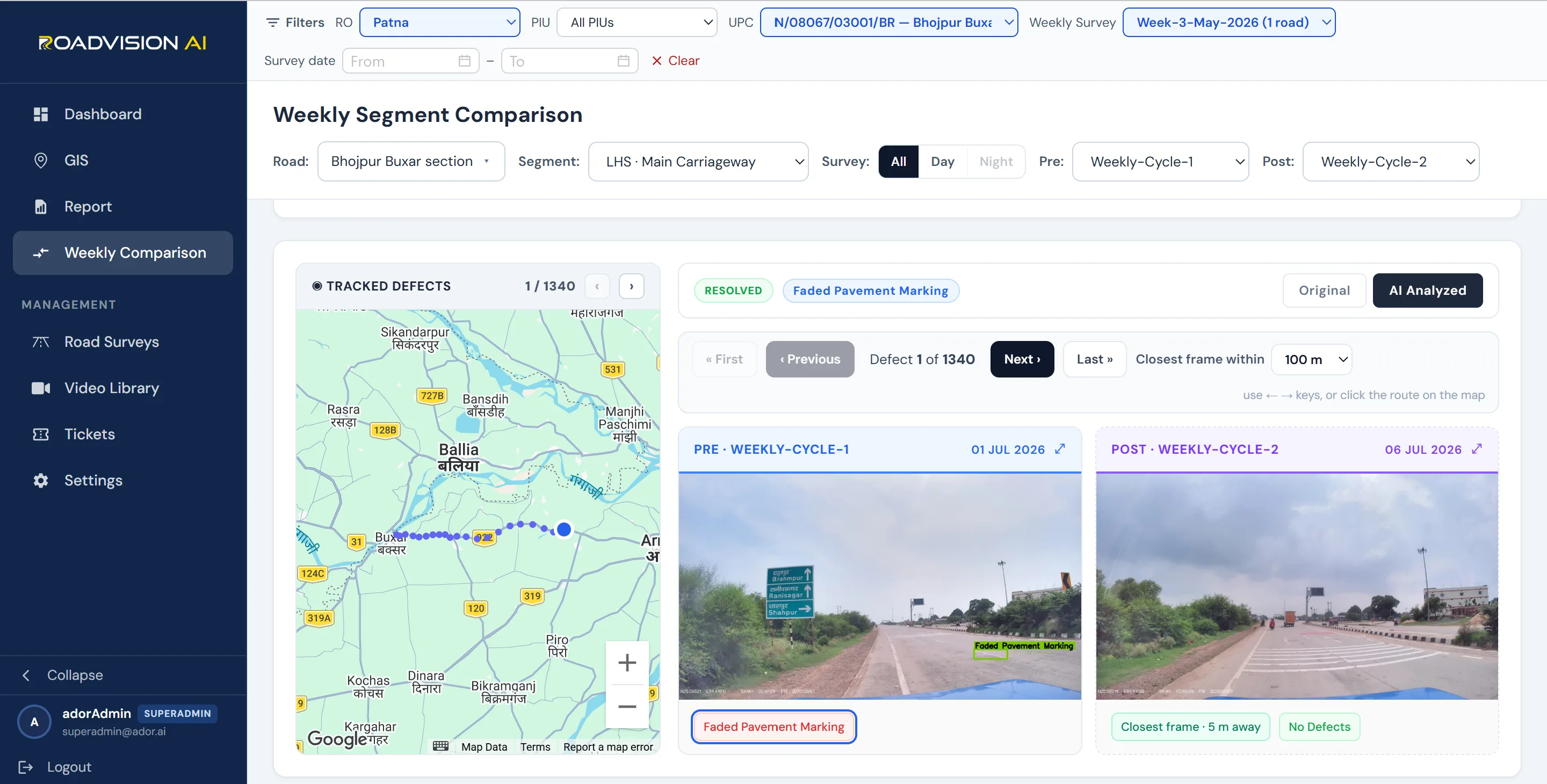
Because every finding carries a chainage, a later survey of the same point can be checked against it. On the Bhojpur–Buxar section's left-hand main carriageway, the Weekly Segment Comparison tool tracks 1,340 defects between Weekly Round 1 (1 July 2026) and Weekly Round 2 (6 July 2026). The first, a faded pavement marking, is marked Resolved: the closest frame in the later round, 5 m from the original point, shows no defect. The same view is available along the Koilwar–Bhojpur section.
Both sections are cracking-led, at about 80% to 83% of roadway-surface findings. The difference is in the urgent tail: Koilwar–Bhojpur carries twice the High-severity share, from potholes, edge drop and rutting, which makes it the section where first-priority repairs are most concentrated.
On both sections, each survey gives NHAI's Patna Regional Office a defect ID, chainage and survey reference for every finding, independent of the agency doing the work. A later survey of the same chainage then shows whether it has been closed out, as with the resolved marking in Figure 3.
RoadVision AI is committed to continuous AI-based road condition monitoring along the Koilwar–Bhojpur–Buxar run, giving NHAI a consistent, chainage-level record from the Sone crossing onward. A corridor that hands over from one section to the next should be read as one road, and the record behind it should show, week by week, whether it is being kept to standard.

The Autonomous Road Engineer
AI-powered road condition monitoring, asset management, & infrastructure intelligence helping agencies move from reactive maintenance to predictive road management.