
Canada is in the middle of a major transportation shift. As cities grow denser and traffic volumes rise, road authorities are under pressure to maintain safe, efficient, and compliant road networks. Ensuring that infrastructure aligns with the standards of the Transportation Association of Canada (TAC) is one of the most critical parts of this mission. However, traditional inspections—slow, manual, and costly—often struggle to keep pace with modern demands.
With AI-enabled road safety audits, smartphone-based road surveys, and automated asset inspections, Canadian authorities now have powerful tools at their disposal. As the saying goes, "Work smarter, not harder." In the world of road management, AI makes this philosophy a reality.
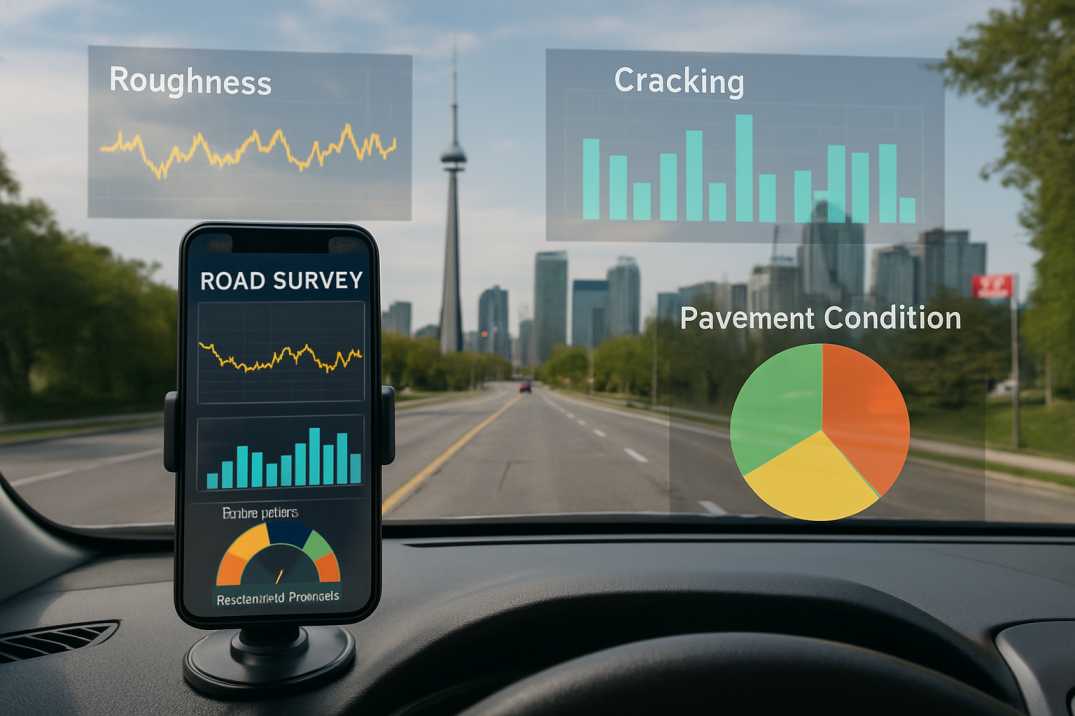
Across provinces and territories, TAC guidelines define the gold standard for safe, consistent, and predictable road design. Whether it's the Geometric Design Guide for Canadian Roads, the Manual of Uniform Traffic Control Devices for Canada (MUTCDC), or the Road Safety Audit Guidelines, these documents ensure:
Failing to comply isn't just a bureaucratic hiccup—it can jeopardize grant approvals, increase liabilities, and erode public confidence. In short, TAC guidelines are the north star for Canadian road authorities.
Although Canada follows TAC rather than IRC, the fundamental pillars mirror those found in internationally recognized roadway compliance frameworks. Key TAC principles include:
2.1 Safety First
Infrastructure must minimise collision risk and protect vulnerable users such as pedestrians, cyclists, and workers through design that anticipates human error.
2.2 Consistency and Predictability
Road users should experience uniform signage, geometry, and traffic controls across jurisdictions—reducing confusion and enhancing safety.
2.3 Context-Sensitive Design
Roads must suit their environment—urban, suburban, rural, Indigenous communities, or remote northern routes—with designs appropriate to local conditions.
2.4 Evidence-Based Decision Making
Evaluation and upgrades must be supported by measurable, objective, and repeatable data—not anecdotal observations or infrequent inspections.
2.5 Proactive Risk Mitigation
Issues should be identified early, not after an accident has occurred, through systematic monitoring and preventive maintenance.
2.6 Lifecycle Asset Management
Infrastructure should be managed across its entire lifecycle, from planning and design through operation and renewal, to optimize long-term value.
2.7 Multi-Modal Integration
Road networks must accommodate all modes of transportation, including active transportation, transit, freight, and personal vehicles.
AI technologies strengthen each of these pillars—acting as a force multiplier for compliance and safety through the Road Safety Audit Agent.
Modern digital road management thrives on automation, analytics, and continuous monitoring. This is where solutions like RoadVision AI shine through its integrated suite of AI agents.
3.1 Smartphone-Based Road Surveys for Scalable Compliance
Instead of relying on expensive survey vans, the Pavement Condition Intelligence Agent and Roadside Assets Inventory Agent use smartphone apps to capture high-definition video from any vehicle. This allows:
A real "kill two birds with one stone" solution—cutting cost while boosting accuracy and coverage.
3.2 Automated Detection of TAC-Specific Parameters
AI models continuously evaluate:
What once required days of manual work across limited samples is now automated within minutes across entire networks.
3.3 Digital Twins for Smarter Road Asset Management
RoadVision AI builds a virtual model of road networks, enabling:
This lines up perfectly with TAC's push for lifecycle-based asset management and evidence-based decision making.
3.4 Rapid AI Road Safety Audits
TAC encourages systematic, data-driven audits. With the Road Safety Audit Agent:
As the old saying goes, "A stitch in time saves nine." Early detection prevents costly failures down the road.
3.5 Traffic Analysis for Compliance Validation
The Traffic Analysis Agent provides:
3.6 Winter Maintenance Monitoring
For Canadian conditions, the platform tracks:
Even with advanced tools, authorities still face significant hurdles:
4.1 Canada's Geographic Scale
Challenge: Maintaining compliance across vast territories—remote rural roads, northern regions, mountain routes—is logistically complex and expensive with manual methods.
Solution: AI-powered mobile surveys using regular fleet vehicles cover these areas during normal operations, eliminating dedicated survey missions.
4.2 Weather Extremes
Challenge: Snow, ice, freeze-thaw cycles, and visibility issues accelerate road degradation and distort manual inspections, making condition assessments unreliable.
Solution: The Pavement Condition Intelligence Agent captures data year-round, with algorithms calibrated for Canadian winter conditions.
4.3 Budget and Staffing Pressures
Challenge: Municipalities often operate with tight budgets and limited technical staff, making comprehensive manual inspections impossible.
Solution: Automation reduces inspection costs by up to 80%, freeing staff for analysis and decision-making rather than data collection.
4.4 Legacy Systems
Challenge: Outdated monitoring frameworks and asset management systems slow down modernization and integration of new data sources.
Solution: RoadVision AI provides flexible export options compatible with existing systems, enabling gradual modernization without disrupting current operations.
4.5 Diverse Jurisdictional Requirements
Challenge: Different provinces and territories may have varying interpretations or supplementary requirements beyond TAC guidelines.
Solution: Configurable assessment criteria allow the platform to adapt to specific provincial requirements while maintaining core TAC compliance.
4.6 Climate Change Adaptation
Challenge: Changing weather patterns and more frequent extreme events require adaptive management approaches.
Solution: Predictive analytics help agencies anticipate climate impacts and adapt maintenance strategies accordingly.
These challenges make AI not just helpful—but essential. It levels the playing field between large provinces with extensive resources and small municipalities with limited budgets.
Canada's journey toward safer, more compliant infrastructure hinges on digital transformation. AI-powered surveys, automated compliance checks, and data-driven audits are turning once reactive workflows into proactive safety ecosystems. And with TAC compliance becoming more crucial than ever, municipalities cannot afford to rely solely on legacy systems that leave gaps in coverage and quality.
RoadVision AI is helping pave the way—leveraging roads AI, digital twins, and automated defect detection through the Pavement Condition Intelligence Agent, Roadside Assets Inventory Agent, Road Safety Audit Agent, and Traffic Analysis Agent to ensure pavement conditions, signage, geometry, and safety parameters align fully with TAC standards. By reducing inspection costs, improving accuracy, and delivering actionable insights, it empowers engineers and authorities to make informed decisions that enhance community safety.
The platform's ability to operate across Canada's diverse geography—from urban centres to remote northern communities—ensures that all roads receive the same high-quality assessment regardless of location. Its weather-resilient algorithms maintain accuracy through harsh winters, spring thaws, and summer construction seasons.
As Canadians often say, "The proof is in the pudding." AI has proven that it can deliver cleaner data, faster audits, and safer outcomes that directly support TAC's vision for consistent, evidence-based road management.
If your city, municipality, or provincial organization is ready to modernize compliance processes and step confidently into the future of intelligent transportation management, book a demo with RoadVision AI today and discover how AI can transform your approach to TAC compliance and road safety.
Q1. What are TAC guidelines in Canada?
They are national standards for road design, signage, and safety audits issued by the Transportation Association of Canada.
Q2. How does AI help with road safety audits in Canada?
AI systems automate inspections, detect hazards, and ensure faster, data-driven compliance with TAC standards.
Q3. Are smartphone-based road surveys reliable in Canadian conditions?
Yes, modern AI-enabled mobile apps are calibrated for Canadian road types and weather, providing accurate results.
The Autonomous Road Engineer
AI-powered road condition monitoring, asset management, & infrastructure intelligence helping agencies move from reactive maintenance to predictive road management.


.webp)
.webp)
.webp)