
Winter weather in Georgia can be unpredictable—one moment the pavement is merely damp, and the next, temperatures drop enough to turn moisture into hazardous ice. These sudden transitions create major challenges for transportation departments tasked with keeping highways safe, efficient, and open. With traffic volumes rising and infrastructure expanding, agencies are now turning to advanced digital tools such as road asset management Georgia systems, AI-powered highway monitoring, and AI winter road monitoring to stay ahead of weather-driven hazards.
As the old saying goes, "Forewarned is forearmed." AI provides exactly that advantage—early awareness, faster detection, and smarter responses during winter operations.
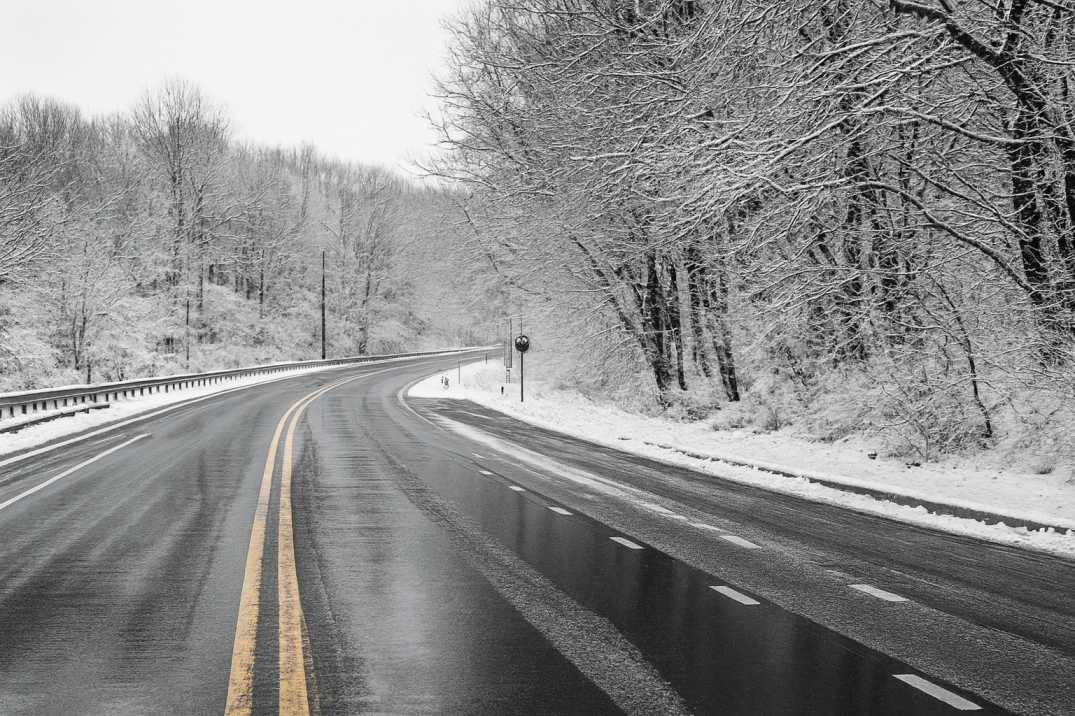
Although Georgia does not experience the severe winters of northern states, its freeze–thaw cycles, black ice formation, and freezing rain create disproportionately high safety risks due to unpredictable roadway conditions. Trouble spots often include:
These areas can transition from safe to dangerous in minutes. Manual inspections and weather stations alone cannot capture this level of variability. AI-driven monitoring through the Pavement Condition Intelligence Agent fills the gap by providing continuous, real-time visibility into pavement conditions across the network.
2.1 Freezing Rain Events
2.2 Black Ice Formation
2.3 Freeze-Thaw Cycles
2.4 Mountain Snow
Even though Georgia follows U.S. FHWA, AASHTO, and GDOT standards, internationally recognized concepts from the Indian Roads Congress (IRC) offer valuable guidance for intelligent winter maintenance workflows. Core IRC-aligned principles that support winter road safety include:
3.1 Continuous, Data-Driven Condition Assessment
IRC emphasizes consistent, objective measurement of pavement conditions through the Pavement Condition Intelligence Agent—essential when ice may form without visible cues.
3.2 Early Detection to Prevent Failures
Both IRC and U.S. maintenance philosophies prioritize early intervention, aligning perfectly with AI-enabled hazard identification.
3.3 Prioritization Based on Severity and Network Impact
IRC's structured severity categorization helps agencies triage treatments based on actual risk, not assumptions.
3.4 Integrated Asset Visibility
Winter operations must account for pavement condition, roadside assets, and traffic behavior—mirroring IRC's holistic approach through the Roadside Assets Inventory Agent.
3.5 Safety-First Approach
Protecting road users and maintenance workers is paramount, with AI supporting both through early warning and reduced manual inspection exposure.
These principles ensure winter management strategies remain proactive, consistent, and aligned with long-term roadway resilience goals.
4.1 Bridges and Overpasses
4.2 Shaded Areas
4.3 Mountain Grades
4.4 Curves and Ramps
4.5 Intersections
RoadVision AI applies these principles using advanced AI, computer vision, and automated analytics through its integrated suite of AI agents to support winter operations across Georgia.
5.1 AI Winter Road Monitoring for Hazard Detection
The Pavement Condition Intelligence Agent and Road Safety Audit Agent identify:
High-resolution imaging and thermal analytics allow the platform to detect hazards invisible to the human eye—especially critical during dawn and late-night hours.
5.2 Predictive Winter Maintenance Technology
By analyzing temperature trends, moisture, historic patterns, and live sensor data through the Traffic Analysis Agent, RoadVision AI predicts:
This transforms winter maintenance from reactionary to strategic.
5.3 AI Roadway Safety and Automated Alerts
RoadVision AI automatically notifies operators when risk thresholds are exceeded. Alerts include:
This reduces human error and improves response times during winter storms.
5.4 Integration With Georgia's Roadway Management Systems
The platform connects with:
This unified ecosystem ensures decisions are supported by real, verified, real-time data.
5.5 Treatment Verification
Post-treatment monitoring confirms:
6.1 North Georgia Mountains
6.2 Metro Atlanta
6.3 Coastal Georgia
6.4 Rural Corridors
Although transformative, adopting advanced AI systems involves overcoming several operational hurdles:
7.1 Upfront Technology Costs
Deploying sensors, cameras, and AI platforms requires initial investment.
AI Solution: Scalable deployment and demonstrated ROI through reduced crash rates and optimized treatments.
7.2 Data Volume and Management
Winter monitoring produces large datasets that must be securely stored and analyzed.
AI Solution: Cloud-based platforms through RoadVision AI manage data at scale.
7.3 Integration With Legacy Systems
Some DOT systems require modernization to fully integrate AI tools.
AI Solution: Flexible APIs enable gradual integration without disrupting current operations.
7.4 Operational Training
Staff must adapt to AI-driven workflows and learn new digital processes.
AI Solution: Comprehensive training programs ensure successful adoption.
7.5 Rural Connectivity Limitations
Remote or mountainous areas may require communication upgrades for real-time data streaming.
AI Solution: Offline-first data capture with automatic synchronization.
7.6 Sensor Calibration
Winter conditions can affect sensor accuracy and require calibration.
AI Solution: Adaptive algorithms maintain accuracy despite environmental challenges.
Despite these challenges, the long-term payoff—fewer crashes, optimized treatments, and smoother winter operations—makes AI adoption through RoadVision AI a strategic necessity.
8.1 For Drivers
8.2 For Maintenance Teams
8.3 For Agencies
Winter roads in Georgia present unique, fast-changing challenges. However, AI-based highway monitoring through the Pavement Condition Intelligence Agent, predictive analytics, and automated hazard detection via the Road Safety Audit Agent offer a powerful set of tools to enhance safety, reduce costs, and strengthen network reliability. With AI, agencies can finally stay one step ahead of weather rather than scrambling to react to it.
The platform's ability to:
transforms how winter road safety is approached across Georgia.
RoadVision AI is at the forefront of this transformation. Its advanced computer vision, predictive modeling, and digital twin technologies detect pavement issues early—whether caused by cold weather, moisture, or underlying distress through the Pavement Condition Intelligence Agent. Fully aligned with IRC principles and Georgia's roadway standards, RoadVision AI enables transportation teams to minimize risk, reduce maintenance costs, and ensure smoother, safer winter travel for all.
As the saying goes, "An ounce of prevention is worth a pound of cure." By integrating AI into Georgia's winter road strategy, agencies can keep roads safer—no matter what the season brings.
To explore how RoadVision AI can strengthen your winter operations, book a demo with RoadVision AI today.
1. Can AI detect black ice before drivers notice it?
Yes. AI systems monitor friction levels, freezing patterns, and real-time visuals to automatically detect black ice and trigger alerts.
2. Is AI winter monitoring suitable for rural roads?
Yes, the technology scales efficiently across rural highways, bridges, and remote corridors.
3. Does AI replace crews or enhance their efficiency?
AI enhances operational efficiency by providing accurate, real-time decision intelligence rather than replacing human teams.
The Autonomous Road Engineer
AI-powered road condition monitoring, asset management, & infrastructure intelligence helping agencies move from reactive maintenance to predictive road management.


.webp)
.webp)
.webp)