
In the United States, highways are the lifelines of economic activity, freight movement, and daily mobility. As infrastructure ages and traffic volumes surge, the need for accelerated highway construction has grown dramatically. Agencies often operate under tight deadlines to reduce traffic disruptions while still meeting stringent federal and state specifications.
Yet, building highways quickly without compromising durability is easier said than done. When time is short and expectations are high, even a minor oversight can snowball into major performance issues later. This is where modern technology—especially AI-based highway monitoring—is reshaping how projects are planned, executed, and evaluated.
As the saying goes, "A stitch in time saves nine," and in the world of highways, timely insights can save millions in maintenance costs and prevent long-term failures.
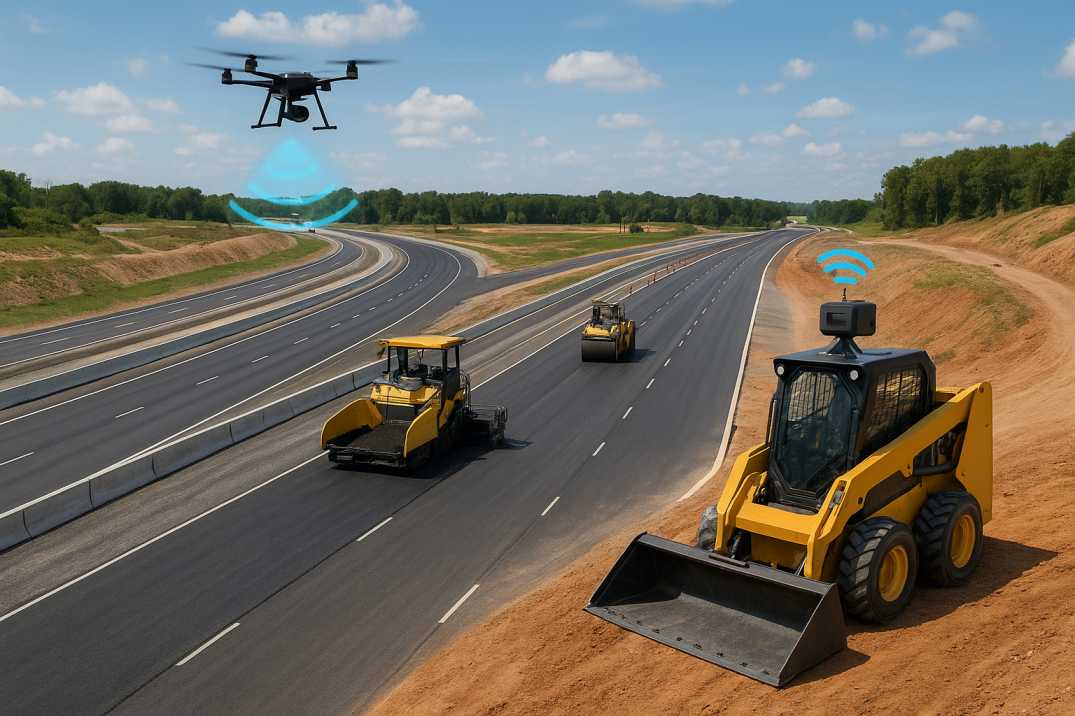
Accelerated construction compresses tasks that traditionally span months into weeks or even days. While this improves mobility and reduces user delays, it also introduces several systemic challenges:
Traditional inspection methods alone often can't keep pace with the speed demanded by accelerated programs.
2.1 Prefabricated Bridge Elements
2.2 Rapid Pavement Placement
2.3 Fast-Track Concrete
2.4 Night and Weekend Construction
2.5 Precast Concrete Pavement
While the user mentioned "IRC principles," the U.S. relies on standards from FHWA, AASHTO, and state DOTs. For clarity, here are the core U.S. construction quality principles relevant to accelerated projects:
3.1 Performance-Based Specifications
Ensuring pavements meet predefined mechanical and durability criteria rather than just prescriptive material requirements.
3.2 Continuous Quality Management
Integrating QC/QA from mix production to final surface finishing, with real-time monitoring during placement.
3.3 Non-Destructive Testing (NDT)
Using tools like FWD, GPR, and profilers for structural and geometric assessment without damaging completed work.
3.4 Work Zone Safety Standards
Adhering to MUTCD and state work zone traffic control guidelines to protect workers and road users.
3.5 Lifecycle-Oriented Construction Planning
Ensuring accelerated methods do not compromise long-term pavement health and durability.
3.6 Documentation and Traceability
Maintaining comprehensive records of materials, placement conditions, and quality control for future reference.
These principles provide the benchmark that AI-driven systems can strengthen and automate.
4.1 Quality Assurance at Speed
4.2 Material Supply Chain
4.3 Work Zone Safety
4.4 Regulatory Compliance
4.5 Coordination Complexity
RoadVision AI integrates cutting-edge technologies that elevate the speed, quality, and reliability of accelerated highway construction through its integrated suite of AI agents. Its platform enhances project delivery through:
5.1 Real-Time Construction Monitoring
The Pavement Condition Intelligence Agent uses high-resolution imagery, LiDAR, and sensor data to capture pavement conditions, surface profiles, and structural indicators during construction—without slowing down work progress.
5.2 Automated Quality Verification
Digital highway testing systems through the Pavement Condition Intelligence Agent automatically assess:
This eliminates human subjectivity and ensures compliance with DOT standards.
5.3 Predictive Insights for Better Decision-Making
AI models through the Pavement Condition Intelligence Agent forecast:
Engineers can intervene early—preventing rework and material waste.
5.4 Integration with Road Asset Management Systems
All construction-stage data is seamlessly linked to asset management platforms through the Roadside Assets Inventory Agent. This creates a digital twin of the highway that supports future maintenance planning and lifecycle optimization.
5.5 Enhanced Safety and Operational Efficiency
The Road Safety Audit Agent minimizes manual inspections in hazardous zones, improving worker safety and accelerating overall decision cycles.
5.6 Material Tracking
The Traffic Analysis Agent integrates material delivery data with placement progress, ensuring consistent supply during extended paving operations.
5.7 Work Zone Monitoring
AI continuously monitors:
In essence, RoadVision AI ensures that the mantra "build fast, build right" is no longer a paradox but a practical reality.
6.1 Pre-Construction
6.2 Construction
6.3 Post-Construction
7.1 FHWA Every Day Counts (EDC)
7.2 State DOT Accelerated Programs
7.3 Design-Build Project Delivery
While transformative, AI adoption has its own hurdles:
8.1 Data Integration Barriers
Merging field data, sensor inputs, and legacy systems can be complex, requiring careful planning and system compatibility.
AI Solution: Flexible APIs and standardised data formats through RoadVision AI enable integration.
8.2 Skill Gaps
Agencies may need training to fully leverage AI-driven insights and interpret automated quality reports.
AI Solution: Comprehensive training programs ensure successful adoption.
8.3 Initial Investment
Upfront costs can be a deterrent despite long-term savings from reduced rework and extended pavement life.
AI Solution: Scalable deployment and demonstrated ROI build the business case.
8.4 Infrastructure Variability
Different states and projects require customized AI calibration for local materials, specifications, and conditions.
AI Solution: Configurable models adapt to regional requirements.
8.5 Regulatory Acceptance
Standardizing AI outputs across DOTs is still evolving as agencies develop acceptance protocols.
AI Solution: Pilot projects demonstrate reliability for regulatory acceptance.
8.6 Real-Time Data Requirements
Accelerated construction demands real-time data processing that some legacy systems cannot support.
AI Solution: Cloud-based platforms with edge processing enable real-time insights.
However, as technology adoption grows through RoadVision AI, these barriers are rapidly shrinking.
9.1 For Project Owners
9.2 For Contractors
9.3 For Road Users
Accelerated highway construction is no longer just about speed—it's about precision, foresight, and resilience. With AI-powered monitoring through the Pavement Condition Intelligence Agent, Traffic Analysis Agent, Road Safety Audit Agent, and Roadside Assets Inventory Agent, agencies can ensure highways are safer, smoother, and more durable—even under tight deadlines.
The platform's ability to:
transforms how accelerated highway construction is delivered across the United States.
RoadVision AI is at the forefront of this transformation, providing tools that detect defects early, enhance compliance, and deliver actionable insights throughout the construction lifecycle. In a world where "time is money" and infrastructure demands are rising, AI empowers engineers to stay ahead of the curve.
If you're ready to build highways that stand the test of time—while cutting delays and improving performance—book a demo with RoadVision AI today and experience the future of highway construction.
Q1. What are the main challenges of accelerated highway construction in the USA?
Time constraints, material quality, traffic management, and adherence to highway safety regulations are primary challenges.
Q2. How does AI improve highway construction quality?
AI enables real-time monitoring, automated evaluation of pavement and alignment, predictive analytics, and integration with road asset management systems.
Q3. Is AI-based monitoring compliant with USA highway standards?
Yes, AI solutions follow federal and state highway regulations, ensuring construction quality and safety compliance.

The Autonomous Road Engineer
AI-powered road condition monitoring, asset management, & infrastructure intelligence helping agencies move from reactive maintenance to predictive road management.


.webp)
.webp)
.webp)