
Australia has committed to the ambitious Vision Zero target—an international movement that seeks to eliminate road deaths and serious injuries. Despite continuous efforts, the nation still loses more than 1,200 lives on its roads every year, with thousands more suffering life-changing injuries. These aren't just numbers—they represent families, communities, and futures cut short.
Traditional road inspections, manual audits, and reactive maintenance alone cannot achieve Vision Zero. As the saying goes, "If you keep doing what you've always done, you'll keep getting what you've always got." Australia needs a smarter, scalable, and data-driven approach.
This is where AI-powered road asset management is stepping in—helping transform how risks are identified, how assets are monitored, and how decisions are made across national and state networks.
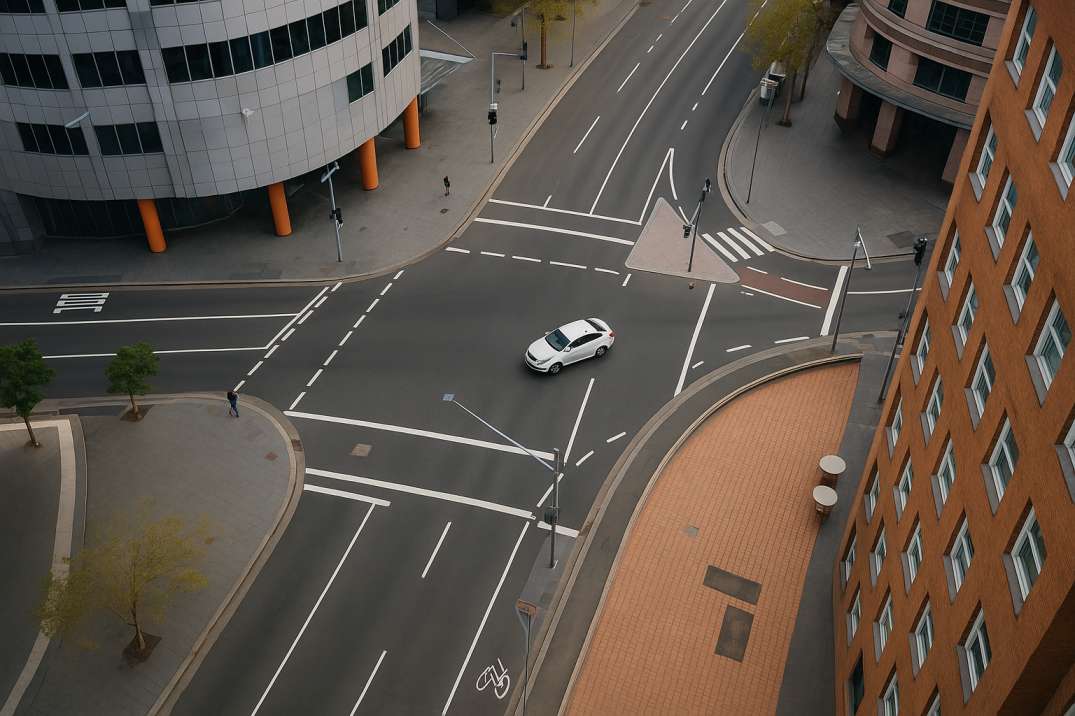
Vision Zero is built on the principle that humans make mistakes, but the road system should prevent those mistakes from becoming fatal. This philosophy anchors Australia's National Road Safety Strategy 2021–30, which aligns with the United Nations Decade of Action for Road Safety.
Key pillars include:
Agencies such as Austroads, Transport for NSW, and the Department of Infrastructure, Transport, Regional Development and Communications increasingly recognise the essential role of technology in supporting these goals.
To build a safer transport ecosystem, Australia must adopt tools that enhance visibility, improve accuracy, and enable preventive interventions—and AI delivers exactly that.
AI road asset management uses computer vision, machine learning, and advanced analytics to automatically record, assess, and interpret road conditions.
AI systems can:
The outcome? Faster, repeatable, and more accurate insights across thousands of kilometres—without relying solely on human judgement.
3.1 AI-Powered Pavement Condition Surveys
The Pavement Condition Intelligence Agent runs pavement inspections using mobile devices and smart algorithms. These systems:
Timely detection prevents minor defects becoming major hazards—proving the old adage, "A stitch in time saves nine."
3.2 Smart Road Safety Audits
The Road Safety Audit Agent expands the scope and precision of safety audits by analysing:
This creates a proactive audit system that aligns perfectly with the Vision Zero philosophy of preventing risk before it causes harm.
3.3 Intelligent Road Inventory and Inspection
The Roadside Assets Inventory Agent automatically inventories roadside assets, detecting and classifying:
With consistent digital records, councils and state authorities can allocate budgets, meet compliance standards, and improve roadside safety systematically.
3.4 Advanced Traffic Survey Insights
The Traffic Analysis Agent captures vehicle counts, turning movements, speed distributions, and pedestrian flows with high accuracy. Insights help identify:
These analytics support better planning and road safety interventions aligned with Vision Zero principles.
3.5 Blackspot Identification and Analysis
By integrating pavement condition, traffic data, and crash history, AI identifies emerging blackspots before they meet traditional crash-based criteria—enabling preventive treatments that stop crashes before they occur.
3.6 Digital Twin for Scenario Planning
RoadVision AI creates digital twins of road networks, enabling engineers to simulate safety interventions, assess their impact, and prioritise investments based on predicted crash reduction.
While AI brings transformative value, some challenges persist:
As technology matures, these challenges are steadily becoming non-issues through continuous platform improvements and implementation support.
Vision Zero is far more than a government mandate—it is a shared national commitment to saving lives. Achieving it requires modern tools that can outpace traditional processes and identify risks before they claim lives.
AI delivers exactly that through RoadVision AI's integrated suite of capabilities:
With capabilities spanning the Pavement Condition Intelligence Agent, Road Safety Audit Agent, Roadside Assets Inventory Agent, and Traffic Analysis Agent, RoadVision AI enables Australia to:
As the saying goes, "The best time to act was yesterday; the next best time is now." Australia's journey toward Vision Zero demands innovation—and AI is the accelerator that can help the nation get there faster and safer.
If your agency, council, or organisation is committed to achieving Vision Zero targets, book a demo with RoadVision AI today and discover how intelligent road management can transform your safety outcomes.
Q1. What is Vision Zero in Australia?
Vision Zero is a commitment by Australian governments to eliminate all road deaths and serious injuries through safer roads, vehicles, and road users.
Q2. How does AI improve road safety audits?
AI automates the analysis of environmental and structural road conditions, allowing for quicker, more accurate identification of safety issues.
Q3. What services does RoadVision AI offer?
RoadVision AI offers pavement condition surveys, road safety audits, traffic surveys, and complete road asset management solutions.
The Autonomous Road Engineer
AI-powered road condition monitoring, asset management, & infrastructure intelligence helping agencies move from reactive maintenance to predictive road management.


.webp)
.webp)
.webp)