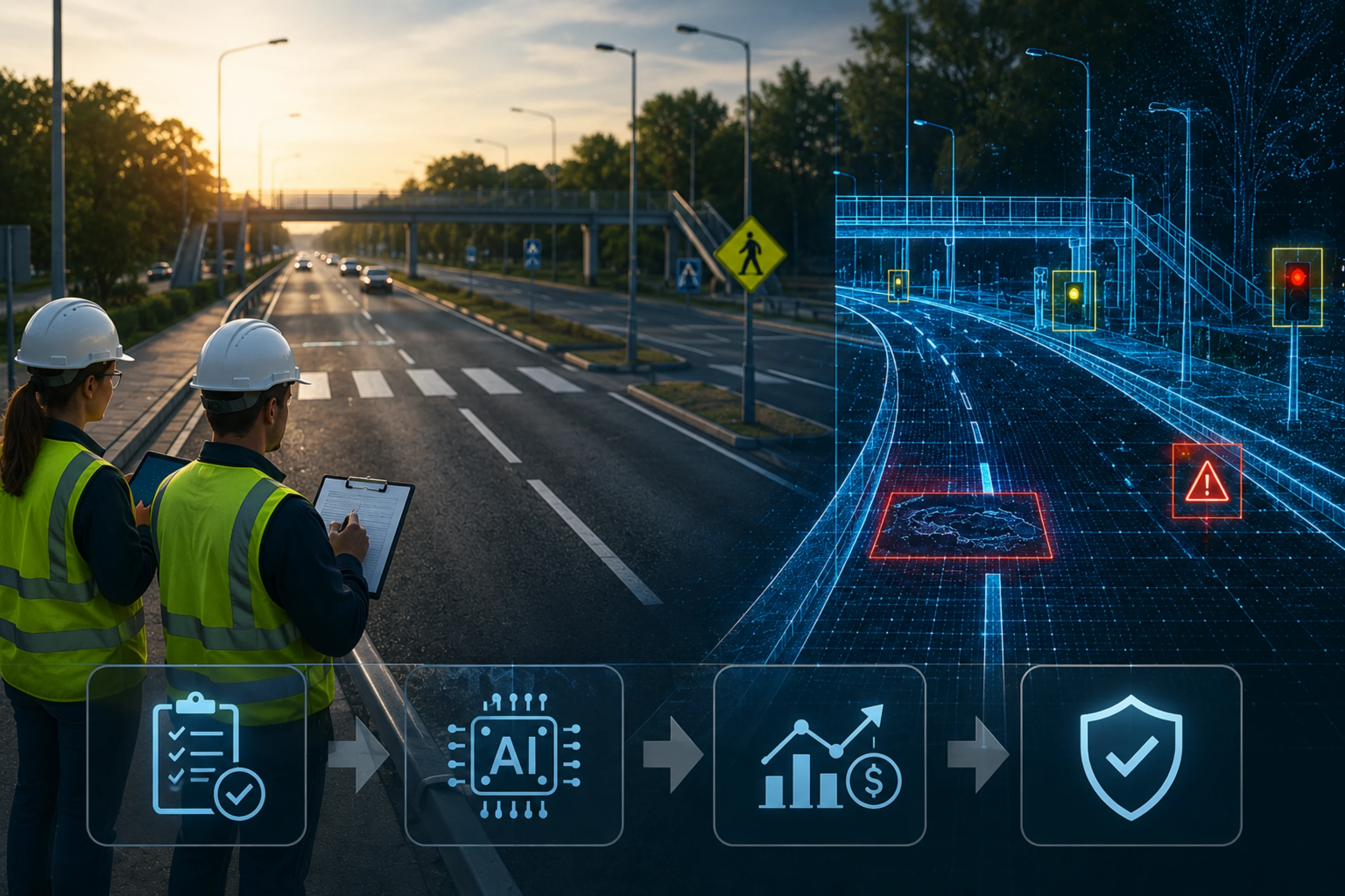
Roads carry goods, people and economies, and keeping them in good shape has always been expensive and slow. Traditional inspection means crews driving or walking long stretches, noting defects by eye, and writing reports that are often out of date by the time they’re read.
AI is changing this. By learning from large volumes of imagery and sensor data, it can spot problems earlier, predict failures and help agencies spend limited budgets where they matter most. Here are five of the biggest shifts.
Let’s delve into the five groundbreaking ways AI is shaping the future of road inspections and paving the way for smarter, safer roads.

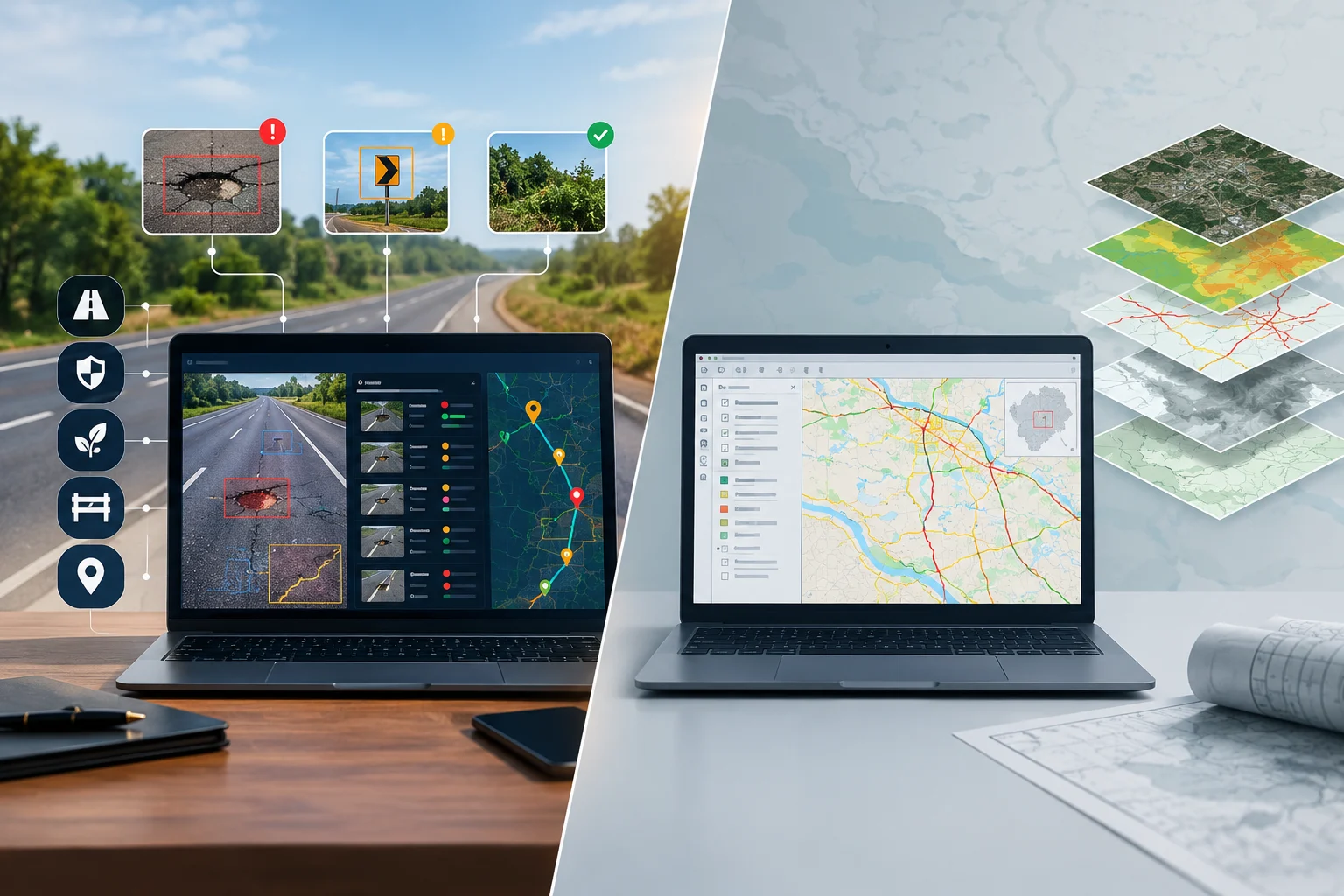
Gone are the days when road inspections meant teams manually scouring highways for cracks and potholes. AI-powered systems now use advanced computer vision to scan road surfaces efficiently. Mounted on vehicles, cameras and sensors capture high-resolution images, which are analyzed in real-time by AI algorithms.
These systems detect subtle surface anomalies cracks, potholes, or uneven surfaces long before they escalate into bigger problems. This proactive approach not only saves time but also significantly reduces maintenance costs.
AI models trained on thousands of road images can differentiate between a minor crack and one that requires urgent attention. This kind of precision ensures that repairs are targeted and effective.
One of the most exciting applications of AI in roads is predictive maintenance. Instead of fixing issues reactively, AI analyzes historical data, weather patterns, and traffic conditions to predict when and where road damage is likely to occur.
For instance, a region prone to heavy rainfall might see faster road degradation. AI systems factor this in and alert road engineers to potential problems, enabling timely interventions.

AI doesn’t just detect road damage it helps prevent accidents. Using sensors and IoT devices embedded in roads, AI systems analyze traffic flow, weather conditions, and surface quality in real time.
This data is then relayed to traffic management centers or even directly to drivers, warning them of hazardous conditions like slippery surfaces or ongoing repairs. The result? Fewer accidents and safer journeys for everyone.
Drones equipped with AI capabilities are revolutionizing the way road inspections are conducted. These drones can cover vast areas quickly, capturing aerial footage of roads and surrounding infrastructure. AI analyzes this footage, identifying potential issues that may not be visible from ground level.
Drones are particularly useful for inspecting bridges and flyovers, ensuring every aspect of a road network is accounted for.
Pavement quality is crucial for the smooth functioning of any road network. AI-powered systems now specialize in pavement analysis, evaluating factors like texture, durability, and load-bearing capacity.
These systems use a combination of sensors, GPS data, and machine learning to assess pavement health. They can even predict when pavements will need resurfacing, helping planners allocate resources efficiently.
Did you know that some advanced AI systems can simulate the effect of years of traffic on newly constructed roads? This helps in designing more durable road surfaces from the outset.

The integration of AI into road inspections offers numerous advantages:
With its ability to learn, adapt, and improve, AI in roads is set to make infrastructure smarter and more reliable. Imagine a world where potholes are fixed before they even form, or where traffic congestion is reduced through intelligent systems. That future isn’t far off it’s already unfolding.
If you’re wondering how these advancements are being implemented in the real world, look no further than RoadVision AI. This innovative platform harnesses the power of road AI for road inspection and pavement analysis, offering unmatched precision in detecting potholes, cracks, and surface irregularities before they escalate into major issues.
RoadVision AI puts these ideas into practice with a platform built for AI road inspection and pavement analysis. It detects potholes, cracks and surface irregularities before they grow into costly failures.
By leveraging AI, RoadVision AI is helping cities and communities build safer, more efficient road networks. Learn more about their cutting-edge solutions at RoadVision AI.
Roads need constant attention, and AI makes that attention continuous rather than occasional. From automated surface monitoring to predictive maintenance, drones and pavement analytics, it is moving highway management from reactive repair to proactive planning. The result is safer, longer-lasting and more cost-effective infrastructure.

The Autonomous Road Engineer
AI-powered road condition monitoring, asset management, & infrastructure intelligence helping agencies move from reactive maintenance to predictive road management.