
Australia is entering a pivotal era in infrastructure development. With increasing climate pressures, expanding regional populations, and growing freight demand, maintaining resilient road networks has become a national priority. From remote highways in Western Australia to busy urban corridors in Sydney and Melbourne, transport agencies face mounting challenges in balancing safety, sustainability, and cost efficiency.
Traditional road inspections are often expensive, labour-intensive, and difficult to scale across Australia's vast geography. As a result, authorities are increasingly turning to AI road management Australia solutions to improve visibility into asset conditions, accelerate inspections, and support data-driven maintenance planning.
RoadVision AI helps bridge this gap by combining computer vision, geospatial intelligence, and predictive analytics to align with Australia's infrastructure sustainability objectives while supporting safer and longer-lasting road networks.
Australia's road network is exposed to some of the world's harshest operating conditions.
Key challenges include:
Modern infrastructure strategies focus on maximizing asset life while reducing environmental impact. This has increased demand for technologies that support road infrastructure sustainability Australia initiatives through proactive monitoring and evidence-based decision-making.
As infrastructure owners seek to do more with limited budgets, intelligent asset management has become essential.
The foundation of Australian road planning is guided by Austroads road asset management frameworks that promote long-term infrastructure performance.
These principles emphasize:
Road agencies are encouraged to make maintenance decisions based on asset condition rather than waiting for failures to occur.
Reliable condition data supports prioritization, budgeting, and risk management.
The Safe System road design Australia philosophy aims to reduce the likelihood and severity of road crashes through safer roads, safer speeds, and safer infrastructure.
Infrastructure investments should maximize service life while minimizing environmental and financial costs.
These principles increasingly rely on digital technologies capable of generating consistent, network-wide condition intelligence.
RoadVision AI translates infrastructure policy into practical operational outcomes.
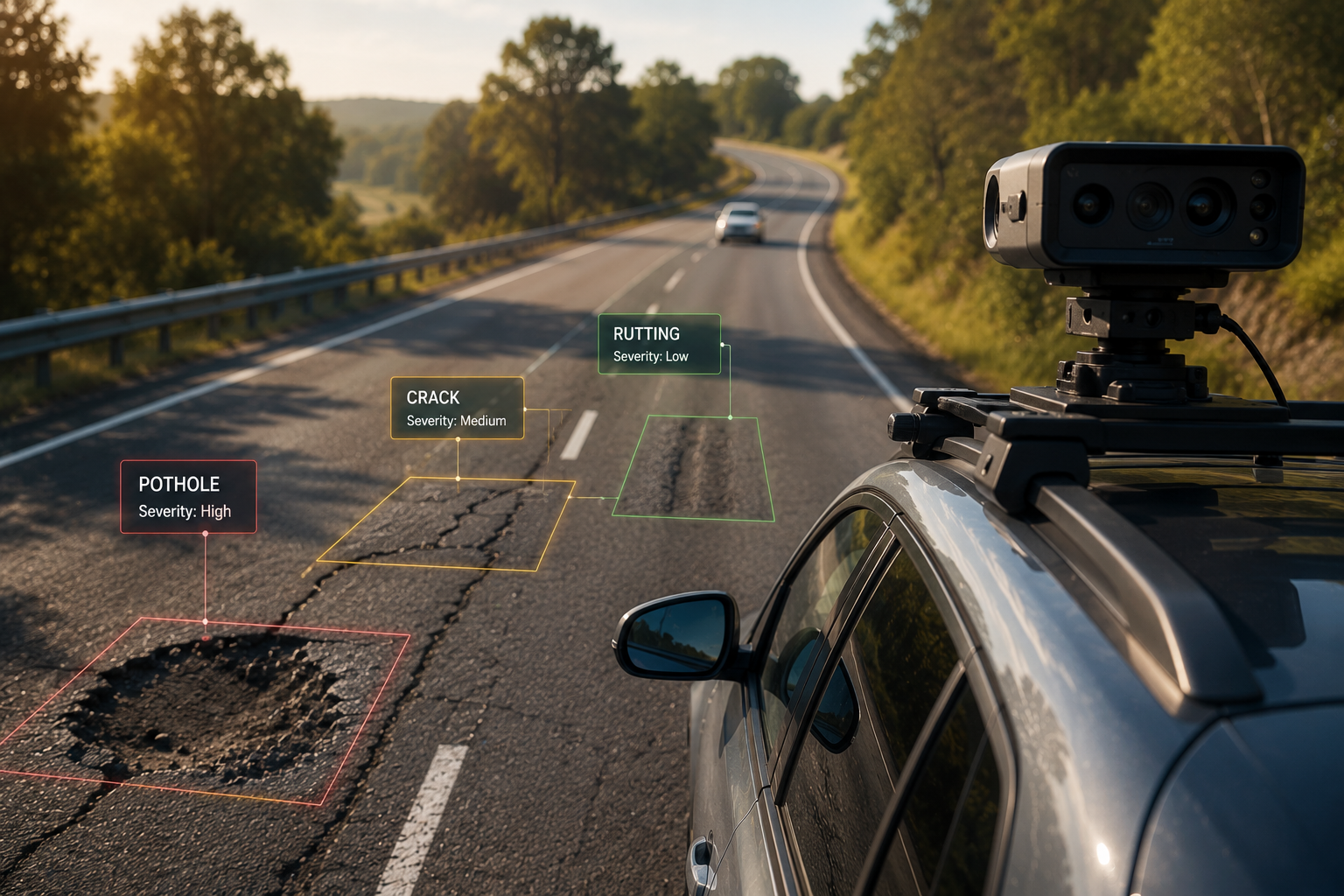
Using advanced imagery and machine learning, RoadVision AI performs AI pavement condition monitoring Australia across large road networks.
The platform automatically identifies:
Through AI road defect detection Australia, agencies gain objective condition data that supports targeted maintenance and reduces unnecessary rehabilitation works.
Traditional inspections often require specialized survey vehicles, lane closures, and significant manpower.
RoadVision AI enables automated road inspection Australia programs using dashcams, fleet vehicles, and mobile devices.
Benefits include:
This allows agencies to monitor assets continuously rather than relying on infrequent manual surveys.
Road safety remains a critical component of sustainable infrastructure management.
RoadVision AI supports digital road safety audit workflows by identifying:
Early identification enables corrective action before conditions contribute to crashes.
Infrastructure owners require accurate records of roadside assets for planning and compliance purposes.
RoadVision AI supports AI road inventory management Australia by automatically detecting and cataloguing:
Combined with GIS road asset management Australia, these inventories provide a centralized view of network assets and maintenance requirements.
Climate resilience is becoming increasingly important across Australian transport networks.
Flooding, heat stress, and extreme weather accelerate pavement deterioration and increase maintenance demands.
RoadVision AI supports climate resilient road infrastructure Australia initiatives by enabling:
This helps agencies identify vulnerabilities before they become costly failures.
Australia's geography creates unique infrastructure challenges.
Large portions of the network are located in sparsely populated regions where inspections are costly and infrequent.
Using remote road inspection Australia AI, authorities can assess extensive highway networks without deploying large field crews.
This is particularly valuable across:
Major cities require continuous monitoring due to higher traffic volumes and accelerated asset wear.
RoadVision AI supports urban road monitoring AI Australia programs through automated data collection and condition analysis during normal traffic operations.
No road closures. No disruption. No specialized survey schedules.
One of the biggest advantages of AI is the ability to move beyond reactive maintenance.
Using predictive road maintenance Australia capabilities, RoadVision AI helps agencies:
This aligns directly with Austroads recommendations for proactive and condition-based asset management.
By repairing roads at the right time, agencies can significantly reduce long-term rehabilitation costs while improving network performance.
Despite strong policy frameworks, several challenges continue to impact infrastructure delivery.
Aging infrastructure requires increasing levels of investment.
Extreme weather events create unpredictable maintenance demands.
Many agencies face workforce shortages and limited inspection resources.
Infrastructure information often exists across disconnected systems and departments.
Australia's extensive road network makes traditional inspection approaches difficult to sustain.
AI-powered infrastructure intelligence helps address these challenges by improving efficiency, consistency, and visibility across the asset lifecycle.
Australia's infrastructure sustainability goals depend on smarter, more resilient approaches to road asset management. As climate pressures increase and road networks continue to expand, transportation agencies require better tools for monitoring, planning, and maintaining critical infrastructure.
RoadVision AI supports these objectives through AI pothole detection Australia, automated inspections, intelligent asset inventories, predictive analytics, and integrated monitoring workflows. By combining computer vision with geospatial intelligence, the platform enables authorities to make faster, more informed decisions while improving safety and extending infrastructure lifespan.
Whether supporting regional highways, freight corridors, or urban road networks, RoadVision AI helps agencies transition from reactive maintenance to proactive asset management—creating safer, more sustainable transportation systems for the future.
Ready to modernize your road asset management strategy?
Book a demo with RoadVision AI to discover how AI-powered inspections, predictive maintenance, and intelligent infrastructure monitoring can help your organization achieve its sustainability, safety, and asset performance goals across Australia.
RoadVision AI enables early defect detection, automated inspections, predictive maintenance planning, and lifecycle optimization, helping agencies reduce costs and improve infrastructure longevity.
Yes. The platform supports condition-based maintenance, asset lifecycle management, road safety assessment, and data-driven decision-making principles promoted by Austroads.
Yes. RoadVision AI is designed for both urban and regional environments, making it highly effective for monitoring remote highways, freight corridors, and rural road networks across Australia.

The Autonomous Road Engineer
AI-powered road condition monitoring, asset management, & infrastructure intelligence helping agencies move from reactive maintenance to predictive road management.


.webp)
.webp)
.webp)