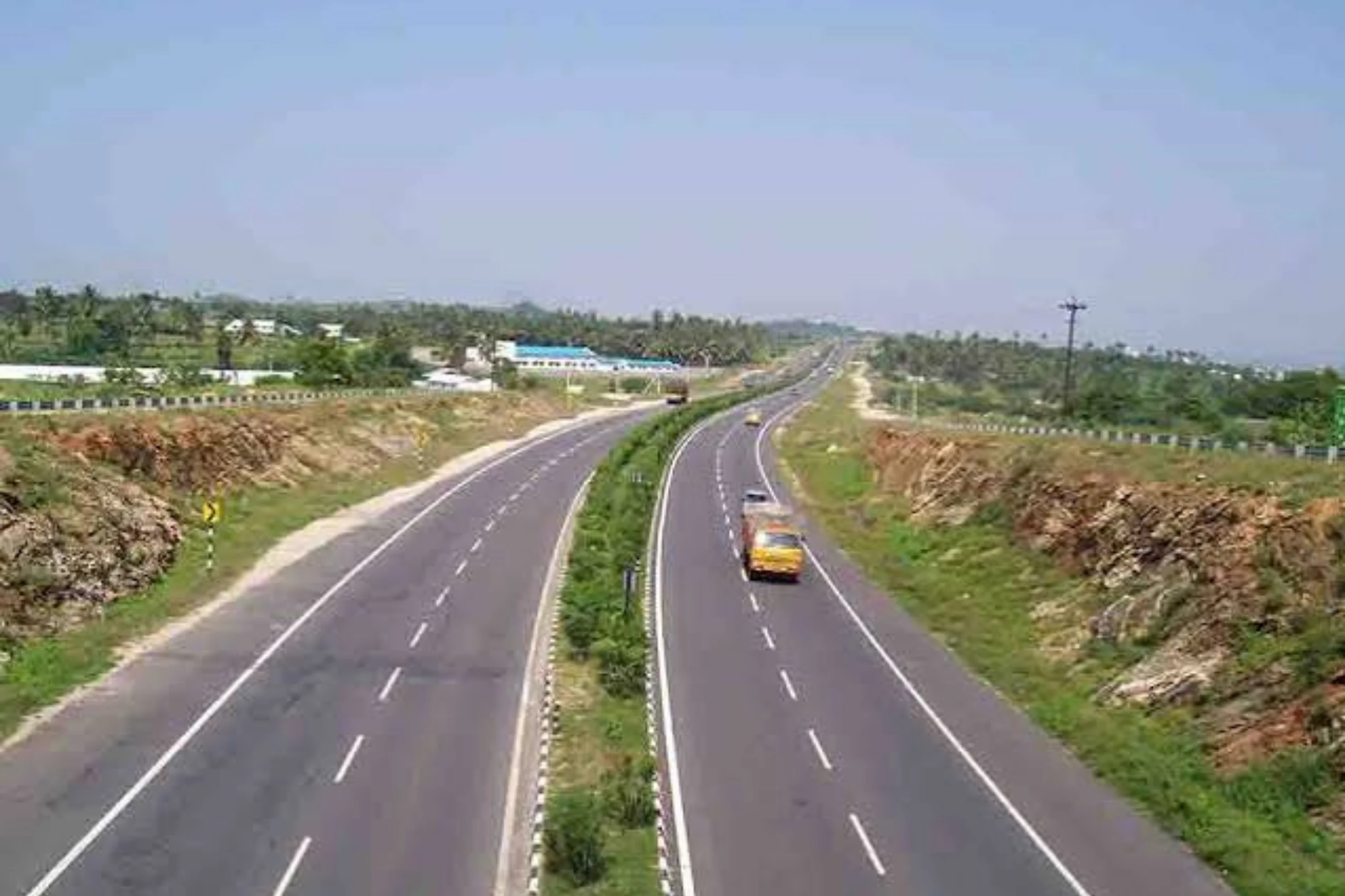
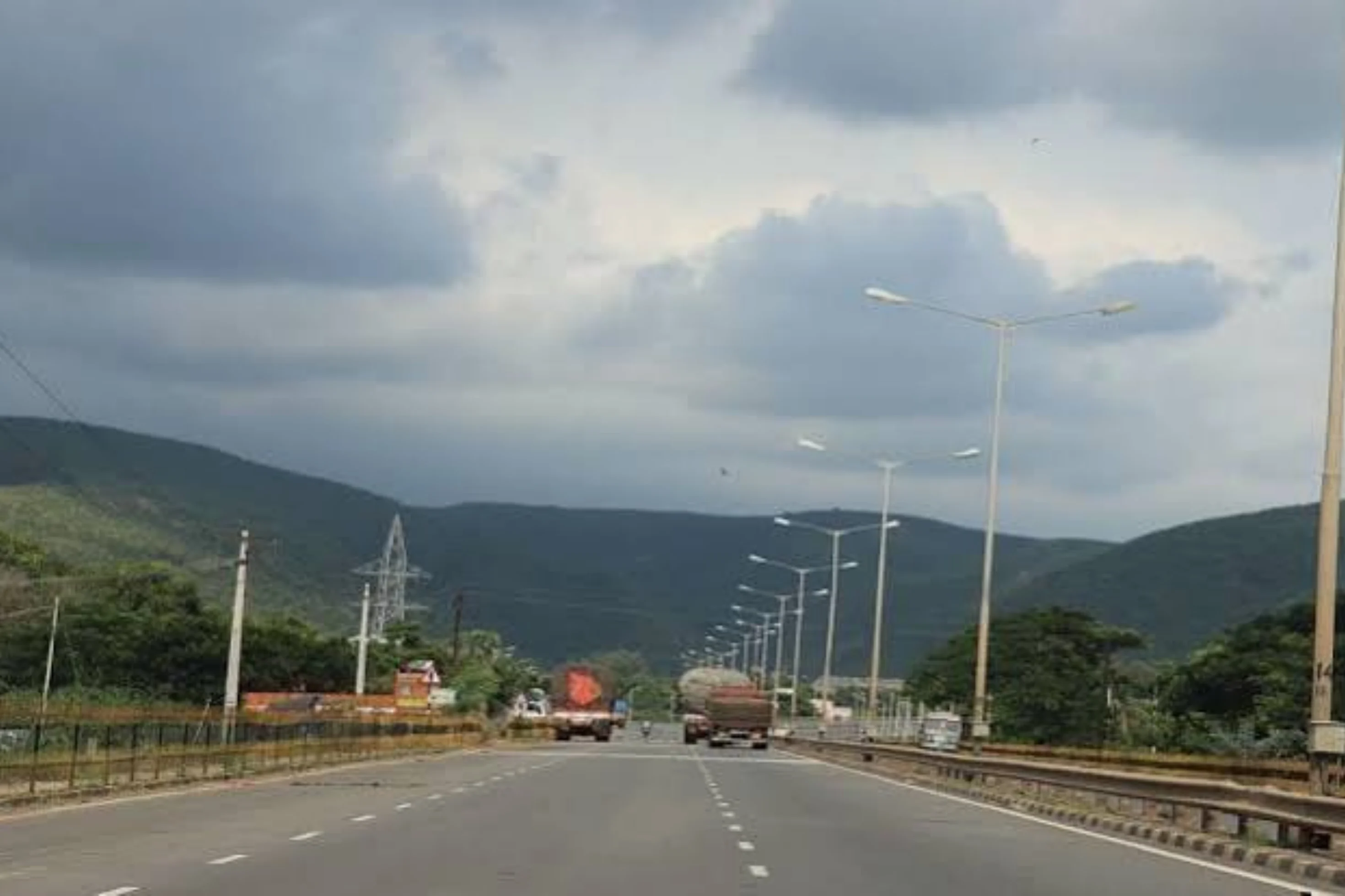
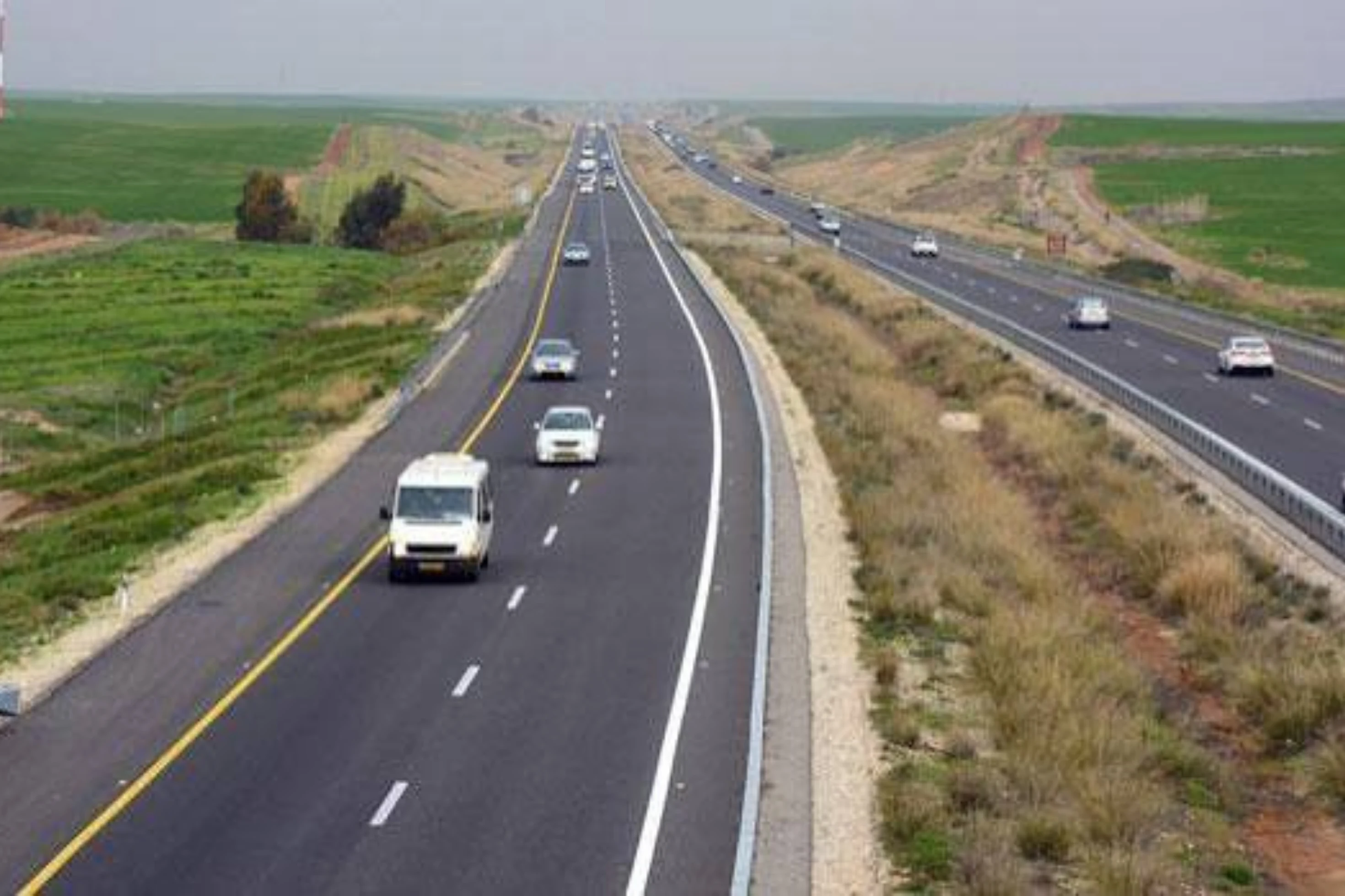
This is a project-level account from RoadVision AI's road survey programme for NHAI's Patna Regional Office, covering two Bihar corridors surveyed in Weekly-Cycle-5: the 6-lane Kanhauli – Ramnagar section (Patna Ring Road Package I), km 0.000 to km 39.160 of SH-78 (new NH-131G), and the Narenpur – Purnea section of NH-131A, 4-lane from km 34.600 to km 79.970 and 2-lane with paved shoulders from km 79.970 to km 82.000. It sets out what the surveys of 22 July to 27 August 2026 found, and why corridors still being upgraded are exactly where an independent condition record earns its keep.
Patna Ring Road Package I runs from Kanhauli to Ramnagar, covering 39.16 km from km 0.000 to km 39.160 of SH-78, now designated NH-131G. It is a 6-lane carriageway. As publicly described, NH-131G is a six-lane spur of NH-31 and a designated part of the Patna Ring Road, running from Dighwara on NH-31 to Ramnagar via Sherpur and Kanhauli in the Saran and Patna districts of Bihar.
The second corridor is the Narenpur – Purnea section of NH-131A, a branch of NH-31 that, as publicly described, connects Malda in West Bengal to Purnia in Bihar. The surveyed section is four-lane from km 34.600 to km 79.970 and two-lane with paved shoulders from km 79.970 to km 82.000, 47.4 km in all, of which the Survey 4 record carries 46.69 km.
As publicly reported, the Patna Ring Road corridor is under construction, with completion projected around September 2027, and the Narenpur – Purnea stretch is among the 4-lane upgrades under way on NH-131A. A road that is being built or upgraded changes week by week, and the stretches already in use carry traffic while work continues around them. That makes it hard to tell, from a desk or an occasional visit, what the road looks like for the people using it today. A consistent, chainage-tied record answers that: it shows what is wrong, how urgent it is, and whether it has been put right by the next survey.
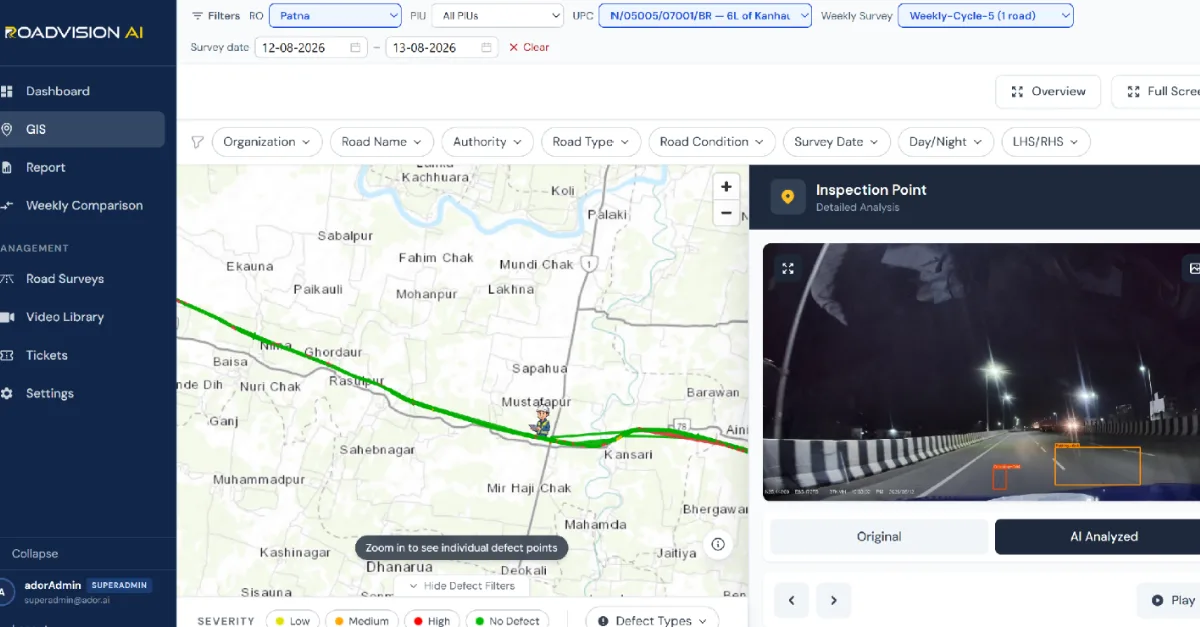
Every finding sits on a live GIS map, with each inspection point opening to its exact location, the defect flagged, and the frame behind it in both original and AI-annotated form. Figure 1 shows the Patna Ring Road (Kanhauli – Ramnagar) for the survey of 12 to 13 August 2026, with an inspection point captured at night, at about 10:33 pm on 12 August, flagging cracking and rutting on a street-lit carriageway beside a barrier. A night frame is a reminder that the survey records conditions as road users meet them, after dark as well as by day.
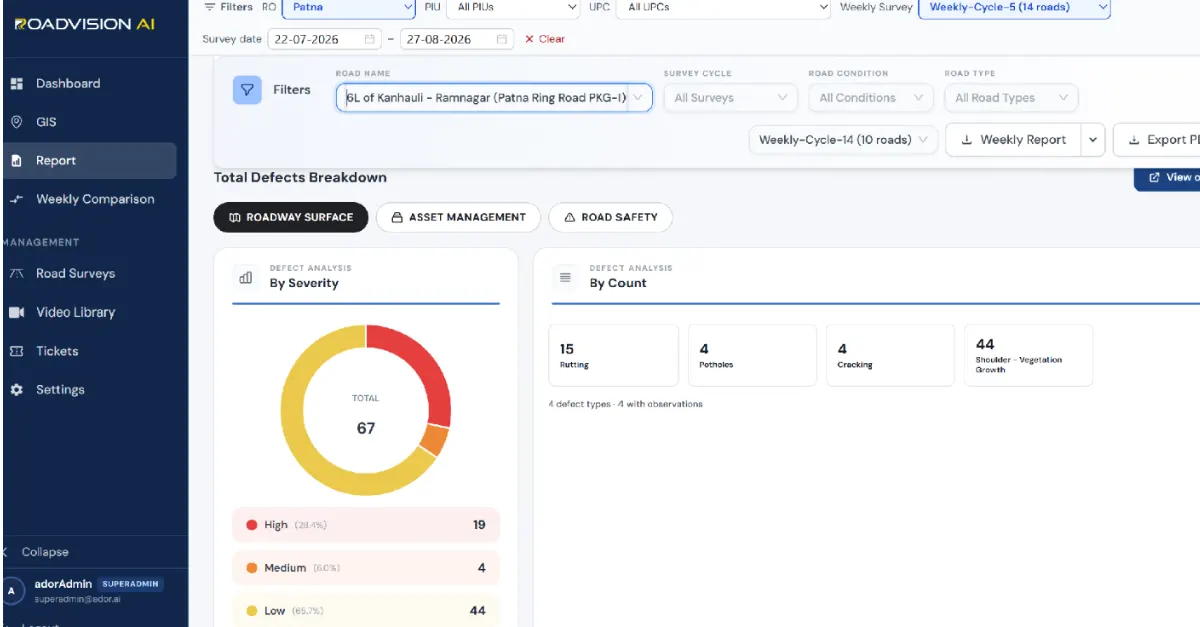
The Patna Ring Road report, covering all surveys in the 22 July to 27 August 2026 window, logged 67 findings in the roadway-surface view across four defect types. Shoulder vegetation growth accounts for 44 (65.7%), rutting for 15 (22.4%), potholes for 4 (6.0%) and cracking for 4 (6.0%). By severity, 19 are High (28.4%), 4 Medium (6.0%) and 44 Low (65.7%).
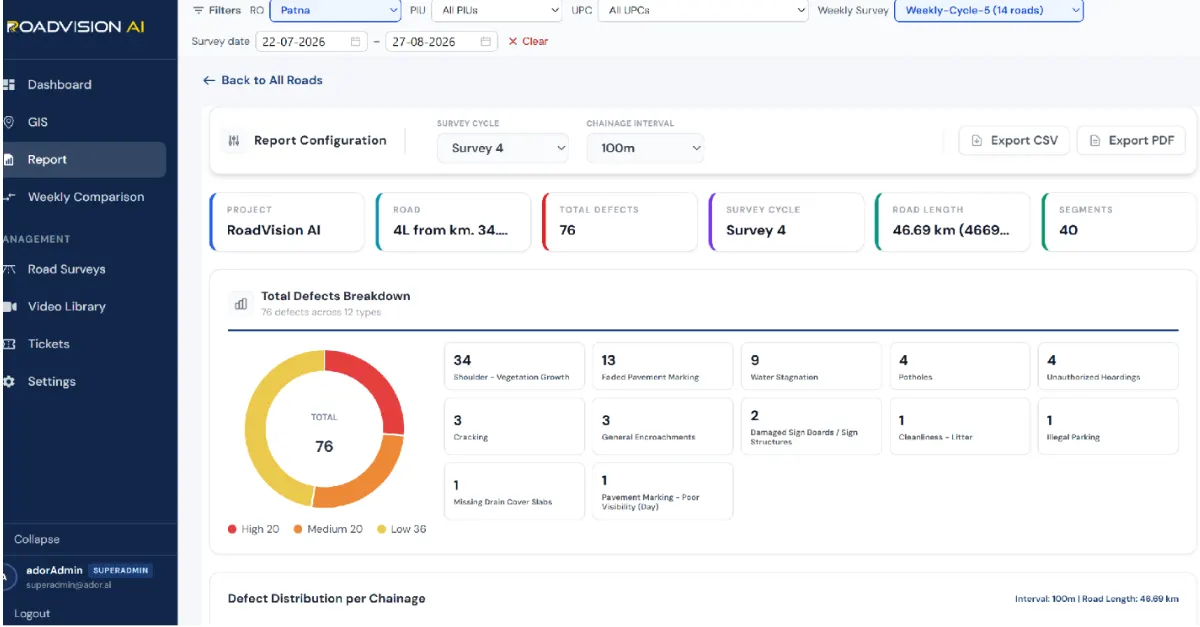
On NH-131A, Survey 4 covered 46.69 km and logged 76 defects across 12 defect types, as Figure 3 shows. Shoulder vegetation growth leads with 34 (44.7%), followed by faded pavement marking with 13 (17.1%) and water stagnation with 9 (11.8%), with potholes and unauthorized hoardings at 4 each (5.3%). By severity, 20 are High (26.3%), 20 Medium (26.3%) and 36 Low (47.4%). The two reports are not like-for-like, since the Ring Road figure is the roadway-surface view and the NH-131A figure covers all defect types. But taking vegetation growth, water stagnation, potholes and cracking as the roadway-surface types, shoulder vegetation is 34 of 50 findings (68.0%) on NH-131A, close to its 65.7% share on the Ring Road.
Each survey gives the Patna Regional Office a defect ID, chainage and survey reference for every finding, independent of the agency doing the work. A later survey of the same chainage then shows whether the finding has been closed out, so that verification does not rest on the executing agency's own account.
RoadVision AI is committed to continuous road inspection along the Patna Ring Road and the Narenpur – Purnea section of NH-131A, giving NHAI a consistent, chainage-level record of two corridors that are still taking shape. Keeping that record current, survey after survey, is how an upgrade programme can be shown to be doing its job.

The Autonomous Road Engineer
AI-powered road condition monitoring, asset management, & infrastructure intelligence helping agencies move from reactive maintenance to predictive road management.