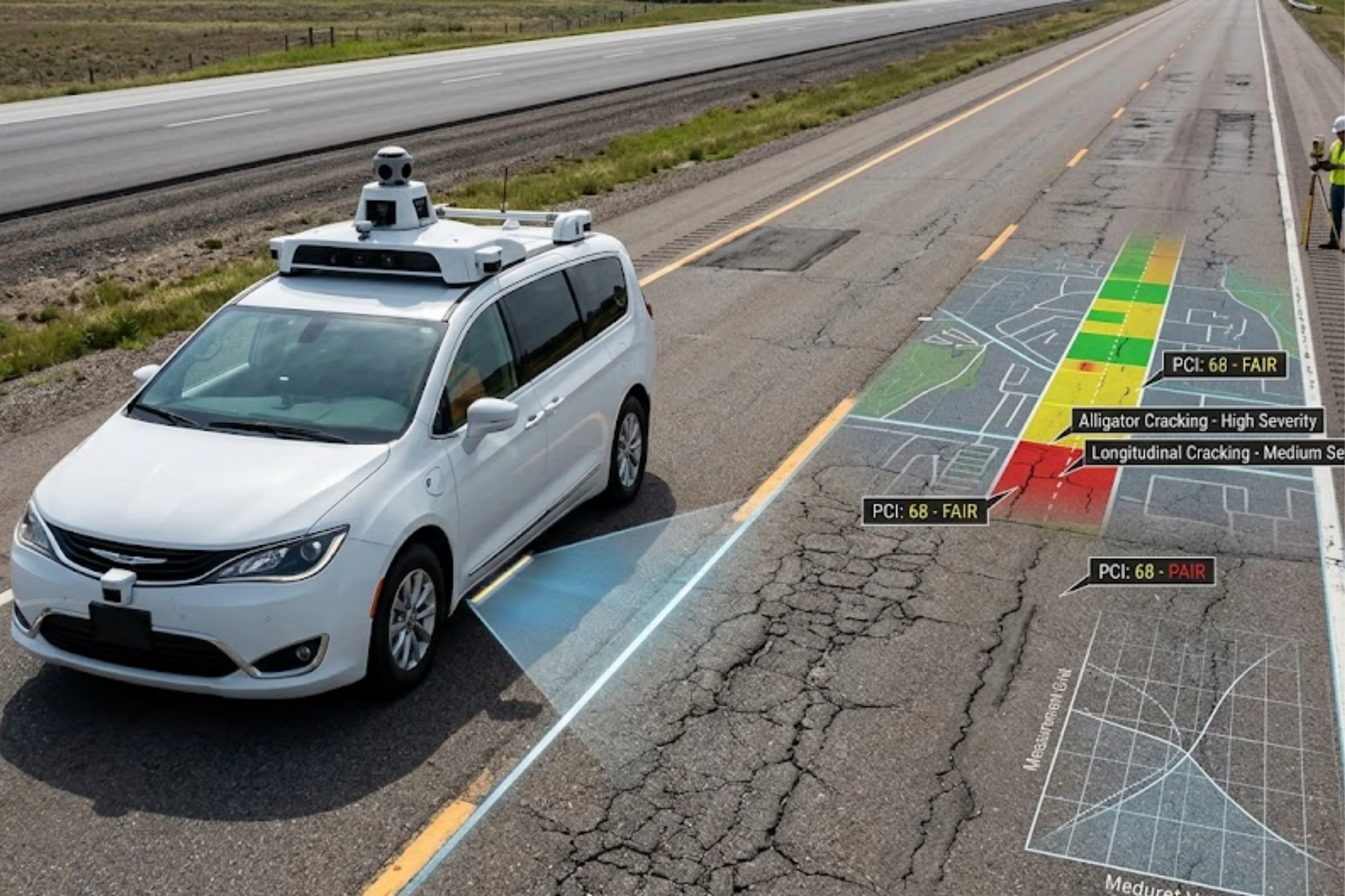
Smart Parking Management with AI-Powered Illegal Parking Detection
On this page
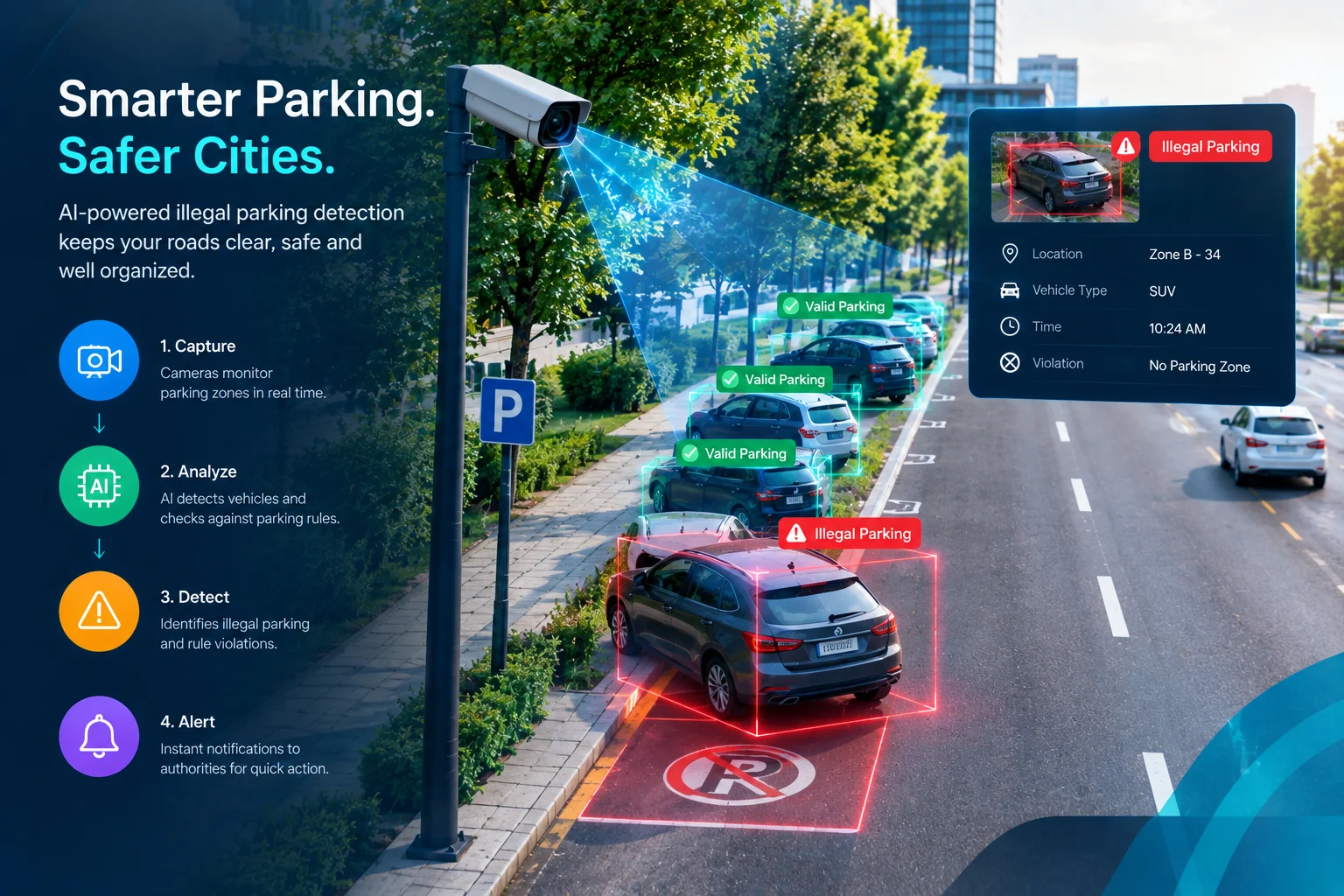
AI-powered illegal parking detection uses computer vision from fixed cameras, mobile patrol vehicles, or drones to automatically identify vehicles parked in violation of posted restrictions: no-parking zones, fire lanes, disabled spaces, loading zones, and time-limited areas. The AI detects a vehicle's presence, cross-references its location against zoning and restriction data, tracks how long it's been parked there, and flags genuine violations for enforcement often generating evidence-backed citations automatically. Combined with broader smart parking management systems that track space availability and occupancy in real time, this technology shifts parking enforcement from sporadic, patrol-based spot checks to continuous, consistent, city-wide monitoring.
Why Illegal Parking Is a Bigger Problem Than It Looks
Illegal parking gets treated as a minor nuisance in most conversations about urban infrastructure, but its downstream effects are more serious than the term suggests:
It blocks emergency access. A vehicle parked in a fire lane or blocking a hydrant isn't just inconveniencing traffic — it's a genuine life-safety risk if emergency responders can't reach a location quickly.
It creates cascading congestion. A single vehicle double-parked or blocking a lane can back up traffic for blocks, disproportionate to the size of the violation itself.
It undermines accessibility. Illegally occupied disabled parking spaces directly deny access to people who depend on them, often for basic mobility.
It degrades pedestrian and cyclist safety. Vehicles parked on sidewalks, crosswalks, or bike lanes force pedestrians and cyclists into traffic, creating avoidable safety risks.
It's genuinely hard to enforce at scale with patrols alone. Traditional enforcement relies on parking officers physically patrolling — a method that covers a small fraction of a city's streets at any given time, meaning the overwhelming majority of violations simply go unnoticed and unaddressed.
What Is Smart Parking Management?
Smart parking management refers to the broader use of technology sensors, cameras, connected apps, and AI to optimize how a city's parking supply is monitored, allocated, and enforced. It typically includes:
Real-time occupancy tracking, showing which spaces are available across a monitored area
Dynamic pricing or time-limit enforcement, adjusting rates or monitoring compliance based on demand or posted restrictions
Driver-facing apps and signage, directing drivers to available spaces and reducing the time spent circling for parking
Illegal parking detection, the enforcement-focused layer that specifically identifies and documents violations
Illegal parking detection is best understood as one critical component of the broader smart parking ecosystem — the part focused specifically on compliance and safety rather than availability and convenience.
How AI Detects Illegal Parking
1. Vehicle Detection
The process starts the same way most AI-based computer vision applications do: object detection models typically convolutional neural networks or architectures like YOLO identify vehicles within camera footage, whether from fixed street cameras, mobile patrol vehicle cameras, or drone imagery.
2. Zone and Restriction Mapping
Detected vehicle locations are cross-referenced against a geospatial database of parking restrictions no-parking zones, fire lanes, disabled spaces, loading zones, time-limited zones, and permit-only areas since determining whether parking is "illegal" requires this contextual layer, not just detecting that a vehicle is present.
3. Duration and Time-Limit Tracking
For violations defined by duration rather than location alone (such as exceeding a posted time limit), AI systems track a vehicle's presence over time — often using license plate recognition to confirm it's the same vehicle across multiple detection passes flagging it once it exceeds the permitted duration.
4. License Plate Recognition (Where Applicable)
Automatic number plate recognition (ANPR) is commonly used to identify specific vehicles for citation purposes, track duration-based violations, and cross-reference against permit databases for permit-restricted zones though this raises privacy considerations that require careful governance.
5. Evidence Documentation
Once a violation is confirmed, the system automatically captures timestamped, geotagged photographic evidence supporting citation issuance and providing a documented record that holds up if a citation is disputed.
6. Real-Time or Near-Real-Time Alerting
For high-priority violations a vehicle blocking a fire lane, for instance systems can generate immediate alerts to enforcement personnel, rather than the violation only being discovered during the next scheduled patrol pass.
Benefits of AI-Powered Illegal Parking Detection
For Cities and Enforcement Agencies
Dramatically expanded coverage — monitoring far more of the network consistently than patrol officers alone ever could
Consistent, objective enforcement — the same detection criteria applied everywhere, reducing the perception (and reality) of inconsistent or selective enforcement
Faster response to safety-critical violations — fire lanes and emergency access routes can be monitored continuously rather than checked periodically
More efficient use of enforcement staff — officers can be directed to confirmed violations rather than spending time on routine patrol sweeps
For Drivers and the Public
Improved emergency access — fewer blocked fire lanes and hydrants means faster emergency response when it matters most
Better accessibility compliance — more consistent monitoring of disabled parking spaces protects access for people who depend on them
Reduced congestion from illegal double-parking and lane blocking
More predictable enforcement — consistent, technology-based enforcement can feel fairer than sporadic, patrol-dependent ticketing
For City Revenue and Planning
More consistent citation revenue, supporting infrastructure and enforcement program funding
Better data on parking demand and violation patterns, informing where additional parking supply, restriction changes, or infrastructure investment might actually help
Challenges and Considerations
Privacy governance. Continuous camera monitoring, particularly combined with license plate recognition, requires clear policies on data retention, access, and anonymization to address legitimate privacy concerns.
False positives and edge cases. Legitimate temporary stops (deliveries, passenger drop-offs within allowed windows) need to be distinguished from genuine violations, requiring careful system tuning.
Public perception and trust. Automated enforcement can generate public pushback if perceived as revenue-focused rather than safety-focused — clear communication about which violations are prioritized (safety-critical vs. minor) matters for public acceptance.
Equity in enforcement. Camera placement decisions should be evaluated to ensure enforcement intensity isn't disproportionately concentrated in specific neighborhoods without clear safety justification.
Integration with citation and payment systems. The detection technology is only as useful as the citation, appeals, and payment infrastructure it connects to a gap here undermines the value of accurate detection.
Weather and lighting conditions. Like other camera-based AI systems, detection accuracy can be affected by rain, glare, and low-light conditions, requiring robust, well-validated models.
Best Practices for Implementation
Prioritize safety-critical zones first — fire lanes, hydrants, disabled spaces, and school zones offer the clearest public safety justification and tend to generate less public pushback than general time-limit enforcement.
Communicate the "why" clearly — framing automated enforcement around safety and accessibility, not just revenue, supports public trust and acceptance.
Build in a fair appeals process — accurate detection still requires a straightforward, transparent way for drivers to contest a citation if they believe it was issued in error.
Combine detection methods based on location needs — fixed cameras for continuous, high-priority locations; mobile patrol-based detection for broader distributed coverage.
Review equity impacts of camera placement — regularly assess whether enforcement intensity aligns with genuine safety risk rather than incidentally concentrating in particular areas.
The Future of AI-Powered Parking Enforcement
As computer vision, connected vehicle data, and smart city infrastructure continue to mature, expect to see:
Deeper integration with broader traffic management systems, connecting parking enforcement data with congestion and traffic flow analytics
Predictive violation modeling, identifying locations and times where violations are likely to spike based on historical patterns, events, or weather
Expanded use of connected vehicle and app-based data, supplementing camera-based detection with driver-reported or vehicle-reported parking states
More sophisticated exemption handling, better distinguishing legitimate temporary activity (deliveries, ride-share pickups) from genuine violations to reduce false positives and public friction
See RoadVision AI in Action
RoadVision AI's computer vision platform extends beyond pavement condition monitoring to support broader road-adjacent use cases, including AI-powered detection of parking violations, encroachment, and other right-of-way compliance issues — all from the same integrated data pipeline.
Curious how AI-powered detection could support your city's parking or enforcement program?Talk to the RoadVision AI team to learn more or request a demo.
Frequently Asked Questions (FAQs)
1. How does AI detect illegal parking?
AI uses computer vision to detect vehicles in camera footage, then cross-references their location against a database of parking restrictions and, for duration-based violations, tracks how long a vehicle has been present using license plate recognition.
2. What is smart parking management?
Smart parking management is the broader use of technology sensors, cameras, apps, and AI to optimize parking availability, pricing, and enforcement, with illegal parking detection serving as its compliance and safety-focused component.
3. What types of parking violations can AI detect?
AI can detect violations including no-parking zone parking, fire lane and hydrant blocking, disabled space misuse, time-limit overstays, loading zone violations, and unauthorized parking in permit-only areas.
4. Does AI parking detection use license plate recognition?
Often yes, particularly for duration-based violations and permit verification, though this requires clear data governance policies to address privacy considerations appropriately.
5. What's the difference between fixed camera and mobile patrol-based illegal parking detection?
Fixed cameras provide continuous monitoring of a specific high-priority location, while mobile patrol-based detection offers broader coverage across many streets but isn't continuous for any single location.




.webp)
.webp)