
Roads and runways are among the most critical infrastructure assets in any nation. Whether supporting daily commuters, freight transportation, or aviation operations, their performance depends heavily on one factor: construction quality.
Recognising the importance of consistent construction standards, the Indian Roads Congress (IRC) developed IRC SP 11: Handbook of Quality Control for Construction of Roads and Runways. This handbook provides a structured framework for ensuring that every stage of road and runway construction meets established engineering standards.
Today, modern technologies such as AI construction quality control platforms, digital construction inspection systems, and infrastructure quality monitoring solutions are helping agencies implement IRC SP 11 requirements more effectively than ever before.
As the saying goes, “Quality is never an accident; it is always the result of intelligent effort.”
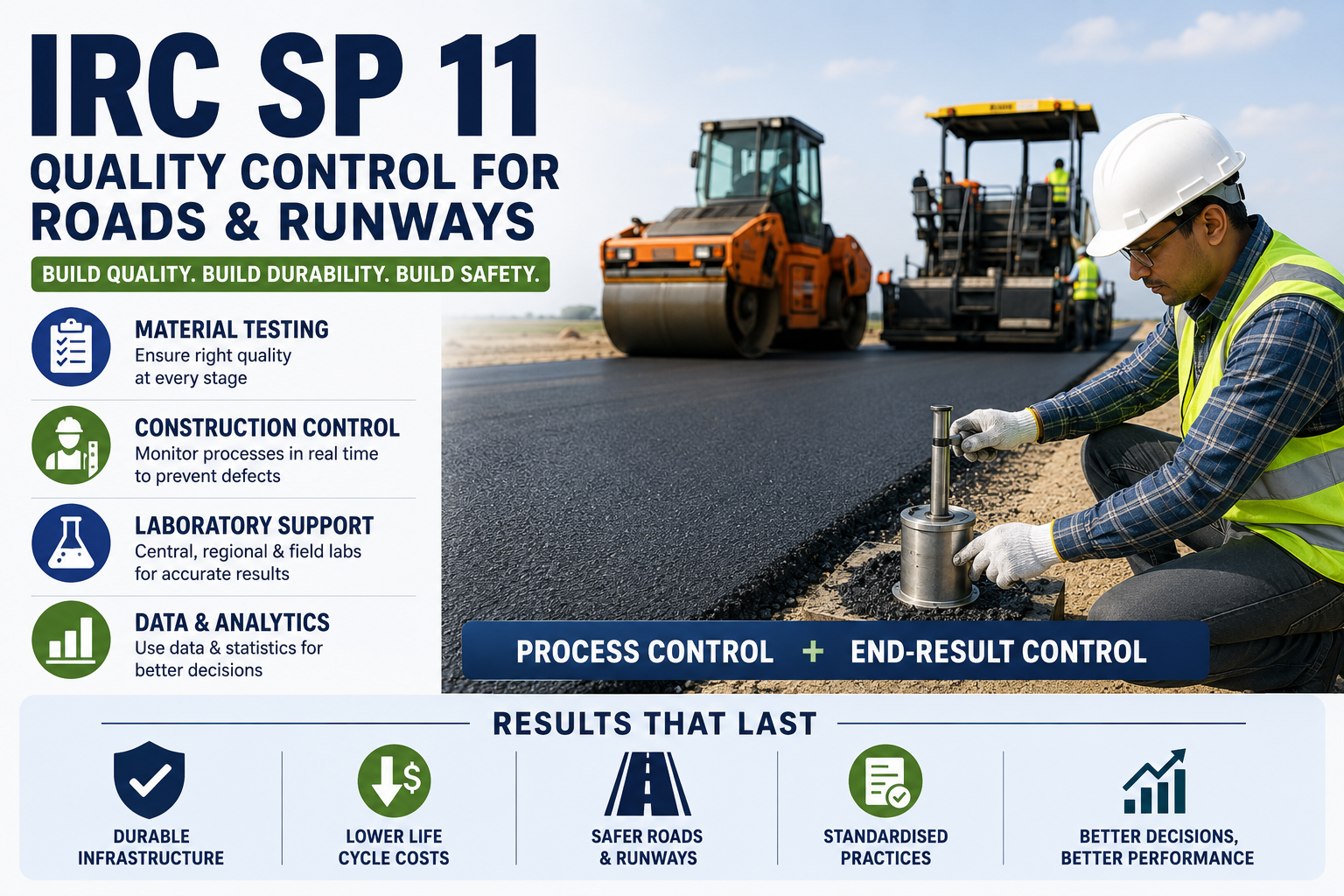
Road and runway failures rarely occur because of design issues alone. In many cases, inadequate material testing, poor compaction, insufficient supervision, or construction deviations contribute to premature deterioration.
Without proper quality assurance:
IRC SP 11 was developed to minimise these risks by establishing standard procedures for testing, inspection, monitoring, and acceptance during construction.
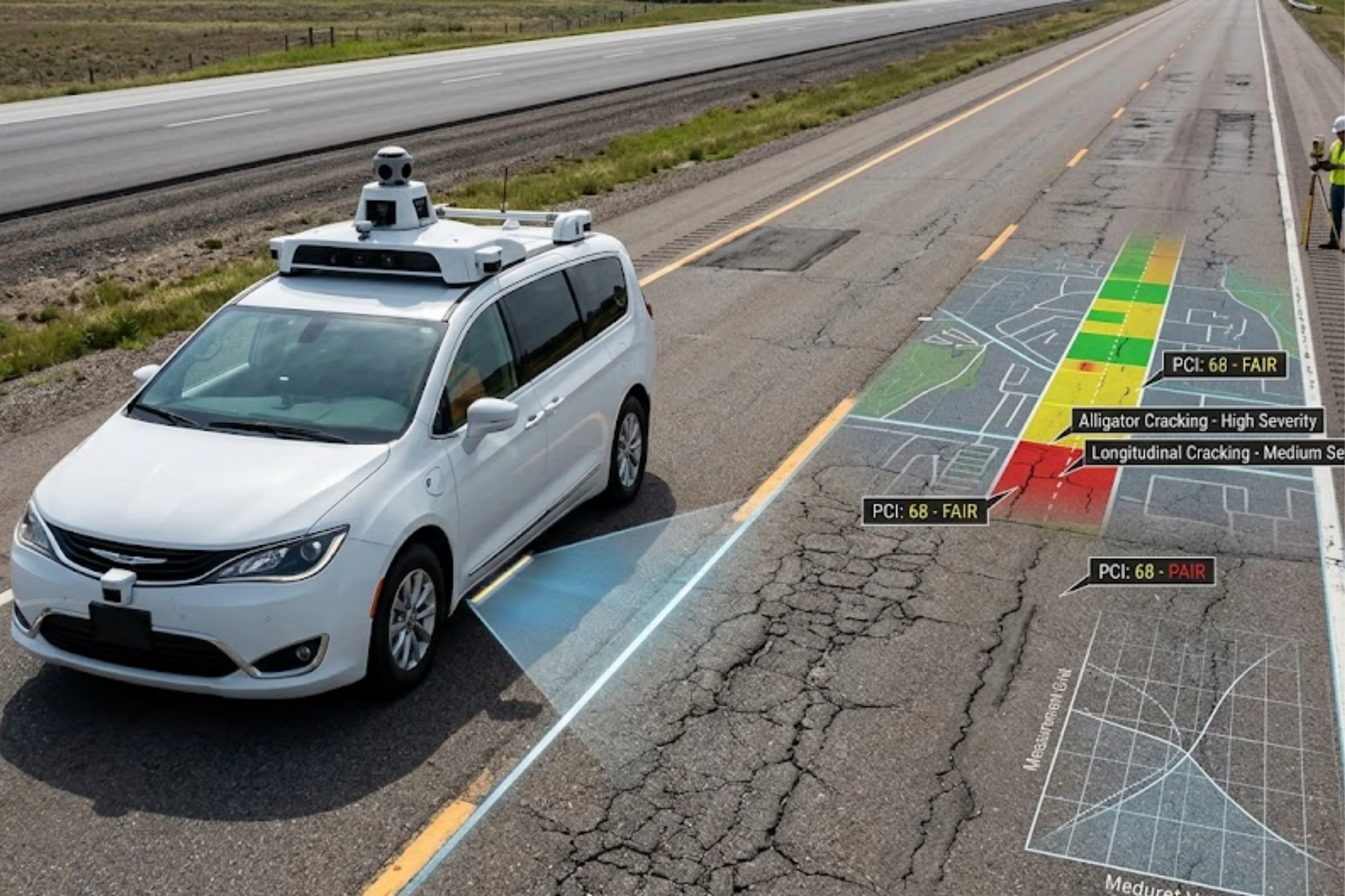
Modern AI pavement quality assessment technologies further strengthen these processes by providing real-time verification of construction quality and identifying defects before they become major issues.
Originally introduced in 1973 and revised in 1984, IRC SP 11 serves as a practical handbook for engineers, contractors, consultants, and government agencies involved in road and runway projects.
The handbook provides detailed guidance on:
The objective is simple:
Build durable infrastructure while reducing long-term maintenance and lifecycle costs.
The handbook focuses on several key goals:
Consistent quality control helps roads and runways withstand heavy traffic loads, environmental conditions, and operational stresses.
Quality construction reduces premature repairs and rehabilitation expenses.
Properly constructed pavements improve ride quality, reduce structural failures, and increase operational safety.
The handbook establishes uniform testing and inspection procedures across projects.
Modern automated construction analytics tools help project teams collect, analyse, and act on quality data throughout the construction lifecycle.
A major strength of the handbook is its structured approach to quality management.
The central laboratory is responsible for:
Regional facilities support multiple projects by:
Field laboratories provide on-site quality verification through:
Today, digital construction inspection platforms enable seamless data transfer between field teams and central laboratories, improving transparency and reporting efficiency.
IRC SP 11 highlights two complementary approaches to quality assurance.
Process control focuses on monitoring construction activities while work is being performed.
Examples include:
This proactive approach helps identify issues before defects occur.
End-result control evaluates the completed work.
Examples include:
Modern automated road inspection systems help engineers perform both process control and end-result verification more efficiently across large projects.
Materials are the foundation of road and runway performance.
IRC SP 11 outlines detailed testing requirements for:
Testing includes:
Quality checks include:
Tests focus on:
Key parameters include:
Today, AI defect detection solutions can supplement traditional testing by identifying visible material defects during construction operations.
One of the advanced concepts introduced in IRC SP 11 is the use of statistical methods for quality assurance.
Instead of relying solely on individual test results, statistical quality control evaluates trends and performance consistency.
Benefits include:
When integrated with AI-based construction analytics platforms, statistical quality control enables predictive insights and early warning systems for project managers.
Road pavement performance depends heavily on construction quality.
IRC SP 11 provides detailed guidance for:
Proper subgrade construction ensures:
Quality checks focus on:
Monitoring includes:
Modern AI pavement quality assessment systems can automatically evaluate pavement surface conditions and construction compliance in real time.
Runways require even stricter quality standards than roads due to aircraft loading conditions.
IRC SP 11 addresses:
Even minor irregularities can impact aircraft operations.
Runways must withstand:
Materials must resist:
Advanced AI infrastructure quality monitoring solutions help aviation authorities continuously verify runway performance during construction and operation.
IRC SP 11 emphasises that successful quality control depends not only on equipment but also on people.
The handbook encourages:
Digital tools now support remote learning and real-time guidance for quality teams operating across multiple project sites.
While IRC SP 11 established the foundation decades ago, modern technologies are significantly enhancing quality assurance capabilities.
AI systems analyse project progress and detect deviations from specifications.
High-resolution imagery helps identify:
Inspection reports can be generated automatically, reducing manual effort and improving traceability.
AI models help forecast construction risks before failures occur.
Advanced AI work zone safety platforms improve worker protection and ensure compliance with safety standards throughout construction operations.
These innovations complement IRC SP 11 by making quality assurance faster, more consistent, and more scalable.
Projects that implement IRC SP 11 effectively achieve:
Higher construction quality reduces premature deterioration.
Well-built roads require fewer repairs and interventions.
Better pavement performance improves user safety and operational reliability.
Quality assurance prevents expensive rework and project delays.
Reliable infrastructure improves user satisfaction and government accountability.
The future of infrastructure quality assurance is becoming increasingly digital.
Emerging trends include:
As infrastructure projects become larger and more complex, combining IRC SP 11 principles with smart technologies will become essential for delivering durable, safe, and cost-effective transportation networks.
See how AI-powered quality monitoring can improve road construction compliance and reduce project risks. Book a demo with RoadVision AI today.
IRC SP 11: Handbook of Quality Control for Construction of Roads and Runways remains one of India's most important references for infrastructure quality assurance. Its structured approach to testing, inspection, process control, and acceptance criteria provides a strong foundation for delivering high-performing roads and runways.
Today, modern technologies such as AI construction quality control and automated work zone safety systems are helping agencies implement these standards more effectively than ever before.
By combining proven IRC methodologies with advanced digital tools, infrastructure stakeholders can build roads and runways that are safer, more durable, and better prepared to meet future transportation demands.
IRC SP 11 provides comprehensive guidelines for quality control during the construction of roads and runways. It establishes standards for material testing, construction supervision, laboratory procedures, and acceptance criteria to ensure infrastructure is safe, durable, and cost-effective throughout its lifecycle.
Quality control helps identify construction issues before they become major defects. By ensuring proper material quality, compaction, pavement thickness, and workmanship, IRC SP 11 reduces maintenance costs, extends pavement life, improves safety, and enhances overall infrastructure performance.
Modern AI-powered construction monitoring systems can automate inspections, detect pavement defects, track construction progress, and verify compliance with quality standards. These technologies complement IRC SP 11 by providing real-time insights, improving inspection accuracy, and enabling more efficient infrastructure quality management.
The Autonomous Road Engineer
AI-powered road condition monitoring, asset management, & infrastructure intelligence helping agencies move from reactive maintenance to predictive road management.


.webp)
.webp)